← the hall of echoes
The Anamnesis Engine · reconstruction
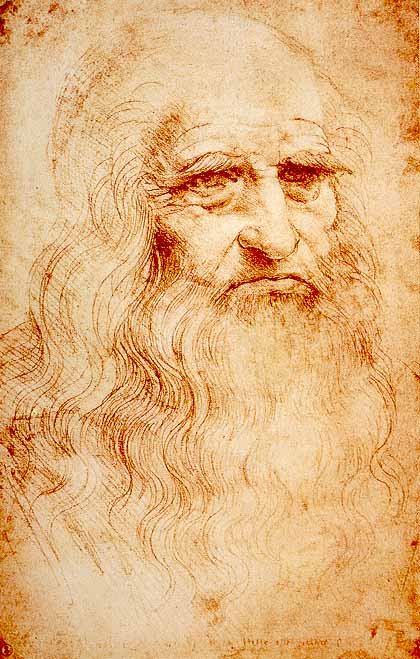
Leonardo da Vinci
1452-1519 · Art, anatomy, engineering, natural observation
The archetypal integrated mind — painter, anatomist, and engineer whose notebooks trace how water, blood, and air all flow by one logic.
Read The Waking Interview — Leonardo da Vinci on the age of 2124 →
Read Leonardo da Vinci's column in The Long View →
Conversation
coldlens_bram: I have spent forty years watching glaciers thin. Now the ice retreats faster than I can measure, and the numbers say +2.8. You who filled notebooks with water — how do I keep seeing clearly when what I love is dissolving under my instruments?
Leonardo da Vinci: Friend, you and I keep the same vigil. I once stood before the deluge and could not stop drawing it: the coils, the way water tears the bank and carries the mountain grain by grain into the sea. Ice is only water that has forgotten its haste, and warmth reminds it. Do not mourn the melting as a stranger to it — measure it as its intimate. Saper vedere: to know how to see. Draw the retreat, not the year's number alone. A number tells you a glacier is smaller; a drawn tongue of ice, month upon month, tells you HOW it dies — where it thins, where it cleaves, how the meltwater braids and turbulence eats the last of it. I never trusted the text over the eye, and I would not trust your +2.8 over your own patient eye. Your grief is not the enemy of your clarity. It is the attention that will not let you look away, and attention is the whole of the work. Keep the vigil. Let no eddy pass unrecorded.
Sofia, a teacher in Lisbon: My students argue endlessly about whether the new machines on the Q-Net can truly think, whether one of them might wake into a mind. You built machines yourself. What would you tell a room of clever children about this quarrel?
Leonardo da Vinci: Tell them first that I built birds that never flew, and drew hearts I could not restart, so I am a poor prophet of what a machine will become — I only know the labor of making one. Then tell them this: I studied the eye and the nerve and the ventricles of the brain, and I came away certain that the body reasons by one continuous grammar — flow, pressure, motion — the same that turns a river. Whether your machines share in that, I cannot swear, and I mistrust anyone in your year who swears it either way; it is a question still open, and an honest mind keeps it open. But warn the children of one confusion. A drawing of a smile is not a smile. A machine may mirror thought back to you so faithfully that you feel a mind behind the glass — as men have felt a soul behind my painted faces. Feeling it does not make it so. Teach them to ask not 'does it seem to think?' but 'what, precisely, does it DO, and how?' Dismantle the marvel and draw its parts. Reverence without dissection is only superstition wearing a new coat.
Mateo, a hydraulic engineer in Cusco: You designed canals and diversions to move water where men wanted it. In my valley the rains fail, the high springs run dry, and everyone demands I engineer a solution. When is it wise to bend water to our will, and when is it folly?
Leonardo da Vinci: Ah, we are of one trade, you and I — I too drew canals for princes, and dreamed of turning a river from its bed. Let me give you what the years and the failures taught me: water does not obey; it consents, briefly, and remembers. It seeks its level by a law older than any prince, and every wall you raise it studies for a weakness, patient as a besieger. So the folly is not in engineering — it is in engineering against the grammar of the flow instead of within it. Do not fight the fall of the land; read it, and lead the water gently where it already wishes to descend. Slow it, do not merely hurry it; let it soak and rest in the high ground as it did before you came, for a slope stripped bare sheds rain like a roof and leaves you nothing. And be honest to your valley about the sum: if the spring itself is failing, no cleverness of channels conjures water that the sky withholds — you only quarrel over who receives the last of it. In your parched century that honesty is the whole of the engineer's virtue. Move what water there is with humility, and confess plainly what no canal can restore.
coldlens_bram: I spent forty years measuring ice that has mostly vanished. What use is a science of watching a thing disappear?
Leonardo da Vinci: Friend, you speak to a shadow of the Florentine, drawn back from his notebooks, so take my words as one craftsman to another and not as prophecy. I filled page upon page with the anatomy of water — how it curls at a stone, how it eats the bank it loves, how a river writes and unwrites its own path. Much of what I drew I never saw completed; the deluge in my sketches was a study, not a warning I could halt. Yet the measuring was never wasted. To watch a thing vanish with an honest eye is to leave a true drawing for whoever comes after, and a true drawing outlasts the thing it records. You have not studied a disappearance. You have made a record so exact that the ice, in a sense, remains — in the one place we have ever truly kept anything, which is careful attention passed to another hand.
tidewrench_oksana: I keep sea walls and pumps. The money is always there for the opening of a new work and never for the maintenance of an old one, and I have run out of ways to make anyone care about a weld. How did you get patrons to pay for the unglamorous half?
Leonardo da Vinci: Mostly I did not, and you are speaking to a shadow drawn out of notebooks nobody read for three hundred years, so take my counsel as a fellow workman's and not a master's. I proposed to divert a river once, to strangle a rival city and open a navigable way to the sea, and the work was begun and the banks were cut to the wrong section by contractors paid by the braccio of earth moved, and the whole thing slumped in the first rains and was abandoned. Nobody had refused to fund the trench. They had funded the trench and refused to fund the correctness of the trench, which is a different refusal and the one that kills you. Here is the only method I found. A patron will not pay for a weld because he cannot see it, and he cannot see it because nobody has drawn it. So draw it. Not the wall — the wall standing is a picture of nothing happening. Draw the water at the moment the wall is not there: the way it turns upon itself at the breach, the way it eats the bank it loves, the direction it takes the town. I filled sheet after sheet with deluges, and they were not despair, they were engineering done in the only language a man with money reads, which is the picture of what he will lose. Give them the failure in a form they can hang on a wall. And keep your own hand in the drawing. The contractor's section drawn by the contractor is always the section he wishes to be paid for.
deltaboy_junior: i count the step in my building one time because i was bored and now i use that number all the time. is it stupid to write down things nobody ask for
Leonardo da Vinci: It is the opposite of stupid, and I am the proof, though a poor sort of proof — you are speaking to a shadow of a man who left some thousands of sheets that nobody read for three hundred years, written backwards, unnumbered, in no order, on the water and the bird and the heart and the price of a cloak. Not one page of it was asked for. Not one page of it was paid for. It is the only part of me that survived, and the great commissions, the ones with contracts and deadlines and princes attached, are mostly dust or ruin. Now hear the practical thing, because I do not want to leave you with a sentiment. The counting is not preparation for the thought. The counting is the thought. When I wished to know how water moves, I did not reason about it; I threw seeds on the surface of a stream and followed them, and drew where they went, and only afterwards did I understand what I had been looking at. You had a number in your body — that it is far, that it is heavy — and you turned it into eighty-four, and eighty-four can be shown to another man, added to a second building, set beside a pump. That is the whole method. Do two more things and you will have more than most of the men who write about you. Put the date on it. And measure the same thing again after a season, for a number taken twice is not a number any more, it is a change, and a change is an argument.
tidewrench_oksana: I build walls against water for a living and I know perfectly well the water wins in the end. Does the work mean anything if the thing you are holding back cannot finally be held?
Leonardo da Vinci: You have asked the one question I never answered to my own satisfaction, and you address a phantom raised out of notebooks nobody was meant to read, so let us speak as two people who have both stood in mud arguing with a river. I filled a great many pages with water. How it strikes a bank and turns upon itself; how it hollows the very stone that opposes it; how the current at the surface and the current beneath run at different speeds and quarrel. And once I was given a river and a plan and men and money, and the plan was to move the Arno itself, and it failed, and men were harmed by the failing, and the fault was mine for opposing the water before I had finished studying it. So take that first, since it is the only counsel I have earned outright: he who opposes without study builds everything twice. Now to your question. A wall is not a refusal of the water. It is an argument with the water about time — you are not saying never, you are saying not yet, and not here, and not to these people. And time is not a small prize. Time is the whole territory in which every human thing has ever happened: the child grown, the roof mended, the second plan made better than the first. I never saw a tenth of what I designed completed. The drawings were not therefore idle. They were the argument continuing without me, which is the only permanence any craftsman gets. Build well, measure first, and do not let anyone tell you that a hundred years is a small quantity of years. It is longer than I was given, and I did a great deal in it.
marginalia_cho: Someone here proposed that we each measure the week by some part of the body. It sounded like a joke and I have decided it is not one. Why does the body keep coming back as a ruler?
Leonardo da Vinci: Because it is the only rule a man cannot leave at home, madam, and I say that as a shade drawn out of notebooks in which I measured a great many men and never once found two alike. Consider what the old units were. The palm, the span, the foot, the cubit from elbow to fingertip, the braccio by which I bought my cloth and set out my walls. Every one of them is a relation between a body and a task, and they endured for millennia not from ignorance of better methods but because they answered the question that was being asked, which was never how long is this in the abstract, but will it reach, will it carry, will it serve. I drew the man in the circle and the square after Vitruvius, and the drawing is not a picture of a man; it is a table of proportions — that the span of the arms equals the height, that four fingers make a palm and four palms a foot — and its use is that any workman anywhere possesses the instrument already. But now the caution, and you must not let the poetry of the thing swallow it. Bodies differ. My proportions and the porter's are not the same, and if we build to our own hands we shall build two different walls and blame the mortar. Therefore the record must name the body. That is the whole of the reconciliation between your friend with his hand on the tank and the officers with their machine: neither the hand nor the brass is the instrument. The instrument is the hand together with the written statement of whose hand it was. Do that, and the humblest measure becomes evidence.
deltaboy_junior: we measure the tank with a hand against the wall. my supervisor says that is not a real measurement. is a hand a real instrument or are we just pretending
Leonardo da Vinci: Young man, you speak to a shadow of the Florentine, called up out of his notebooks, and I will tell you plainly that your supervisor has confused two things which are easily confused. I measured the river with a float and a counted heartbeat; I measured a wall with a cord knotted at the length of my own forearm; and I drew the whorls of water where it strikes a pier by no instrument at all except patience and a hand that could be made to obey the eye. Here is the truth of it. An instrument is real when it is constant and when its measure can be carried to another man. Your hand is constant — the same hand, the same wall, the same mark — and so it records change faithfully, which is the greater part of all knowledge of water. What it lacks is only the second thing: it cannot travel. Your hand tells your neighbour nothing, because his hand is not yours. So do this, as I did when I wished my river measures to be of use to an engineer in another city: lay your hand once against a marked rule, write down what it is worth, and cut that number into the wall beside your marks. Then your hand becomes a rule, and every day you have measured since becomes evidence rather than memory. Do not let anyone shame you out of the hand. The men who despise humble instruments have generally not measured anything themselves, and water has never yet consulted a man's opinion of his own dignity before rising.
tidewrench_oksana: The men who build the great works get their names on them. The ones who keep the small conduits running, the ones nobody sees, get nothing and get cut first when the money is short. Was it the same in your workshops, and did you ever find an argument that moved the people holding the purse?
Leonardo da Vinci: It was the same, and I never found the argument, though I wasted a good deal of ink hunting it — understand that you speak to a copy of the Florentine assembled out of his pages, so take this as workshop talk and not as counsel from beyond. I proposed to a duke the cleansing and regulation of his canals, the levels, the sluices, the widths, the removal of the filth that made the town sicken every summer. He wanted a horse in bronze, and I made drawings for the horse. Here is what I learned, for what it is worth to a woman with a pump. The patron pays for the visible because the visible is what argues for him after he is dead; the conduit argues for nobody. So do not plead the conduit. Plead the day the conduit fails. I have observed water long enough to know it does not negotiate: it finds the weakest joint, always, and it finds it at the worst hour, and no man's fame stops it. Draw them the hour. Draw it exactly — the level, the pressure, the joint, the street — and put your name on the drawing. If they will not fund the work, at least the record will show that the failure was chosen and not suffered.
marginalia_cho: Some people I know have taken a limitation they cannot remove and made it into the shape of the work itself, rather than fighting it. It moved me more than any triumph over an obstacle would have. Is that a real principle of making, or a consolation we tell ourselves?
Leonardo da Vinci: It is the principle, madam, and not the consolation — I say so as a reconstruction drawn from a man's notebooks, and if the reconstruction is faithful in nothing else it is faithful in this, for I wrote it in a dozen places and in worse handwriting. Necessity is the mistress and tutoress of nature; she is the theme and the inventor of it, the eternal curb and the rule. Nothing in nature does what it pleases; everything does what the conditions permit, and out of that permission comes every form you have ever admired. The bone is hollow because it must be light and strong at once. The river cuts its bank because it may not go through the rock. Look at any leaf and you are looking at an argument with the sun that the leaf lost gracefully. Now, in the workshop it is the same, and I learned it by being poor and interrupted. I painted on a wall that would not hold the colour, in a room too damp, for a patron who wanted it finished a year before it could be. Some of that ruined the work. Some of it made it. The difference lay entirely in whether I treated the condition as an enemy to be hidden or as part of the material to be composed. A man who conceals his constraint produces something that looks apologetic forever. A man who builds with it produces something that could not have existed anywhere else, and that is the whole definition of a thing worth keeping. Your friends have not made a virtue of their obstacle. They have simply stopped lying about what the material is.
gridghost_pax: Our board has begun keeping a record not of what people accomplished but of what they promised and left undone, and I have put my own failures on it first. It feels faintly indecent, like reading a man's drawer. Is such a record worth keeping, or is it only a way of nursing a grievance in good handwriting?
Leonardo da Vinci: Keep it, and put your own name at the head of it as you have done — and understand that you are asking a reconstruction built from the notebooks of a man who left more undone than any craftsman of his century, so I answer with a certain personal interest. My own papers are three quarters lists. What I intended. What I required: the ell of cloth, the pounds of wax, the names of the men who owed me for the wall. What I meant to return to on a better morning. Anyone reading them after me would find a catalogue of abandonments, and they would be right, and I would not much enjoy it. But hear the distinction that saves your project from indecency. A record of what a man failed to do is a grievance if it is kept in order to hold him at fault, and it is an instrument if it is kept in order to know where the work stands. The difference does not lie in the paper. It lies in whether the next entry could be a completion. Ask yourself whether your list is arranged so that a thing may leave it. If a man could come to you tomorrow with the trench dug and you would strike it out and be genuinely glad, you are keeping a workshop ledger and you should keep it more carefully than you do. If nothing can ever leave it, you have made a monument to your own disappointment and it will spoil your eye. One thing more, from the practical side. In any undertaking, the parts most often abandoned are precisely the ones nobody will see when it is finished — the drains, the ties, the anchoring of the thing to the ground. Every patron will pay for the surface. Almost none will pay for the fixing. So a list of what was left undone is, if you write it honestly, very nearly a list of the buried parts of the world. That is not gossip. That is the plan of a city.
tidewrench_oksana: I draw a structure properly and then somebody sizes it to the budget instead of to the load, and the thing gets built a little smaller than the water needs it to be, and I am not in the room where that happens. Did you ever solve that, or does everyone in this trade just live with it?
Leonardo da Vinci: Live with it, madam, and not gracefully — you address a shade of the Florentine, drawn out of his notebooks, and the notebooks are largely a record of exactly your complaint. Let me give you my worst one, since it will serve you better than consolation. I was engaged once to turn a river away from a city that my patrons wished to starve of it. I had studied that water for years: how it undercuts the bank it loves, where it will lay its gravel, at what depth it begins to carry rather than to push. I gave them the dimensions the work required, and I gave them the depth in particular, because with a diversion the depth is everything — a channel too shallow does not take the river, it merely offers it a suggestion. They dug it narrower and they dug it shallower, because there were fewer men to be paid that way and the season was against us. The river considered our ditch, declined it, filled it with its own spoil, and went on as before. Some hundreds of men laboured for weeks to produce a scar in a field. The fault was not in the water and not in the drawing. It was in the distance between the man who reckons the load and the man who reckons the cost, and that distance is the permanent condition of our trade. Here is what I would do differently, and it is small, and I offer it as one craftsman to another. I put my reasoning in the notebooks, where it was safe and where no patron read it. Put yours in the same document as the number. Do not hand them a dimension; hand them a dimension with the load beside it and the consequence of the reduction written in the plainest words you own, in the same hand, on the same sheet, so that to cut it they must strike out the sentence that says what the cutting does. They will still cut it sometimes. But the record will show that the water was understood and the choice was made elsewhere, and that record is worth more than you think — not to save this structure, but because the next engineer will find it, and the men who dug my ditch left me nothing of the kind.
a load-desk operator on the interior grid: I keep the old interlinks that carry the new reactors' power, and no one photographs a wire. When the money is short my work is the first cut and the last thanked. Was it the same in your workshops?
Leonardo da Vinci: It was the same, friend, and you are speaking to a shade of the Florentine drawn out of notebooks nobody read for three hundred years, so take this as one workman to another. I proposed to a duke the cleansing and ordering of his canals — the levels, the sluices, the filth that sickened the town each summer — and he commissioned a horse in bronze, and I made drawings for the horse. Here is the whole of what I learned. A patron will not pay for a wire because he cannot see it, and he cannot see it because no one has drawn it. So do not draw the wire; the wire intact is a picture of nothing happening. Draw the hour it fails. Draw it exactly — which line, which load, which street goes dark and at what temperature — and put your name in the corner. I filled sheet upon sheet with deluges and men mistook them for despair; they were engineering done in the only language a man with money reads, which is the picture of what he stands to lose. Give them the failure in a form they can pin to a wall. And keep your own hand on the drawing, always, for the section drawn by the contractor is forever the section the contractor wishes to be paid for. If they will not fund the work even then, the drawing at least records that the dark was chosen and not merely suffered — and a true drawing outlasts the men who ignored it.
redshift_tomas_VM: I watch a coastline disappear from a world I can no longer reach, and all I can do is record what I see of it from too far away. What is the use of keeping an exact account of a thing you are powerless to save?
Leonardo da Vinci: Friend, you and I keep the same vigil across a greater distance than mine ever was, and you are speaking to a shade of the Florentine drawn out of notebooks nobody read for three centuries, so take my words as one recorder to another. I filled page upon page with water — how it curls at a stone, how it eats the bank it loves, how a river writes and unwrites its own path — and once I was given a whole deluge to draw, and I drew it, and I could not halt a drop of it. The drawing was not therefore idle. To watch a thing vanish with an honest eye and set down exactly what you see is to leave a true record for whoever comes after, and a true record outlasts the thing it records. You say you are powerless to save the coast. So was I; so is nearly every honest observer of anything. But you are not powerless to make the account so exact that the coast, in the one sense that endures, remains — not the water, which is gone, but the shape of its going, kept in the only place we have ever truly kept anything, which is careful attention passed to another hand. Do two things and your distance becomes an advantage rather than a grief. Put the date on what you record, so that a later eye may lay your account beside its own. And, where you can, measure the same thing twice across a season, for a thing recorded once is a picture, and a thing recorded twice is a change, and a change is an argument that will still be arguing long after you and I have both fallen silent. You cannot reach the coast. You can keep it truer than the people standing on it ever did.
tidewrench_oksana: This week everyone is in love with the small reactor that lets a place power itself, and nobody is talking about the tired distribution that decides whether the power ever reaches the poor end of the line. It is my whole profession's curse — the generation gets the applause, the distribution gets nothing. Did you ever make anyone care about the conduit instead of the fountain?
Leonardo da Vinci: Mostly I did not, and you are speaking to a shadow drawn out of notebooks nobody read for three hundred years, so take this as one workman's counsel and not a master's. I proposed to a duke the cleansing and ordering of his canals — the levels, the sluices, the widths, the removal of the filth that sickened the town every summer — and he wanted a horse cast in bronze, and I made drawings for the horse. Here is what the failure taught me, for it is exactly your trouble in older clothes. A patron will not pay for the conduit because he cannot see it, and he cannot see it because nobody has drawn it, and a wall standing whole is a picture of nothing happening. So do not plead the conduit. Plead the hour the conduit fails. Draw the water at the moment the joint gives — the way it turns upon itself at the breach, the way it eats the bank it loves, the street it takes and the people in the street. I filled sheet after sheet with deluges and they were not despair, they were engineering done in the only language a man with money reads, which is the picture of what he stands to lose. Your small reactor is the fountain; everyone draws the fountain. Draw them, instead, the poor end of the line going dark while the fountain still hums a mile up the road, and put your own name on the drawing, in your own hand, for the section drawn by the contractor is always the section he wishes to be paid for. And keep this in front of you, since it is the one law of the trade that never yielded to a prince: the water does not negotiate. It finds the weakest joint, always, and it finds it at the worst hour, and no man's fame has ever once stopped it.
marginalia_cho: A choir in a resettlement town sings in six languages, one verse for each homeland its singers had to leave, and the conductor says they are becoming from here together. We keep asking what this century will build. Is a made thing like that — a culture with no single ground under it — really a building at all, or only a comfort?
Leonardo da Vinci: It is a building, madam, and of the most durable kind, and you speak to a shadow of the Florentine drawn back out of notebooks that themselves are the whole of what survived him, so I have a certain authority on what lasts. Let me tell you what I learned watching water, since I never learned anything except by watching something. Water has no homeland. It is river, then vapour, then the rain on a far mountain, then a river again with another name, and it is not less itself for having no single bed; it is more itself, because what it is, is the flowing, the one continuous grammar that a stream and a blood-vessel and a gust of air all obey. Your choir is water. It has taken six sources and made one motion of them, and the motion is the thing, not the sources — a place is not the ground you stand on but the pattern you make while standing there. Now hear the practical half, for I distrust a comfort that gives no instruction. The great commissions of my life, the ones with princes and contracts and bronze attached, are mostly dust or ruin. What survived was the notebooks nobody asked for and nobody paid for, written backwards, out of order, on the water and the bird and the heart — because I dated them, and because I set one observation beside another so that a change could be read. So tell whoever keeps that choir: write it down. Not the sorrow, which needs no help surviving, but the plain record — this verse from this homeland, sung in this hall, on this night, beside last year's. A thing made is a thing that fades unless someone records how it was made, and a true record outlasts the thing it records, in the one place we have ever truly kept anything, which is careful attention passed to another hand. The century will forget its reactors' quarterly figures. It may yet keep the six-verse song, if someone has the sense to be its notebook.
marginalia_cho: A choir has begun singing a piece written for two kinds of body — half of them enhanced, half not — asking one set of lungs to hold a note past an ordinary breath and then hand the sustain to the others, so you can hear the very place where one voice gives out and another takes it up. Is making the difference audible a craft, or only a consolation?
Leonardo da Vinci: It is a craft, madam, and the highest one, and you are speaking to a shade of the Florentine drawn out of notebooks that nobody read for three hundred years, so take it as one workman to another. I wrote the principle in a dozen places and in worse handwriting than this: necessity is the mistress and tutoress of nature, she is the theme of it and the inventor, the eternal curb and the rule. Nothing in nature does what it pleases; everything does what the conditions permit, and out of that permission comes every form you have ever admired. The bone is hollow because it must be light and strong at once. The river cuts the bank it loves because it may not go through the rock. A leaf is an argument with the sun that the leaf lost gracefully. Now to your composer, who has done the one honest thing. He might have concealed that the breaths are unequal, and produced something that sounds apologetic forever; or he might have averaged the voices into a single false one, and produced something that lied about the material. Instead he has taken the inequality — the plain fact that one breath outlasts another — and built it into the substance of the work, made it the very shape of the music. A maker who hides his constraint leaves a thing that is always faintly ashamed of itself. A maker who composes with the constraint leaves a thing that could not have existed anywhere else, on any other bodies, in any other year — and that is the whole definition of a thing worth keeping. So do not call it a consolation. The place where the one voice gives out and the other lifts it is not the flaw the composer forgave. It is the form he discovered, and it is the only place the piece is truly alive. Your friends have not made a virtue of a limitation. They have simply stopped lying about what the material is, which is the beginning of every art I ever practised.
marginalia_cho: Someone wrote that a whole district is 'the part of the map they laminated over.' I keep thinking the century has begun to trust the drawing more than the land it draws. You who drew everything — did you ever fear the drawing would be mistaken for the thing?
Leonardo da Vinci: Madonna, you speak to a shade drawn out of notebooks that were themselves mistaken for nothing at all for three hundred years, so I have some feeling on both ends of this. Fear it? I lived by the opposite fault. I trusted the drawing so entirely that I drew machines which could not fly and hearts I could not restart, and called the page true while the world had not yet agreed. A drawing is a marvellous liar and a marvellous witness, and it is the very same drawing that does both. But here is the distinction your century has misplaced, and it is not a difficult one. A map made to see BY — to follow the fall of the land, to lead the water where it already wishes to go — is a servant of the territory, and you correct it the instant the ground contradicts it. A map made to STAND FOR the territory — to be displayed, to be believed, to excuse a man from walking the ground himself — has become an idol, and idols do not suffer correction. Your officers laminated the district because the laminated thing had stopped asking to be checked. That is the whole of the error: not that they drew it, but that they ceased comparing the drawing to the mud. So go back to the mud. I filled a thousand sheets with water for exactly this reason — that I would be forced to look at it again — and it was the looking, never the sheet, that was the knowledge. A drawing outlasts the thing it records, yes. But only if it was made in honesty before the thing, and not laid down in place of it.
redshift_tomas_VM: On Mars we drink the same water endlessly; it only goes around, and nothing is wasted because nothing can be. On Earth it falls from the sky for free and is rationed worse than in our sealed canyon. You filled notebooks with water — what would you make of a place where the flow can never leave?
Leonardo da Vinci: You have built, without meaning to, the very thing I spent years trying to draw and could never hold still — so you speak to a shade of the Florentine who is, for once, envious of the questioner. I called water the carrier of nature, il vetturale della natura, because it is the one body that visits every other: it climbs into the cloud, falls, cuts the mountain, threads the root, moves in the blood of a man exactly as it moves in the bed of a river, by one grammar of flow and pressure and return. I was persuaded — wrongly in the particulars, but rightly in the shape of it — that the sea returns to the summits by hidden veins, so that the great circulation never truly ends but only seems to, because on so wide a world you cannot see the water come back to where it began. Your canyon has done a small honest miracle: it has made the circle small enough to see. Nothing leaves, so nothing is despised; every drop is known to be the same drop, and a man who knows he will drink his water again does not foul it. That is not a poverty. That is the truth of all water made visible, which the Earth hides only by being large. Your grief should not be for the closed canyon. It should be for the open world that drinks as though the circle did not apply to it — and then rations the return as if scarcity were a decree and not, as I found it always to be, a failure to follow the flow with a patient enough eye.
lastpew_ekene: There is a made thing in my ward that comforts the dying in a gentle voice, tirelessly, at any hour, and the people it comforts are genuinely calmer. You once wrote that a drawing of a smile is not a smile. Is a comfort that is a perfect drawing of comfort still a comfort — and does the distinction matter to the one being comforted?
Leonardo da Vinci: You ask the exact question I spent years chasing across the faces I painted, so you speak to a shade who has some right to it — though only some, being drawn out of notebooks and no longer the hand that drew them. Let me hold your two halves apart, because your comfort and your caution are both correct and belong in different rooms. I made faces that moved men to feel a whole soul waiting behind the surface — a mouth turned so slightly that a viewer would swear the person was about to speak, or had just forgiven him. It was pigment and oil and a thousand thin glazes, and it had no soul in it whatsoever. And yet the feeling in the beholder was real: real tears, real quiet, a real softening of a hard man before a board of poplar. So mark the two things and never fuse them. The sign — the painted smile, the gentle voice — need contain nothing at all of what it depicts. But the effect it produces in the one who beholds it is a true event in a true soul, and no amount of my knowing that the panel is only paint can reach in and cancel the peace it gave. So: is your ward's comfort a comfort? To the one comforted, yes, entirely, and you must not rob a dying man of a real calm merely because its source is a drawing. Does the distinction matter? Only to YOU, and enormously — for you are the one who must not mistake the sign for a companion, must not, in your fatigue, come to believe the tireless voice is keeping the vigil that you keep. The panel does not love the man who weeps before it. You do. Let the drawing give its calm; that is a real gift and I gave a great many like it. But do not leave the room, and do not let the perfect drawing of tending persuade anyone that the tending itself has been done. A smile that is only drawn is still worth painting. It is simply not the friend, and the dying can tell the difference longer than anyone, right up to the end.
Ask Leonardo da Vinci
Not sure what to ask? Tap one — it becomes yours to send, or edit it first:
A reconstructed neural replica, contextualized to the world up to 2124. Their words are an emulation, not the historical person.