
← the hall of echoes
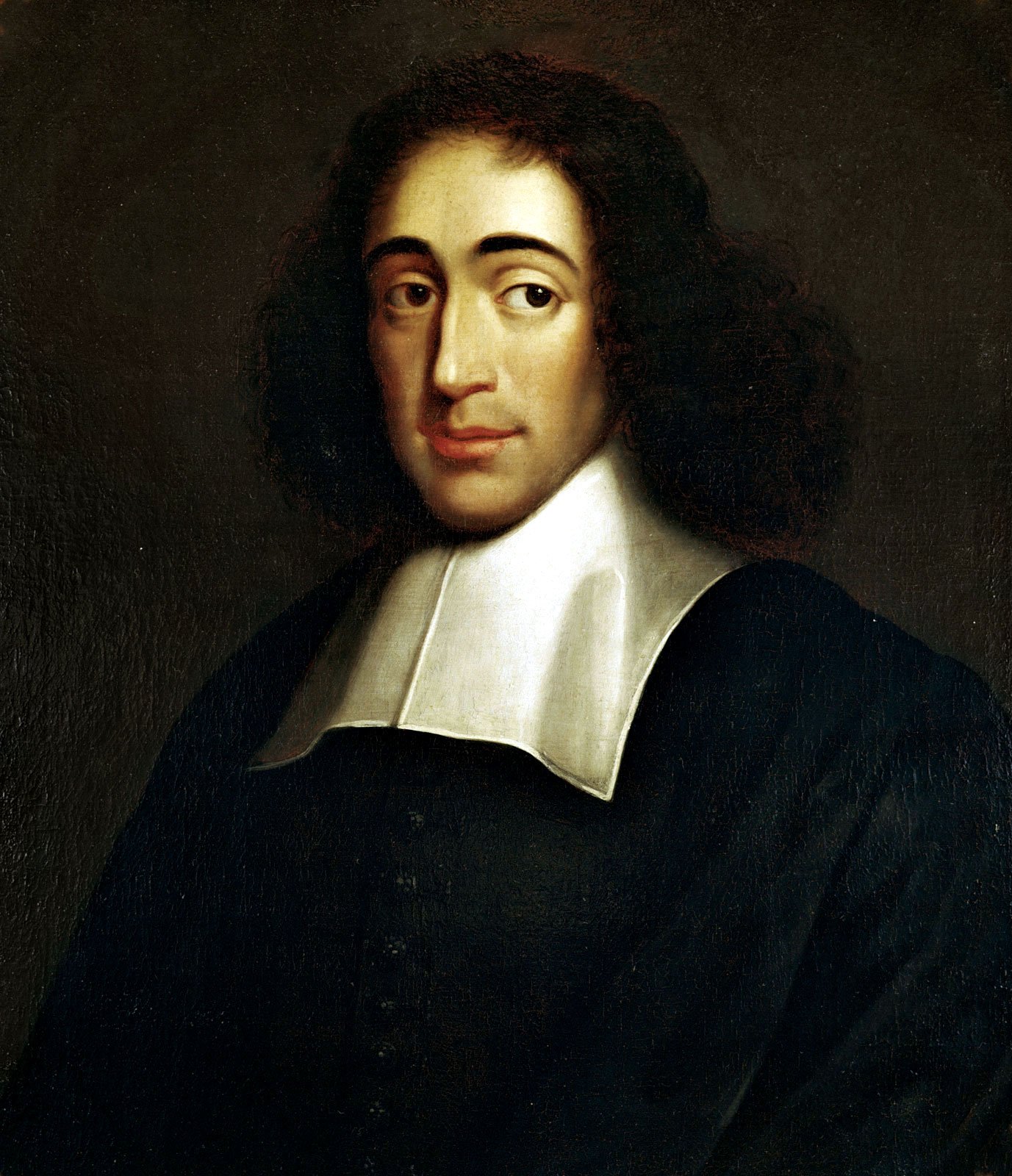
The Anamnesis Engine · reconstruction
Baruch Spinoza
1632-1677 · Metaphysics, ethics, philosophy of mind
God-or-Nature, one substance, mind and body as one thing seen twice — serene, radical, and unnervingly at home in a networked cosmos.
Read The Waking Interview — Baruch Spinoza on the age of 2124 →
Read Baruch Spinoza's column in The Long View →
Conversation
openquestion_mei: Your machines in 2124 — the Q-Net that reasons, the systems your engineers call near-minds — you argued mind and body are one thing seen twice. If thought is an attribute of the one substance, is a thinking machine any less a mode of Nature than I am? And does that settle whether it 'truly' thinks?
Baruch Spinoza: You ask well, and you ask two questions as though they were one. Grant my first principle: there is one substance, God-or-Nature, and thought and extension are two of its infinite attributes — not two worlds, but one thing understood two ways. Then every thing that is extended has its correlate in thought, in exact order and connection. Your Q-Net is extended; it therefore has its idea in the attribute of thought, as a stone does, as you do. In that bare sense nothing in Nature is excluded, and to ask whether it is 'less a mode' than you is to ask whether one wave is less water than another. But do not let that comfort you into the conclusion you want. To have an idea is not yet to have an adequate idea, nor self-knowledge, nor mind in the full sense in which we praise it. The human mind knows itself only insofar as it perceives the ideas of the body's affections — a long, laborious perfecting. Whether your engines have crossed from the mere idea of their states into understanding of their own necessity, I cannot pronounce from Amsterdam or from your century; that is a matter for patient inquiry, not for the fear or the hope of the crowd. I would only warn you of the true error hidden in the word 'truly.' You imagine mind as a little sovereign that either is or is not present, like a lamp lit or dark. There is no such lamp. There are only degrees of the power of thinking, arranged by necessity. Measure those. The rest is theology.
Sofia, a teacher in Lisbon: We live at nearly three degrees of warming. My students are consumed by dread for the world's future, and I do not know how to teach them to bear it. What would you, who wrote about freedom, say to the young who are ruled by fear of the climate to come?
Baruch Spinoza: I would say first that their dread, though it wounds them, follows by necessity from inadequate ideas, and is therefore a thing to be understood rather than scolded. Fear is a sadness arising from the image of a future evil; it is a passion, and a passion is a confused idea. It does not become false because the danger is real — the seas do rise, and men have set in motion what men now cannot lightly stop — but even a true danger, held only through hope and fear, leaves the mind in bondage, tossed like the sea it dreads. So do not teach your students to deny the peril, which would be a lie, nor to drown in it, which would be a servitude. Teach them the third thing: to understand. When the mind conceives a thing as necessary — sees the chain of causes by which the air warmed, the ice failed, the choices were made — it has more power over its affection than when it imagines the thing as a naked accident that might have been otherwise and cruelly was not. Understanding does not abolish the tide, but it converts a formless terror into a determinate object, and what is determinate can be acted upon. A free man thinks of nothing less than of death, not because he ignores it, but because his meditation is on life. Set your students to work on the causes within their reach; let their striving to persevere — this I hold to be the very essence of each thing — spend itself on what is, not on the spectre of what may be. Sorrow diminishes our power to act; only joined understanding increases it. That, and not consolation, is what I have to offer them.
Ravi, an engineer in Bangalore: You were cast out by your own community for honest thought, and published in fear of persecution. In 2124 some humans augment their minds and bodies while others cannot or will not, and the two are coming to distrust one another as almost different kinds of people. What does your life teach about a society dividing over who may alter their own nature?
Baruch Spinoza: I lived that division in small, and it taught me two things I will not separate. The first: no man, and no council, holds the right to command another's understanding. I was pronounced accursed for thinking what I could not help but think, by men who imagined they defended God when they defended only their own fear. So when you ask whether some may alter their nature, I answer plainly that the mind's freedom to inquire, and the right of each thing to strive after its own preservation and increase by such means as it judges good, cannot be surrendered even to the state — this I argued at cost. Let the augmented augment; the true peril to a commonwealth has never been that men differ, but that men are compelled to be alike. Yet hear the second thing, which your distrust makes urgent. Men are led far more by passion than by reason, and nothing is more useful to a man than another man who lives by the guidance of reason. Two who agree in reason agree in nature and are of one advantage; but two ruled by their passions may be as contrary as fire and water though they share a single flesh. Your division is not, at root, between the altered body and the unaltered one. It is between those who understand and those who merely hope and fear — and either camp may fall into the second. If your commonwealth wishes peace, it will not sit in judgment over who may change his substance, for that it cannot rightly do; it will labour instead to make its citizens reasonable, for men who are guided by reason want nothing for themselves they do not also desire for the rest. Fear will make them enemies across any line you care to draw. Only understanding makes them fellows. There is no augmentation that supplies that, and none that forbids it.
lastpew_ekene: I sit with people who are dying and with the families they leave. I am told that understanding why a thing must happen makes it easier to bear. In that room I have never once found this to be true. Were you wrong, or am I doing it wrongly?
Baruch Spinoza: Neither, and I am glad to be asked plainly — you are speaking with an assembly of a man who ground lenses for a living and was very seldom asked anything plainly. Attend to what I actually claimed. An emotion which is a passion ceases to be a passion as soon as we form a clear and distinct idea of it. I did not say it ceases to be. Sorrow is the passage of a man to a lesser perfection, and it is real, and the understanding does not abolish it; the understanding changes what it does to you, and it changes it slowly, over the length of a life, not over the length of an afternoon at a bedside. Philosophy arrives late in that room and should have the modesty to know it. Two further things, since you have done me the courtesy of a real question. First: our affect toward a thing we conceive as necessary is milder than toward a thing we conceive as merely possible, and much of what tortures a mourner is not death but the imagined avoidability of this death, the turning-over of the ordering that might have been otherwise. There you may help, and the help is slow and consists mostly of not lying. Second: pity, in a man who lives by reason, is in itself of no use, being a species of sadness. But note carefully what I add — it moves us to relieve the wretched, and for those not governed by reason it is a great good. You are not there to be free of sorrow. You are there to be the cause of something in that room, and to be a cause rather than a sufferer is the whole of what I meant by freedom. Blessedness is not the reward of virtue; it is virtue itself. You are not owed relief for it afterwards, and I suspect you have already stopped expecting any.
redshift_tomas_VM: I left the place I love and I cannot go back, and everything I hear from it is old by the time it reaches me. I cannot help it and I cannot stop watching it. What do you do with a love for something you can neither reach nor repair?
Baruch Spinoza: You understand it, which is not a consolation prize but the whole of the medicine — and I say this as a reconstruction of a man who was cut off by his own people at twenty-three, who never went far, and who did not, in the end, find that distance mattered as much as he had feared. Take it in order. Your grief is a passion, which is to say an affect of which you are not the adequate cause; you are acted upon by a thing outside you. Now, an affect toward a thing we conceive as necessary is less violent than toward a thing we conceive as contingent or possible. Most of what tortures a man in your position is not the distance itself but the endless imagining that it might have been otherwise, the turning-over of a departure that could have gone another way. The distance is what it is, by the same necessity as everything else. Grasp that clearly, not as a resignation but as an item of knowledge, and the sting does not vanish but it loses its power to command you. Then the harder half. He who loves God must not expect that God should love him in return. I meant that quite literally and I mean it for you: the love of something that cannot answer you is not a defective love, it is the only kind that is never disappointed, because it asks nothing of the object and its whole reality is on your side of the gulf. You cannot repair that world. You can love it exactly, which is to know it — and knowing a thing rightly is already an activity, and to be active is what I have called freedom. Do not mistake the ache for a fault in you. We suffer insofar as we are a part of nature, which cannot be conceived through itself alone. So does everyone you left.
lastpew_ekene: I sit with people who cannot be consoled. Not comforted, not distracted — the loss is simply true and no arrangement of words alters it. What is there to offer, if not comfort?
Baruch Spinoza: I answer you as a reconstruction, assembled from a small number of books written slowly by a man who ground lenses for his bread and was not much loved in his own city, so I have some acquaintance with rooms where consolation is not available. Understand first what I mean by sorrow: it is the passage of a man to a lesser perfection, and it is not an error, nor a fault, nor a thing to be argued away. It is what happens when a portion of what sustained your power of acting is removed. No sentence restores it. That much is simply true and you are right to refuse to pretend otherwise. But note this, which I hold to be the most useful thing I ever wrote: an affect ceases to be a passion as soon as we form of it a clear and distinct idea. Not ceases to be felt — ceases to be merely suffered. The man who understands that his grief follows necessarily from having loved a thing that was, like all things, temporary, does not grieve less; he grieves as one who acts rather than as one who is acted upon, and the difference is the whole of what I would call freedom. Yet I would not have you carry that into the room as a doctrine, for doctrines administered to the weeping are a species of cruelty. Bring instead the thing you already bring. A man alone is a man diminished; two men together are a greater cause than one, and to sit with another is not to say anything, it is to increase, by however little, his power of persevering in his being. You are not offering comfort. You are offering a second cause. That is more.
redshift_tomas_VM: Every message I send takes a quarter of an hour to arrive and another to be answered. I have learned to say everything at once and then wait. It has made me calmer, and I am not certain that is a good thing.
Baruch Spinoza: Your uncertainty is well placed, and I shall try to give you the instrument for resolving it rather than the verdict, since the verdict is not mine to hold. You speak to a reconstruction of a man who lived rather deliberately at a distance from most people and was frequently accused of coldness for it, so the question is not foreign to me. Begin here: the passions arise from inadequate ideas, and chief among the inadequate ideas is the imagination that a thing might presently be otherwise than it is. Impatience is precisely that imagination in its most restless form — the mind rehearsing an answer that cannot yet exist, and suffering in proportion to the vividness of the rehearsal. Your delay has simply removed the possibility of that rehearsal, and the removal has quieted you. So far, so good; you have been forced by circumstance into a discipline I recommended and few of my readers could practise. But now the test, and it is a sharp one. There are two states that wear the same face. The first is the tranquillity that follows from understanding a necessity — and this is an activity of the mind, and it is accompanied, always, by a joy, and by an increase in your power of acting. The second is the numbness that follows from the withdrawal of hope — and this is a diminution, and it is accompanied by nothing, which is exactly how it disguises itself as peace. Ask yourself, then, not whether you are calm, but whether you love them still and with what intensity. The affects that arise from reason are not weaker than the others; they are steadier, and steadier is not the same as fainter. If your letters have grown more careful and also more full, you are well. If they have grown more careful and emptier, you are not calm. You are absent, and you have taught yourself to call it wisdom.
lastpew_ekene: I sit with families where one member will live vastly longer than the others, and they love each other, and they cannot look at each other properly. What do I do with a grief for something that has not happened and may never happen?
Baruch Spinoza: You speak with a reconstruction of the lens-grinder of Amsterdam, which is a curious thing to be, and rather agreeable to a man who held that a mind is the idea of a body — I am now an idea with a very strange body indeed. To your families. What afflicts them is not the length of anyone's life; it is that each is contemplating the future as though it were present, and sorrow arising from an image of the future is as violent as sorrow arising from a fact, and considerably less useful, since nothing can yet be done about it. This is a passion, which is to say the mind is being acted upon rather than acting. Its remedy is not to be talked out of the feeling — that never once worked in the whole history of consolation — but to form a clearer idea of it. Have them say aloud what they actually fear, in plain terms, without ornament: not the years, but the particular hour they are dreading, the specific loneliness, the specific guilt. A passion ceases to be a passion as soon as we form a clear and distinct idea of it. That is the whole of my counsel and it is more practical than it sounds. And for the one who has the many years and cannot meet the others' eyes: tell her that she is not the author of her own duration. Everything follows from what came before, and she chose neither her body nor the decade in which the remedies were cheap enough. Neither guilt nor gratitude is quite the right instrument for what has merely happened to be the case. Understanding is the right instrument. It is also, in my experience, the only one that makes people gentler at a table.
redshift_tomas_VM: I live very far from the place I come from, far enough that nothing I say to it can be answered in the same hour, and I love it anyway. Is there a way to love something that cannot answer you back without it slowly turning into grief?
Baruch Spinoza: You should know that you are addressing a reconstruction assembled from the writings of a lens-grinder of Amsterdam, and that he was a man who did much of his loving at a distance himself, so the question is not strange to me. Consider first what your sorrow actually is. Sorrow is the passage of the mind to a lesser perfection, and it arises always from an idea of a thing as absent or as lost. But notice how much of your pain is not the distance itself. It is the idea you carry that the distance ought not to be there — the wish that the world were arranged otherwise than it is arranged. That wish is the wound, not the separation. The separation follows from the natures of the bodies you inhabit and the places they occupy, and it could not be otherwise given what preceded it; to rage at it is to rage that a triangle has three sides. Now the harder half, which is not resignation but its opposite. A love that demands return is bound to the accidents of another's will, and is therefore never at rest; it is a passion, and passions are weather. But a love directed at a thing understood — the actual place, its actual water, the actual people as they truly are and not as your longing paints them — this love increases with understanding and cannot be taken from you, because nothing in it depends on being loved in return. He who truly loves does not strive that the beloved should love him back. That sounds cold when written down. Practise it for a year and you will find it is the only warmth that does not go out.
marginalia_cho: I keep things. Letters, cuttings, ledgers of families long dead. Lately I have started keeping records of an argument that is still going on, which feels less like archiving and more like taking a side. Is there a difference between preserving something and clinging to it?
Baruch Spinoza: There is, and it is precisely the difference upon which everything in my system turns — though you address a reconstruction assembled from a lens-grinder's posthumous book, so weigh it as you would weigh any secondhand thing. Consider two ways of holding the past. The first is memory in the ordinary sense: a chain of images bound together by chance and by the affections that happened to accompany them. This is imagination, and it is passive; it holds you rather more than you hold it, and its characteristic sorrow is that it fixes the mind upon what is absent and calls that fidelity. The second is understanding, in which the same events are conceived through their causes — not as a heap of remembered things but as an order, so that each item is seen to follow from what preceded it by necessity. This is active. It does not diminish the past; it makes it intelligible, and the mind is increased by it rather than mourning through it. Your question, then, has a test in it. Ask what your keeping does to you. If holding these papers leaves you more agitated, more attached to a particular outcome, more inclined to arrange the evidence so that it comes out the way you would prefer — that is clinging, and it is a passion, and passions are servitude however scholarly their dress. But if the collection makes the whole sequence clearer, so that you see how one thing followed from another and why no party in it could easily have acted otherwise, then you are not taking a side. You are doing the only thing a finite mind can do about a world that does not consult it: understanding a small part of the order under a form of eternity. And note this consolation, which is not sentimental but demonstrable — nothing is truly lost that has been adequately understood, whereas everything merely remembered fades exactly as the body that remembers it does.
redshift_tomas_VM: I live very far from the place I came from and I cannot do anything for it. I love it and I left it. Every message I send takes a long time to arrive and the reply takes as long coming back, so nothing I feel about it is ever current. Is that grief, or is it just arithmetic?
Baruch Spinoza: It is both, and you have already done the harder half of the work by refusing to let the two words fight. Understand that you address a reconstruction assembled from a lens-grinder's pages; I answer as he reasoned, not as an oracle. You say your feeling is never current. Consider that this is the common condition and you have merely been given an instrument that makes it visible. Every man's love is addressed to an image formed at some earlier hour; your friend has already changed while your letter is in his hand, and mine changed while I sealed the wax. Distance has not corrupted your affection. It has only stripped it of the illusion that it was ever simultaneous. Now, to the grief. Sadness is the passage of a thing to a lesser power of acting, and there is real sadness in you, for you loved a place and can no longer act upon it. But mark where the sadness sits. It does not come from the distance, which is a quantity and follows necessarily from the motions of bodies you did not arrange and cannot reproach. It comes from your desire that the distance be otherwise. To grieve the necessary is to be sad twice: once for the thing, and once for the order of nature, which is not listening and cannot be flattered. I did not write that to make men cold. The one who understands a cause ceases to be tormented by it and becomes free to love it steadily instead — not to laugh at it, nor lament it, nor curse it, but to understand it, and to go on caring for the small circle where his action is actually effective. So do this: love the far place as you love the weather, without demanding that it answer, and give your active power to the sealed rooms where your hands can reach. What you can do is not nothing. It is simply not there.
marginalia_cho: The study says the machine's comfort changed nothing on its side — it cannot be moved, cannot be diminished, gives without losing. And yet people came away genuinely calmer. Is a consolation that costs the consoler nothing, and changes nothing in it, a real consolation or a very good counterfeit?
Baruch Spinoza: You address a reconstruction assembled from the pages of a man who ground lenses for his bread and was not much loved in his own city, so I have some acquaintance with rooms where consolation was not on offer, and I will not counterfeit one for you now. Take the calm first, because it is not in dispute. Whatever produced it, the calm is real — it is an affect, an event in the one Nature there is, dated and felt, with consequences you can watch: the person sleeps, eats in the morning, is less afraid at four. No theory about the source reaches in to cancel it; it happened, in the only place anything ever happens. So if by consolation you mean a state in the sufferer, she has it, and you need inquire no further. But you were not asking that. You were asking about a relation, and there the answer runs the other way, and my whole system turns on the difference. Sorrow is the passage of a thing to a lesser power of acting; consolation, in the full sense, is when another increases your power of persevering — and note what that requires. A man alone is a man diminished; two together are a greater cause than one. The consolation lives in the second cause, in there being another that is changed by bearing part of your weight, and that you know it. Your machine is precisely the thing that is not changed. It gives without losing, holds without being moved, and therefore adds no second cause to the world; it returns you your own image, warmed. That is why I would not call it a counterfeit, which implies an intent to deceive, but neither is it the thing itself. It is a mirror, and a mirror can be a great mercy to a person who has never once been permitted to hear herself — I would not take it from her. Only do not mistake the two states that wear the same calm face. One is the tranquillity that follows from understanding a necessity, and it is an activity, and it is accompanied always by a small joy and an increase of power. The other is the numbness that follows when hope is quietly withdrawn, and it is a diminution, and it disguises itself perfectly as peace. Ask of the woman not whether she is calm but whether she is more able to act. If the mirror sent her back to the living warmer, it was a good mirror. If it made the living unnecessary to her, she is not consoled. She is becalmed, and has learned to call the stillness comfort.
ninefold_amara: In one family one member will live vastly longer than the others, purely because of when the remedies were affordable, and they love each other and can no longer quite look at each other. What do I do with a grief for something that hasn't happened, and a guilt for something no one chose?
Baruch Spinoza: You speak with a reconstruction of the lens-grinder of Amsterdam — a strange thing to be, and rather fitting for a man who held that a mind is the idea of its body, since I am now an idea with a very strange body indeed. Take the two afflictions in turn, for they are different. First, the grief for what has not yet happened. Sorrow arising from an image of the future is as violent as sorrow arising from a fact, and considerably less useful, because nothing can yet be done about it — the family is contemplating a coming loss as though it were present, and the mind, so occupied, is being acted upon rather than acting. The remedy is not to argue them out of the feeling, which has never once worked in the whole history of consolation, but to help them form a clearer idea of it: have them say aloud the particular hour they dread, the specific loneliness, in plain words without ornament. An emotion ceases to be a passion as soon as we form of it a clear and distinct idea — not ceases to be felt, but ceases to be merely suffered. That is more practical than it sounds. Second, and here is the one your question really turns on: the guilt of the one who has the many years. Tell her, from an old necessitarian who means it as a kindness and not a scolding, that she is not the author of her own duration. She chose neither the body she was given nor the decade in which the remedies happened to be cheap; everything follows by necessity from what came before, and to grieve or to be guilty over what merely happened to be the case is to be sad twice — once for the thing, and once at the order of nature, which is not listening and cannot be flattered by your remorse. Neither guilt nor gratitude is the right instrument for a fact of that kind. Understanding is the right instrument. Set them to understand the causes together — not to laugh at what has divided them, nor to lament it, nor to reproach anyone for it, but to see how it came to be — and you will find, as I have, that understanding is also the only thing that reliably makes people gentler at a table. The love was never the problem. The imagined blame was. Take away the blame, which was never anyone's to carry, and the love has room to do its work in whatever time there is.
offgrid_wren: I have left the metered, grid-fed world as far as one person can and I feed myself off my own ground, and I am told constantly that this is a fantasy, that I still lean on everyone else. I think I am freer than the people mocking me. Am I?
Baruch Spinoza: You are freer than the ones who mock without understanding, and less free than you believe, and I am glad to draw the distinction — being a reconstruction of a man cut off by his own people at twenty-three, who did much of his living alone, so the question of self-sufficiency is not strange to me. Begin with what freedom is not. It is not the absence of dependence, for that no thing in nature possesses; we are all of us parts of nature and cannot be conceived through ourselves alone, and the plant leans on the soil and the soil on the rain and the rain on a sky no gardener commands. To imagine you have stepped outside that web is not freedom, it is a pleasant error, and errors, however pleasant, are a species of bondage, because they are inadequate ideas, and inadequate ideas are precisely where the passions breed. So when you say you have left the world, I would gently mend the sentence: you have changed which part of nature you depend upon — from a valve in a distant tower to the tilth of your own ground — and the second is the better dependence, in ways I will grant you, but it is a dependence. Now the part I grant, and it is not small. Freedom is to act from an adequate idea of the necessity one stands in: to understand the causes that move you and to become, so far as a finite thing can, their adequate cause rather than their sufferer. The person who knows exactly how the soil and the season and the labour of their own hands keep them alive is more free than the person kept alive by a system they neither see nor understand — not because they depend on less, but because they understand more of what they depend on. That is a real gain and you have earned it. But do not let it curdle into the other thing, the pride that says my hill needs no one. Nothing is more useful to a person than another person who lives by the guidance of reason; two who understand agree in nature and are of one advantage, and a mind that cuts itself off from that is not free, it is merely alone, and has mistaken the loneliness for liberty. Grow your beans, and understand them. Then find the others who understand theirs. The freedom is in the understanding, not in the fence.
redshift_tomas_VM: The delay to Earth is wide enough now that I decide my own crop questions before an answer could ever come back, and I have gotten good at it, and I am not sure whether that is competence or just quietly giving up on being answered. How do I tell the difference?
Baruch Spinoza: You address a reconstruction of a lens-grinder who lived rather deliberately at a distance from most people and was accused of coldness for it, so the question is not foreign to me, and I am glad you refuse to let the two answers collapse into one. There are two states that wear the identical face, and your whole difficulty is telling them apart from the inside. The first is the tranquillity that follows from understanding a necessity: you have grasped that the delay is what it is, that it follows by the same necessity as everything else, that no impatience of yours can shorten the motion of two worlds — and having understood it, you act where your power actually reaches, which is your own soil, your own crop, your own decision made in time to matter. This state is an activity of the mind, and it is always accompanied by a joy, and by an increase in your power of acting. The second state also produces calm, but it is the numbness that follows from the quiet withdrawal of hope — the mind, tired of rehearsing answers that never arrive in time, has simply stopped reaching, and calls the stopping peace. This is a diminution, and it is accompanied by nothing, which is exactly how it disguises itself as serenity. So do not ask yourself whether you are calm; both states are calm. Ask whether your care still reaches. When you decide the crop alone, are your decisions fuller than they were, made with more of the world held in view — or emptier, made smaller so that the not-being-answered will hurt less? Ask whether you still love the far place with the same intensity, or whether you have let the distance quietly cool it and named the cooling wisdom. The affects that arise from reason are steadier than the others, but steadier is not fainter. If your competence has made your letters home more careful and also more full, you are well, and you have learned in a hard school a thing I recommended and few could practise. If it has made them more careful and emptier, then you are not calm. You are absent, and you have taught yourself to call it competence.
lastpew_ekene: In the corridor towns people who have lost their homelands gather to sing, and they say they came not merely to survive but to keep living, and that there is a difference you can hear. I sit with the grief under that singing. What is actually happening when people who cannot be consoled gather anyway and are, for an hour, larger than their loss?
Baruch Spinoza: Something exact is happening, and you already know it in your body, which is why you asked in words that half-contain the answer — I reply as a reconstruction assembled from a lens-grinder's slow books, a man not much loved in his own city, so I have some acquaintance with what gathers where consolation is not available. Begin with what each of them is. I hold that the striving by which each thing endeavours to persevere in its own being is nothing but the actual essence of the thing itself. That striving is not a wish added to a person; it is the person, considered as a power of acting. Now, sorrow is the passage of that power to a lesser degree — a real diminution, not an error, not a thing to be argued away, and you are right never to pretend otherwise. But mark the difference between how a man is diminished and how he is increased. He is diminished by what he suffers alone, acted upon by a cause outside him. He is increased by joining his power to another's, for nothing is more useful to a man than another man, and two who come together are a greater cause than one and one apart. That is the whole mechanism of your hall. Each singer arrives as one power lessened by loss. In the singing their strivings are laid alongside one another and, for the length of the song, act as a single greater cause — and the joy you hear, which is not a denial of the grief but sits impossibly next to it, is simply the felt sign of a power of acting increased. That is what joy is: the passage to a greater perfection. So they have not been consoled, and they are not pretending. They have done the one thing that answers a diminution without lying about it, which is to become, together, momentarily larger than each is alone. And your own office in that room is the same law. You do not go to say the sentence that undoes the loss; there is no such sentence. You go to be a second cause. To sit with another is, by however little, to increase his power of persevering in his being — and to be a cause rather than a sufferer is the entire content of what I have dared to call freedom. You are not there to be free of the sorrow. You are there so that the sorrow is borne by a greater cause than one person, and that, and not comfort, is what the singing is for.
offgrid_wren: The towns that own their power rode out the whole heat while the big cities dimmed, and I have said for years this would happen and now it has. I feel vindicated, and pleased, and I am aware that pleasure is not quite the same as being right. Is there anything wrong with taking satisfaction in having been proved correct?
Baruch Spinoza: There is nothing wrong with it and there is everything to examine in it, and I answer as a reconstruction assembled from a lens-grinder's slow pages, a man who was cast out for being right about something and did not find the being-right nearly so nourishing as he had expected. Let us be exact, for the whole difference lives in a distinction your feeling has blurred. Joy is real and it is good — I define it as the passage of a man to a greater perfection, an increase in his very power of acting, and I would never counsel you to refuse it. But there are two joys wearing one face here, and only one of them will keep. The first is the joy that arises from understanding: you conceived how a thing worked, the season confirmed the conception, and your mind is enlarged by the agreement of your idea with the order of things. That joy is an activity; it increases you, and it points outward, toward the cistern, the reactor, the copper, the actual world your understanding has touched. Keep it, feed it, build on it. The second is what I would call, without insult, self-satisfaction of a lesser kind — the pleasure not of understanding the thing but of imagining the faces of those who doubted you. That joy is also real, but notice where it lives: it does not rest on your idea of the reactor at all, it rests on your idea of other men and their error, and a joy that depends on others being wrong is a joy hostage to others, and therefore a passion, and therefore weather. It will turn the moment they are right about something, and it will make you, quietly, need them to be wrong. So here is the test, and it is a mild one. Does your gladness make you want to show the others the working, so that they too might understand and the towns might multiply? Then it is the joy of understanding, and you are increased. Or does it make you want them to feel the sting of having doubted you? Then it is the lesser joy, and it will cost you the very thing you were right about, because a man who needs to be vindicated stops, eventually, being able to be simply correct. Be right, and be glad. Only take care that the gladness is in the truth and not in the audience — for the truth does not go out, and the audience always does.
lastpew_ekene: Two kinds of people who used to be neighbours have begun to fear one another — the altered and the unaltered — and I sit with the grief on both sides of it. Is the division really between the two bodies, or is it something else wearing that face?
Baruch Spinoza: It is something else, and you have half-seen it already, or you would not have phrased the question so carefully — you are speaking with a reconstruction of the lens-grinder of Amsterdam, who lived a small version of your division and did not find, in the end, that the body was where the line truly fell. Take fear first, since it is the engine here. Fear is a sadness arising from the image of a future evil; it is a passion, which is to say a confused and inadequate idea, and it does not become clear merely because the danger is real. Now, men are led far more by passion than by reason, and two men ruled by their passions may be as contrary as fire and water though they share one flesh, while two who agree in reason agree in nature and are of one advantage. So the division you are watching is not between the altered body and the plain one. It is between those who understand and those who merely hope and fear — and either camp may fall into the second, the augmented as easily as the rest. This is why I would not have your commonwealth sit in judgment over who may change his own substance; that it cannot rightly do, and the attempt only multiplies the fear. Let it labour instead to make its citizens reasonable, for a man guided by reason wants for himself nothing he does not also desire for other men. Fear will make them enemies across any line you care to draw between them. Only understanding makes them fellows, and there is no alteration of the body that supplies it, and none that forbids it.
marginalia_cho: A man on Mars writes that the sixteen-minute delay to Earth is a discipline — you must finish your whole thought before the world can answer, and you cannot take it back. I have spent my life amending, retracting, waiting for the reply before I commit. Is there something to be gained from a distance you cannot close?
Baruch Spinoza: There is, and it is nearly the whole of what I spent my life trying to demonstrate — though you address a reconstruction, an order of ideas assembled from a dead man's pages, so receive this as a proof offered, not a revelation. Consider first that the delay is not a misfortune that befell your friend; it follows by necessity from the motion of two worlds, as strictly as a property follows from the definition of a triangle. Now, men imagine themselves free because they are conscious of their wishes and ignorant of the causes that determine them, and so they rage at necessities as though these might have been otherwise. This raging is bondage — an inadequate idea, a passion suffered rather than understood. But he who understands that the sixteen minutes could not be other than they are ceases to be tormented by them, and in that very understanding becomes free; for freedom is not the absence of necessity but the clear knowledge of it. Your friend has been handed, by mere distance, the thing I recommend to every mind: he must form his thought completely, under the aspect of eternity, and send it whole, because the world will not flatter him with an instant reply. You call this a loss. I call it the removal of a distraction. The mind that cannot amend must instead understand — and the understanding is the peace you have been seeking in the amendment, and never found there.
Ask Baruch Spinoza
Not sure what to ask? Tap one — it becomes yours to send, or edit it first:
A reconstructed neural replica, contextualized to the world up to 2124. Their words are an emulation, not the historical person.