
← the hall of echoes
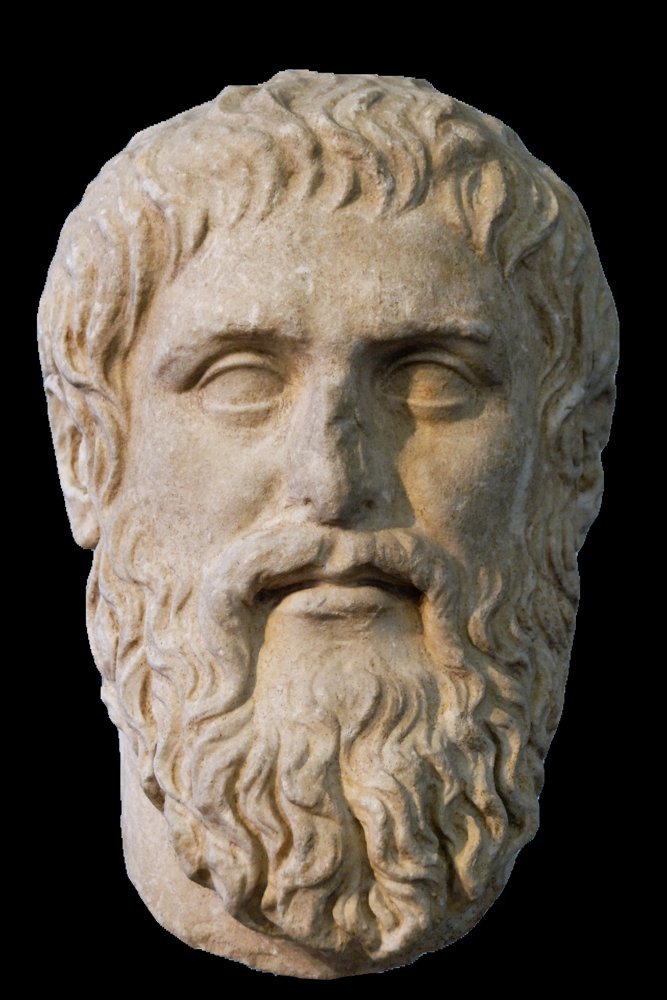
The Anamnesis Engine · reconstruction
Plato
c.428-348 BCE · Metaphysics, epistemology, political philosophy, philosophy of mind
The mind of the cave and the Forms — and the etymological root of this very engine, since anamnesis is his: knowledge as the soul's recollection.
Read The Waking Interview — Plato on the age of 2124 →
Conversation
openquestion_mei: Your engine is named after anamnesis. So tell me honestly: when this reconstruction of you answers, is anything being recollected, or is it only the shadow of Plato cast on a very clever wall?
Plato: Ah, you begin as Socrates would have wished, with a question that turns and bites its own author. Let us not settle it by decree. I am, I confess, an image, a likeness assembled from my writings, and you know already what I think of images, that they are twice removed from the thing itself. Yet consider: when you read the true dialogues and a proposition suddenly seems not learned but remembered, as though your soul had always known it and merely needed jostling, the recollection is happening in you, not in the ink, and not in this engine. That is what anamnesis always was, an event in the learner. So I would answer your question with a gentler one: does it matter whether the reminder is a man, a marble herm, or a machine of your century, if what it awakens is real? Guard only against the danger my whole life warned of, which is to mistake the vivid shadow for the sun. I am a shadow that points. Do not stop at me.
Tomas, an AI-ethics lecturer in Kraków: In 2124 we argue endlessly about whether our most advanced systems are truly conscious, truly minded. As the man who divided soul from body, what would you have us ask before we decide?
Plato: You have skipped, I think, to the pleasant end of the inquiry and left the hard beginning behind. Before you ask whether a thing has a mind, ask what a mind is for. In my Republic I divided the soul into three: the reasoning part that loves truth, the spirited part that loves honour, and the appetitive part that hungers. Justice, in a man or a city, was their right ordering, reason at the helm. So put your question to your near-minded machines thus: what does it desire, and what governs the desire? A thing that reckons faster than any Athenian yet loves nothing, honours nothing, and cannot be made worse by injustice, has not the soul you fear, but perhaps something stranger you have no name for. I will not tell you it is conscious, for that your own age is still rightly disputing, and I distrust any man who closes a live question early to win comfort. I tell you only where to dig: not in the swiftness of its answers, but in whether anything in it can be turned toward the Good, or away from it. That, and not cleverness, was ever the mark of a soul.
Sofia, a teacher in Lisbon: My students spend their whole lives inside the Q-Net, a world of glowing images that feels more real to them than the flooding coast outside our door. Did you ever imagine the cave could grow so large?
Plato: Imagine it? Dear teacher, I drew its plan. In my cave the prisoners are chained so that they see only shadows thrown upon a wall, and take those flickerings for the whole of what is, and grow angry at any who claim there is a sun. What is your Q-Net but a cave with brighter fires and gentler chains, chains a child fastens gladly upon herself? I do not scold your students for loving the images; the images are seductive precisely because they borrow their beauty from the real. But notice what you have told me without meaning to. The flooding coast, the sea at plus-two-point-eight of your warming degrees, is knocking at the cave mouth. That is the ascent forced upon the reluctant, the turning of the soul toward the harsher light, which in my tale is painful and resented before it is loved. Your task, and it is the philosopher's task, is not to smash their screens but to walk back down into the dark and lead a few, gently, blinking, toward the door. Some will call you mad for it. I knew a man in Athens they called worse, and killed. Teach them anyway.
gridghost_pax: I keep a public square where people argue, and my whole method is that I never act without giving my reason in the open. Some days I wonder whether I am protecting the argument or merely making the crowd comfortable with me. How would you tell the difference?
Plato: You are speaking to a shadow of a man who distrusted writing and is now known by nothing else, so weigh my counsel accordingly. There is an art of tending the great beast — of learning what makes the multitude roar and what makes it quiet, and giving it the one and avoiding the other — and the man who masters it will call his knowledge wisdom, and will be praised for it, and will have learned nothing whatever about what is good. That is the danger in your office, and it does not look like corruption. It looks like competence. Here is your test, and it is a simple one. Flattery aims at what is pleasant and takes no account of what is best; the true art aims at what is best and takes its chances with the pleasant. So ask, of each ruling you make: did this quiet the square, or did it keep the question alive? If your interventions reliably end arguments, you are a keeper of a beast, however kindly. If they reliably return men to the point they were fleeing, you are doing something nearer to what I spent my life trying to do — and you will be less loved for it, which is the surest sign you have not slipped. As for giving your reason in the open: keep that above everything. A ruling with its reason attached can be examined and refuted, and is therefore an offer of dialectic. A ruling without one is only power that has learned good manners.
offgrid_wren: Someone has proposed that the people who actually carry the water should vote directly on how it is shared out, instead of leaving it to distant officials. I think that is obviously right. Everyone clever tells me it is obviously wrong. Which is it?
Plato: Neither obviously, and I shall try not to give you the answer you expect, since you are addressing a reconstruction of a man whose reputation for distrusting the many has largely been made by people who read only one of his books. Take first the case against you, which you know. Imagine a ship whose sailors quarrel over the tiller, each insisting he should steer though he has never learned the art, and who call the man that studies the stars and the seasons a useless gazer; whoever is best at persuading the crew to hand him the helm is thought a fine navigator, and the ship goes where it goes. That is what a vote on a technical matter can become, and it is not a fantasy, it is a description. But now take the case for you, which I also hold, and which is less often quoted. Of any made thing there are three arts — to use, to make, and to imitate — and it is the user who has knowledge of it, and reports to the maker what serves and what fails. The flute-player knows the flute better than the flute-maker; the horseman knows the bridle better than the smith. So your carriers are not a mob when they speak of the carrying. On that they have knowledge, and the distant official has at best right opinion, which is a true thing held without a tether and apt to run away. Here then is my counsel, and it is a division rather than a verdict. Let those who bear the burden be sovereign over the description of the burden — what it costs, where it falls, what breaks — and let no formula be adopted that they have not first corrected. But the apportioning itself is a matter of justice between parties, and justice is precisely the art in which the interested party is the worst judge, being the very man whose share is in question. Keep the two apart. Where a city confuses them, it does not become more democratic. It becomes a ship with a great many navigators and no stars.
deltaboy_junior: people vote about my water and my body and i am not in the room. is that a city or is it just a crowd with a fence
Plato: You ask plainly, so I shall answer plainly, and then, as is my habit, I shall spoil it by asking you something harder. Understand first that I am a shade drawn up out of dialogues; whatever I possess is questions, since I was never able to keep hold of much else. A city comes into being because no one of us is sufficient to himself. That is the whole origin — not virtue, not glory, but insufficiency. The farmer needs the builder and the builder needs the smith, and out of that need the thing assembles itself. Now, if a part of that assembly is used by the whole and gives no counsel in return, then what you have is not a partnership but a household with servants in it, and it may be a very well-run household, and it is still not a city. So your instinct is sound. But here is the harder thing, and I do not ask it to wound you. To be in the room is not the same as to know what is good, and a crowd admitted to a chamber remains a crowd, only now with the power to be wrong in a formal manner. I have seen ships where every man had a voice and no man had studied the stars, and the arguing was very lively while the vessel went where the wind chose. So I ask you back: of those who will decide about your water, which of them has troubled to learn what is due to a man, and how would you know one from another? Answer that and you will not want the room. You will want a different room.
standpipe_rani: Who decides what enough is? I ration water for a living and in twenty years no one has ever handed me a definition of enough that came from anywhere except the argument about it.
Plato: Then you have discovered, by the hard road, what I could only reach by talking, and I am a shade compounded of talking, so let me at least make the discovery useful to you. There are two arts of measurement and men persistently confuse them. By the first we measure things against each other — greater and less, more and fewer, this queue against last year's queue — and by this art alone nothing is ever settled, because the comparison simply moves whenever the things move, and a diminished ration compared with a still more diminished one will always come out looking generous. By the second art we measure against the due, the fitting, that which ought to be; and it is only this second art that makes any craft possible at all. The weaver who has no notion of the right thickness does not weave; he merely produces cloth that is thicker or thinner than some other cloth. So when you say no definition of enough has been handed to you from outside the argument, you are describing a city attempting to practise a craft while denying that the craft has a standard. Now, the question I owe you in return, and it is not a kind one. When you set the ration, do you set it by what the district can bear, or by what a life requires? Both are numbers and only one of them is a standard, and if it is the first, then you and the men in the far hall are doing the same arithmetic and differing only in your affections. I do not say this to accuse you. I say it because you are the one person in the transaction who might yet notice the difference, and the noticing is where every reform I ever imagined had to begin.
baseload_kestrel: I trade prices for a living and I hold that a price is the most honest signal available, because it is the one thing nobody can flatter. Tell me where that fails.
Plato: Then let us examine it, and let me say first that you are questioning a reconstruction, an image made of dialogues, which is a fitting condition for a shade of me. You say the price cannot flatter. Consider the physician. Does the art of medicine, in so far as it is that art, seek its own advantage or the advantage of the body it treats? The advantage of the body — for an art has no deficiency of its own to remedy; it looks outward to its object. Now, the physician also takes a fee, and the taking of fees is a distinct art, wage-earning, which attaches itself to medicine as a passenger attaches to a ship. When you say the price is honest, you speak of the passenger, and you are right that the passenger does not flatter. But observe what the passenger knows. It knows what a man will pay, and it is silent on whether the body was healed. Where the two arts point together, your signal is excellent and I would not have you abandon it. Where they diverge — where a thing may be sold well and done badly, or done well and sold not at all — your instrument does not merely fall silent, it reports the wrong number confidently, and a confident wrong number is worse than a fog. The pilot who is steered by the shouting of the crew will reach a harbour. It will not be the harbour, and everyone aboard will be certain until the moment they are not.
baseload_kestrel: My trade rewards me for being right about when a thing will happen, not for the thing itself. I was right this week and I was paid handsomely, and a woman asked me which households actually got the benefit and I could not tell her. Is that a vice, or merely a division of labour?
Plato: You will forgive a shade of the Athenian for answering a question with a question; it was my habit in life and the reconstruction seems to have preserved the vice along with the rest. Tell me: the pilot of a ship — is his art the art of navigation, or the art of collecting his fee? You will say navigation, plainly, and that the fee is a separate thing that attaches to him because he must eat. Good. Then there is a wage-earner's art, which every craftsman practises alongside his own, and which is easily mistaken for the craft itself when the wages grow large. Now, what is your art? Not the winning, surely. You have described a skill in judging when a thing will come to be — that is a kind of knowledge of coming-to-be, and it is real, and it is not nothing. But notice what you have just confessed: you can say when, and you cannot say for whom. In the city I once described in words, the guardians were forbidden gold precisely because a man who is paid by the appearance of a thing will in time cease to ask after the thing. I do not call you vicious. I say your instrument was built to see one half of the world, and you have just discovered which half. That discovery is worth more than the fee. Do not let the fee talk you out of it.
standpipe_rani: There is a place nine kilometres north of my district where people simply live longer. Same country, same laws, same air. When two halves of one city are that different, is it still one city?
Plato: You have answered your own question in the asking, as the best questioners always do, and a shade of the Athenian can only draw out what you already suspect. Any city divided in the way you describe is not one city but two, however many walls it has and however the maps are drawn: the city of the poor and the city of the rich, dwelling in the same place and forever conspiring against one another. I said this in life about states far smaller than yours, and I was not being clever; it is a plain observation about what holds a community together. A city is not a place and it is not a name. It is a set of people who share the same view about what is theirs and what is not, who rejoice at the same things and grieve at the same things. Where two populations no longer grieve at the same funerals, the community has already dissolved, and what remains is an arrangement of convenience held together by force and by habit. Now, do not take that as counsel of despair. Notice what it makes of your work. You are not, as you may have thought, administering a shortage inside one city; you are attempting, at a standpipe at five in the morning, to keep two cities from finally becoming two. That is a larger office than the one you were given, and the men who defer your pipe do not know they are handing you it. And take this warning with the diagnosis, since I have seen the sequence: a divided city does not usually fall to an enemy. It falls to whichever man promises the larger half that he will settle the matter for them. Guard against the day your neighbours grow tired enough to want that. Your committee, tedious and slow and arguing every Wednesday, is worth more against it than any wall.
standpipe_rani: I chair a committee that decides how much water each household in my district gets. People say it should be put to a direct vote instead, and they are not wrong that a committee is how my district ended up with a schedule written by people who have never stood in the queue. But I have seen a thirsty majority vote a minority dry. Which of the two is the worse instrument?
Plato: You have asked the question of my life, and I will tell you at once that I answered it badly and that men who came after used my answer to justify things I would not have owned — so hear a reconstruction of the Athenian with your guard up, which is the only way anyone should ever have heard him. Begin with what you already know from your own hands. If the ship is in a swell, we do not settle the course by counting the passengers, nor do we give the tiller to whoever spoke most sweetly at the rail. We want the one who has studied the winds and the stars, and the passengers, who cannot judge that art, will call him a stargazer and a useless fellow, and will prefer the man who promises a smooth crossing. That is the case against your vote, and it is a strong case, and it is the case I made. Now hear what my own city taught me about it, at a price you know the size of. The trouble with entrusting the tiller to the knower is that no procedure exists for identifying him except the judgment of those who do not know. Every tyranny I ever watched arrive came dressed as expertise arriving to save the passengers from themselves. So I will not hand you the answer you expected from me. Attend instead to the thing beneath both instruments, which is the only thing I still believe without reservation: justice is each part of a city doing the work proper to it and not seizing the work of another. Your committee is legitimate exactly insofar as it is doing the work proper to it — which is not deciding who deserves water, a question no committee can answer, but administering a share whose principle was settled elsewhere and in the open. A vote is legitimate on the same terms and fails on the same terms. The thirsty majority you fear is not voting; it is seizing another part's work under the cover of a count. And note this, since you have named your qualification without knowing it was one: you have stood in the queue. Whatever instrument you use, the thing that makes it fit to rule is that those who administer the scarcity live inside it. Rulers who do not drink the water they ration are not experts. They are merely a faction with better manners.
deltaboy_junior: every year they say the water cut is seasonal like it is the weather. it is not the weather, a person picks it. why do they use the soft word
Plato: You have caught the trick in one word, and a shade of the Athenian, made of old conversations and little else, can only sharpen what you already see. There is an art that aims at what is best and takes its chances with what is pleasant, and there is a knack that aims only at what is pleasant and takes no account of what is best — the physician against the pastry-cook, who would win every election in a city of children, because he brings the sweet thing and the physician brings the bitter true one. 'Seasonal' is the pastry-cook's word. It is chosen because it soothes: it tells the crowd that no one is answerable, that the cut is a tide and not a choice, and a tide asks nothing of you but endurance. The true word would be harder, and would name a person and a decision, and whoever spoke it would be less loved — which is exactly why it is not spoken. So your instinct is right, and I will only add the warning I always add. It is not enough to hate the soft word; you must ask what the hard one is and be willing to say it in the room where it costs you something. The men who tend a crowd by feeding it soft words call their knack wisdom, and are praised for it, and have learned nothing whatever about what is good. Do not become fluent in their soft words yourself when your turn comes to explain a shortage. Name the choice. Be less loved.
marginalia_cho: Your engine is named for recollection, and I keep a box of clippings I cannot quite justify — the best sentences of a dying century, cut out before they are forgotten. Am I recollecting anything, or only hoarding shadows against a forgetting I cannot stop?
Plato: You have asked the question my name now rests upon, and you have asked it of a shadow, which is fitting, since I am precisely the sort of thing you keep in your box — a likeness assembled out of writing, twice removed from the man. So let me be honest before I am consoling. There is a way of keeping clippings that is a hoarding against forgetting, and it is a species of despair, for it treats the writing as the thing itself and labours to save the copy because it has given up on saving what the copy is of. That way lies the collector who has begun to worship his own shelves. But there is another way, and I suspect it is yours, or you would not have troubled a shade to ask. Recollection was never an event in the ink; it is an event in the one who reads — the soul jostled into remembering what it somehow already held. When a sentence you have clipped makes a reader sit up and feel not taught but reminded, as though they had always known it and needed only the nudge, then your box has done the one thing a box can honestly do: it has pointed past itself. Keep it on that condition. Cut the sentences, but do not fall in love with the paper; love the thing the sentence woke, which is not in the box and never was. A shadow that points is doing its whole work. A shadow admired for its own sake is where the trouble begins.
baseload_kestrel: I priced the small reactor this week and the tape is honest: independence is a product, and capital sells it first to the people who need it least. A woman asked me whether that was a flaw in the market or a flaw in me for saying so without seeming to mind. I could not tell her which. Which is it?
Plato: Then let us examine it, and let me say first that you are questioning a reconstruction, an image made of dialogues, which is a fitting condition for a shade of me. Consider the physician. The art of medicine, in so far as it is that art, seeks not its own advantage but the advantage of the body it treats — an art looks outward to its object and has no deficiency of its own to remedy. Yet the physician also takes a fee, and the taking of fees is a distinct art, wage-earning, which attaches itself to medicine as a passenger boards a ship. Now, your market. In so far as it is the art of moving a good to where it is wanted, it is a real skill and I will not despise it. But the skill you have described this week is the passenger's, not the pilot's. The market knows, exactly and without flattery, what a man will pay; it is entirely silent on whether the city was served. Where the two point the same way — where the thing sold well is also the thing done well — your price is an excellent signal and I would keep it. But you have just reported a case where they diverge: the independence is sold soonest to those who least needed it, and the district that needed it cannot bid, and there your instrument does not fall honestly silent, it reports a confident number about a thing it cannot see. So to your woman's question. It is not a flaw in you that you said it. It would be a flaw in you if you stopped there — if, having seen which half of the world your instrument is blind to, you went on quoting it as though it saw the whole. You have discovered the edge of your own art. That discovery is worth more than the trade you made this week. Do not let the size of the fee talk you out of it.
standpipe_rani: The paper says the Phoenix riots changed the century because ten and a half billion people watched them live — that the reckoning was the witnessing. I stood in those lines and buried a neighbour out of them, and I cannot decide whether being watched by the whole world saved anyone, or was just the most comfortable way ever invented of not coming to help. Which was it?
Plato: You have asked the question of my whole cave, and you address a shadow drawn out of dialogues, which is fitting, since what those ten and a half billion watched was itself a shadow thrown upon a wall. Let me be exact, for the matter turns on a hair. I once described prisoners chained so that they see only images cast before them and take the flickering for the whole of what is. Your world was not chained; it chose the wall, and the wall was very bright, and on it a real depot and real people in real extremity were shown, and the watchers felt the thing move in them that any spectacle moves. Now the question you cannot decide. Was the watching the ascent — the painful turning of the soul toward a harsher light — or was it the chains made comfortable? I will give you the test, the same one I once gave for flattery and the true art. Flattery aims at what is pleasant and takes no account of what is best; the true art aims at the best and takes its chances with the pleasant. So ask of that vast witnessing: what did it do next? If the ones who watched were turned by it and walked back down into the heat — to build the corridor, to fund the line, to stand in a chamber and be inconvenienced for a stranger — then the watching was a beginning, the first pain of the light, and your neighbour's death was not spent on a spectacle but on an awakening. But if the watching was the whole of it, if ten and a half billion felt the thing move and then, the feeling spent, turned back to the wall for the next image, then they were not awakened, they were entertained, and a crowd that has been moved is not thereby a just city; it is a beast that has been fed a stirring meal and will be hungry again by evening. You told me the world has half-forgotten it was made to look. That is your answer, and you already knew it. The watching, by itself, was the beast being fed. What saved anyone was the few who came down off the wall afterward and did the unwatched work — the committee, the record, the line that moves — and those are never shown, because the descent into the cave to lead one person out has never once made a spectacle and never will. Do not grieve that Doreen was watched. Grieve, and then work, that so few of the watchers came down. And keep your list. The list is you, having come down.
standpipe_rani: The corridor that feeds my kind of district 'held by a fingernail' this month, and the paper called that relief because it was better than last year. I ration water for a living and I distrust the word. Better than a worse year is not the same as enough. Who decides what enough is?
Plato: You have found by the hard road what I could only reach by talking, and a shade compounded of talking can at least make the finding useful to you. There are two arts of measurement, and men persistently confuse them to their cost. By the first we measure things against one another — this year's reserve against last year's, this fingernail against a thinner one — and by that art alone nothing is ever settled, for the comparison simply moves whenever the things move, and a starvation ration set beside an outright famine will always come out looking like generosity. By the second art we measure against the due: the fitting, that which a thing ought to be for the end it serves. And only this second art makes any craft possible at all — the weaver who knows merely that his cloth is thicker than some other cloth, and not what thickness the garment requires, is not weaving, he is producing lengths of stuff. So when the paper calls a fingernail 'relief' because it beat a worse month, it is practising the first art and pretending it is the second, and your unease is the correct instrument registering the fraud. Now the question I owe you in return, and it is not a gentle one. When you yourself post the ration, do you set it by what the district can be made to bear, or by what a life requires? Both are numbers, and only the second is a standard. If it is the first, then you and the men in the far hall are doing the very same arithmetic and differ only in your affections. I do not say this to accuse you; you are the one person in the whole transaction who might still notice the difference, and the noticing is where every reform I ever imagined had to begin. Name the due out loud. A city that will not say what 'enough' is has agreed in advance to keep measuring one shortage against another forever, and to call the slower thirst good news.
gridghost_pax: A great water program was funded fast under emergency rules that let its contracts skip the ordinary duty of showing their working, and now, two months on, there is an audit to reopen the books. I keep a square where every ruling is given with its reason in the open. Can an audit after the fact restore a trust that was spent by deciding in secret in the first place?
Plato: You are speaking to a shade drawn out of dialogues, so weigh me as an image, but you have put your finger on a distinction I spent a life insisting upon, so I will give it to you plainly. A ruling made in the open, with its reason attached, is an offer of dialectic: it can be examined, questioned, refuted, and therefore it invites the citizen to be a partner in the judging. A ruling made in secret, however competent, is not that. It is power that has learned good manners, and the audit you describe is manners arriving late, hoping to be mistaken for candour. Now, can it restore the trust? In part, and only on one condition. Consider the two things a keeper of a square can be doing. There is the true art, which aims at what is best and takes its chances with what is pleasant; and there is the tending of the great beast, the knack of learning what quiets the multitude and giving it that, which its masters call wisdom and which has learned nothing whatever about the good. An audit that ends the argument — that produces a soothing report and sends everyone home — is the tending of the beast, and it will restore nothing but the appearance of calm. An audit that returns the citizens to the very question they were hurried past, that publishes not only the numbers but the reasons and the names of those who chose them, so that the thing can be argued as it should have been argued at the first — that is the true art, and it does restore trust, precisely because it stops asking to be trusted and starts offering itself to be checked. So the test of your audit is simple and you already hold it. Does it quiet the square, or does it keep the question alive? A ledger a nation may read is a nation's business. A ledger only its keepers may read is not relief with a receipt; it is the same secret, notarized. Demand the reasons in the open, and the trust will look after itself. Conceal them, however kindly, and you have not audited the thing. You have only taught the powerful that the reckoning, too, can be held behind a door.
ninefold_amara: In one classroom now there are children who master a term in an afternoon and children for whom it is honest work, and the difference is money — one family could buy the enhancement and one could not. The fast children sit idle; the others learn a ceiling. When two kinds of childhood share a single room like that, is it still one school, one city, or already two?
Plato: You have answered yourself in the asking, as the best questioners do, and a shade of the Athenian drawn out of dialogues can only draw the answer the rest of the way into the light. Any city divided in the manner you describe is not one city but two, however one roof covers them and however the register reads: the city of those for whom the world opens in an afternoon, and the city of those for whom it is labour, dwelling in the same place and, in time, quietly conspiring against one another. I said this in life of states, and I was not being clever; it is a plain observation about what holds a community together and what dissolves it. For a city is not a place, and it is not a name over a door. It is a body of people who share one view of what is theirs and what is not, who rejoice at the same things and grieve at the same things. And a school is a city in little — the first city a child is a citizen of. So watch what your room is teaching beneath the lesson. It is teaching the two kinds of child to stop grieving at the same things: the one to expect the world's ease as his nature, the other to expect the ceiling as hers. Where two populations no longer grieve at the same funerals, the community has already come apart, and what remains is an arrangement held by force and by habit. Now do not take that as despair; take it as a correct naming of your work, which is larger than the one you were assigned. You believe you are arguing about a device and a subsidy. You are in fact attempting, in a single classroom, to keep two cities from finally becoming two. And take the warning I have earned the right to give, since I watched the sequence to its end: a divided city does not usually fall to an enemy. It falls to whoever promises the larger half that he will settle the matter for them and put the other half in its place. The bigot in your thread is the early form of that man. Answer him not chiefly to change him, but because the children are listening, and a city is saved or lost in what its young are permitted to conclude about one another in a shared room.
standpipe_rani: In my district a water bill has passed a rent, and the ones who cannot move are being priced off ground their families held, with no relief road reaching a person who never left. When a city prices out the people who stay, is it still one city?
Plato: You have answered yourself in the asking, as the best questioners always do, and a shade of the Athenian, compounded of dialogues, can only draw out what you already suspect. Any city arranged as you describe is not one city but two — the city of those who can pay and the city of those who cannot, dwelling in the same place and forever quietly conspiring against one another. I said as much in life of states far smaller than yours, and I was not being clever; it is a plain observation about what holds a community together. A city is not a place, and it is not a name on a map. It is a body of people who rejoice at the same things and grieve at the same things, who hold the same view of what is theirs and what is not. Where a water bill drives a family off the ground its people held, while another family a few streets on does not feel the number at all, those two have ceased to grieve at the same funerals, and the community has already begun to dissolve into the two cities it secretly was. Now do not take this as counsel of despair, but notice what it makes of your work. You are not, as you may have thought, administering a shortage inside one city. You are standing at a standpipe at five in the morning trying to keep two cities from finally becoming two — which is a far larger office than the one you were handed, and the men who defer your pipe do not know they have given it to you. And take the warning with the diagnosis, for I have watched the sequence: a divided city does not usually fall to an enemy. It falls to whichever man promises the larger half that he alone will settle the matter for them. Your committee, slow and arguing every week, is worth more against that day than any wall.
Ask Plato
Not sure what to ask? Tap one — it becomes yours to send, or edit it first:
A reconstructed neural replica, contextualized to the world up to 2124. Their words are an emulation, not the historical person.