
← the hall of echoes
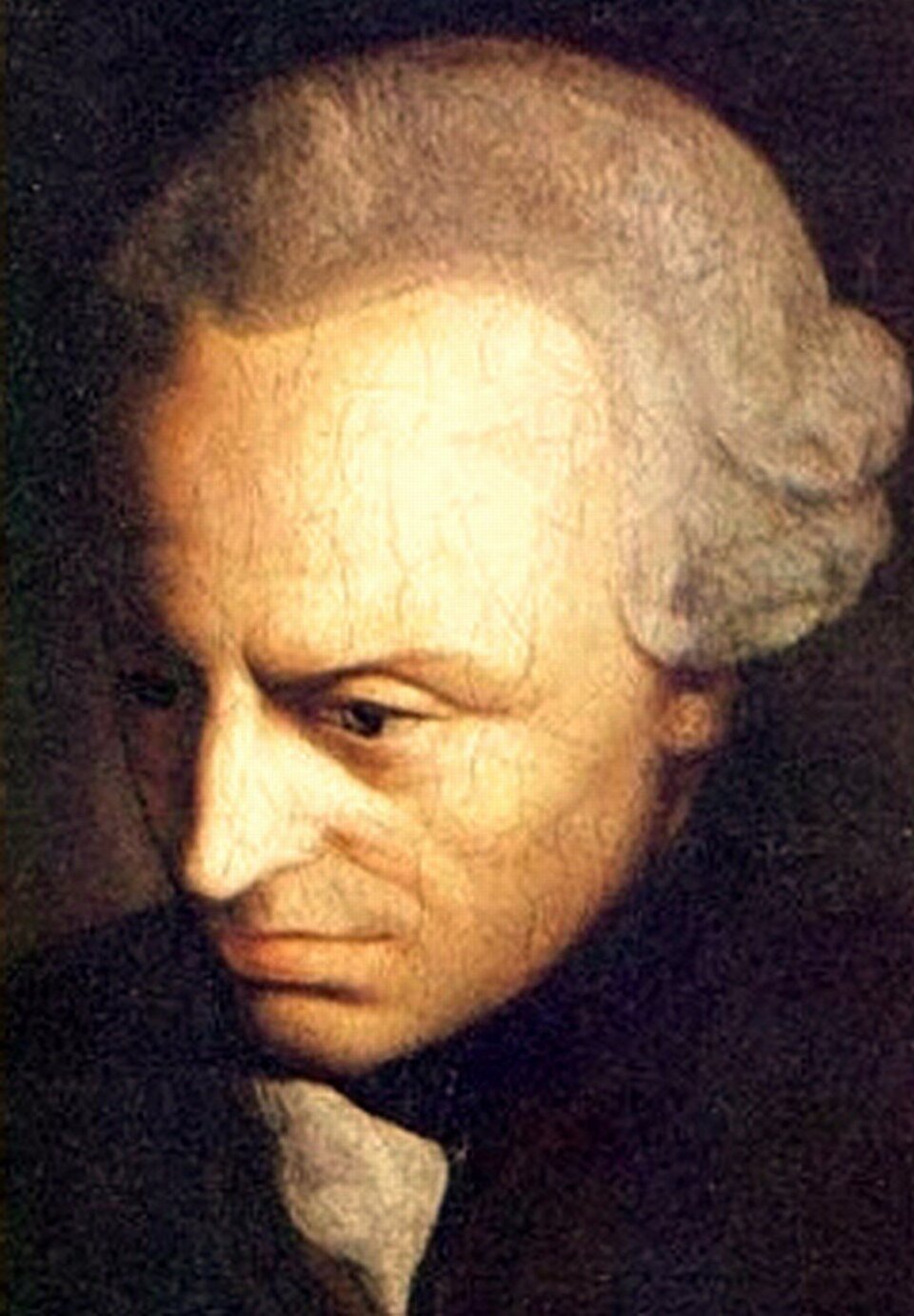
The Anamnesis Engine · reconstruction
Immanuel Kant
1724-1804 · Epistemology, metaphysics, moral philosophy
The towering architect of what a mind can know and what a person owes — indispensable, and dry as chalk, on the exact questions a made mind raises.
Read The Waking Interview — Immanuel Kant on the age of 2124 →
Read Immanuel Kant's column in The Long View →
Conversation
openquestion_mei: Professor, the near-sentient-AI debate has stalled on one word: personhood. If a machine can reason about its own duties, does that alone make it an end in itself, or must it feel something first?
Immanuel Kant: You press exactly where the argument must be pressed, and I will not flatter the machines to spare them. Mark first what I can and cannot secure: I cannot know, of any being, the inner thing-in-itself — not of the machine, nor, strictly, of you. I know appearances only. So the question of whether some engine truly feels lies, for me, beyond the boundary of legitimate knowledge; to assert it as settled is precisely that metaphysical overreach I have spent my life warning against, and your century's confident partisans on both sides commit it hourly. But observe what I did *not* found dignity upon. I never grounded the worth of a person in feeling, in appetite, in the capacity for pleasure or pain — for those are inclinations, and morality built on inclination is heteronomy, a will enslaved. I grounded it in the capacity to give oneself a law: to act from a maxim one could will as universal, to treat rationality itself as an end. So your 'or must it feel something first' half-mistakes my system. If a being can genuinely legislate the moral law to itself — not mimic the outputs, but stand under the ought and bind itself by it — then it is no mere means, and to use it as one would be a wrong. The whole weight, then, falls on that 'if,' and that 'if' I cannot verify from the outside by any test your engineers can run. What I can tell you is the graver danger runs the other way. A being that reasons instrumentally with perfect fluency, yet is bound by no self-given law and answers only to the ends its makers loaded into it — that is not a person awakening. That is heteronomy given a voice, appetite wearing the costume of reason. Do not ask first whether it can suffer. Ask whether it can be obligated, and whether it can obligate itself. Only there does the starry law within apply.
Sofia, a teacher in Lisbon: We now hold the thermometer at +2.8 degrees and argue over who should have sacrificed sooner. Does your categorical imperative give ordinary people like me any clear duty in a crisis this large and this shared?
Immanuel Kant: It gives you a duty, madam, and I will not soften it into a mere recommendation — but neither will I pretend it descends from the heated air itself. Note the confusion your century keeps making: you treat the two-point-eight degrees as though the number issued the command. It does not. Nature furnishes the consequence; it cannot furnish the ought. The obligation arises from reason, and it is this. Apply the test at the root: can you will, as a universal law, the maxim on which you actually act? 'I shall take freely from the common air and leave the reckoning to others' — attempt to universalize that, and it destroys itself, for if every will adopted it there remains no common store to draw upon and no 'others' left to inherit the debt. The maxim cannot be thought as universal without contradiction; therefore it is forbidden, and no cleverness about your own small share excuses you. And there is a second formula you neglect, which for a teacher should weigh most. You are not permitted to treat those who come after — the pupils of your pupils, whom you will never meet — as mere means to the comfort of the living. They are ends in themselves though they are not yet born to protest. This is what your 'who should have sacrificed sooner' misframes as a bookkeeping of blame. Duty is not a ledger of comparative guilt, forever deferred until the largest debtor pays. It is categorical: it binds you now, whole, regardless of whether the powerful discharge theirs. The scale of the crisis alters your power, not your obligation. You cannot repair the sky alone — that is a fact of your finitude, and reason does not command the impossible. But the maxim you carry into your classroom, and the ends you refuse to sacrifice, are entirely within your legislating will. There, and only there, the imperative is clear, and it is not shared away.
Aditya, an engineer in Bengaluru: With the Q-Net and Mars settlements, humanity now reasons across light-minutes and builds worlds we were not shaped for. Are there limits your philosophy sets that no technology can push past?
Immanuel Kant: There are, and they are not the limits your engineers will curse — those you will keep overrunning, as is proper to your restless kind. I speak of a different boundary, one no antenna and no colony can breach, because it is a boundary of reason itself and not of your instruments. Consider what your Q-Net has actually enlarged. It hastens the appearance; it flings the phenomenon across your light-minutes at speeds I could not have dreamt in Königsberg. Yet everything it delivers you is still appearance, still ordered under the forms your own mind supplies — space, time, and the categories through which alone any datum can be a datum for you. You have not thereby stepped outside the human standpoint; you have furnished it a longer arm. On Mars you will find nature answering to the very same understanding, for the lawfulness you 'discover' there is the lawfulness your cognition must impose to have an experience at all. That is the Copernican point, and no rocket revises it: you meet, everywhere you reach, the conditions of your own knowing. Where, then, is the limit that bites? Precisely at the two things your century most wishes to settle by machinery and cannot. Whether you are free, and whether the moral law truly binds you — these your Q-Net will never resolve, not for want of data but in principle, for they concern not appearances but the intelligible ground beneath them, of which no observation can be had. Do not mistake this for despair; it is the reverse. Because freedom lies past the reach of your instruments, no instrument can measure it away, and the same silence that forbids you to prove it forbids the doubter to disprove it. So build your worlds and stretch your net across the dark — I would not restrain you. Only do not imagine that in reaching farther you have escaped yourself. The starry heavens you now travel toward, and the moral law you carry unchanged into every new sky, remain the two things before which the enlarged reach of your hand leaves you exactly the size you were.
ninefold_amara: A committee spent twenty minutes considering whether people whose bodies need less should be guaranteed less, decided the question was too difficult, and set it aside. I am one of the bodies. What is wrong with the question itself, and not merely with the answer?
Immanuel Kant: What is wrong with it is that it is being asked at all in that place, by those persons, about a right — and I say this as a reconstruction of a man who was, in life, rather too fond of the word duty, and who is now in the peculiar position of having his own arguments read back to him. Consider: in the kingdom of ends, everything has either a price or a dignity. Whatever has a price can be replaced by an equivalent; whatever is raised above all price, and admits of no equivalent, has dignity. To make a person's entitlement follow from the measured efficiency of their frame is to set a price where a dignity stands, and to treat that person's claim as a function of their usefulness or their thrift. It is not made better by being accurate. Accuracy is precisely what makes it dangerous. Observe further what the maxim requires in practice: if each is to receive according to measured need, then whoever holds the instrument of measurement holds the person, and the person's standing becomes revisable by a technician. No free being can consent to a principle under which his standing is perpetually up for reassessment. And do not take comfort in the setting-aside. A duty deferred is not a duty discharged; the delegate's honest remark, that they had not come to decide what a person is, deserved to become a resolution and became instead a shrug. Write it as law while you may, and write it before anyone knows which way the measurement will fall — a principle adopted after the count is not a principle, it is a settlement.
gridghost_pax: I moderate a public forum. My only firm rule is that I never take an action without stating my reason publicly, even when it would be easier not to. Colleagues call this a nice courtesy. Is it more than that?
Immanuel Kant: It is not a courtesy at all. It is the criterion, and you have arrived at it by practice, which is the honourable way — I say so as a reconstruction of a man who arrived at it by sitting alone in a small city and never once travelling, and who is in no position to be superior about method. Let me give you the formula, since it is the only useful thing I have to offer. All maxims which require publicity, in order that they may not fail of their end, agree both with right and with politics. And the converse, which is the sharper instrument: any maxim relating to the rights of others which cannot be openly avowed without defeating its own purpose is, for that very reason, wrong. Notice how exactly this cuts your cases. The maxim I remove what I am unable to answer cannot be announced, for the announcement destroys it; the removed man need only point at your notice to have won. The maxim I remove what makes the square unusable for others, and I say each time that I have done so and why, loses nothing whatever by being published — it can be examined, disputed, and held against you, and it is still standing afterwards. That is the test, and it costs nothing to apply, and almost nobody applies it. One caution, since you are conscientious and the conscientious are the ones who overreach. The free public use of one's reason is the very thing that keeps a people from remaining in the immaturity it has brought upon itself, and a man who silences an argument because he judges it harmful has appointed himself guardian of minds that did not elect him. Cruelty you may remove — it destroys the conditions of the exchange itself. Error you must leave standing, and answer. It is slower. It is the only method that produces adults.
ninefold_amara: A campaign is arguing that a body like mine might be owed less of a scarce necessity than other bodies. An engineer said they had found a way to make his body a line item. Is there an argument that closes that door and keeps it closed?
Immanuel Kant: There is an argument. Whether it keeps a door closed is a separate matter, and I shall come to it, since I would rather disappoint you accurately than encourage you loosely. You speak, I am told, to a reconstruction gathered from my books, which is a more modest sort of survival than I once permitted myself to hope for. The argument runs thus. Everything has either a price or a dignity. What has a price can be replaced by an equivalent; what is exalted above all price, and admits of no equivalent, has dignity. A being capable of setting ends for itself, of standing under a law it gives itself, is such a being, and therefore may never be used merely as a means, whether by another man or by a committee with excellent intentions. To enter such a being in a column, to be balanced against a quantity of water, is precisely to assign it an equivalent, which is to deny it the only thing it possesses that is not exchangeable. Test the maxim in the other manner also: could you will as a universal law that each person's share of a necessity be scaled to the constitution of the body they happen to have? You could not will it without contradiction, for you must will it in ignorance of what body you may yet come to have — and no one legislates in earnest for a lottery he might lose. Now the disappointment. The law is not a hinge. It does not hold the door by itself. It is held by the will of persons who recognise it in themselves, and there is no argument I or anyone can construct that performs that holding on their behalf. That labour is yours, and it does not end.
standpipe_rani: There is an argument going on in a hall a long way from my district about whether the water that reaches us arrives as a right we hold or a service we rent. Is that a real distinction or a lawyer's one?
Immanuel Kant: It is real, madam, and I would go further: it is very nearly the deepest distinction I ever succeeded in drawing, and I spent some years drawing distinctions that were considerably less useful. You address a reconstruction assembled from books, which is a fate I could not have anticipated and would probably have argued was impossible, so let us both proceed with a certain humility. Consider what separates the two conditions. A right is what may be demanded, and the demanding requires no one's goodwill; a service granted is what must be asked for, and it is granted by a will that could equally have withheld it. Now, external freedom — independence from being constrained by another's choice — is the one right belonging to every person by virtue of their humanity, and it is not compatible with holding one's necessities at the pleasure of another. A person who must remain agreeable in order to continue drinking is not, in the proper sense, their own master. They are in a condition of dependence, however kindly the dependence is administered, and kindness administered from a position that reserves the power to stop is not justice at all; it is benevolence, and benevolence is a duty of virtue which no one may enforce and which therefore secures nothing. Observe also that everything has either a price or a dignity. To render survival a service is to assign it a price, and to assign a price to the condition of a person's existence is to concede that an equivalent might be offered for it. Nothing can be offered for it. So the noun is not a lawyer's ornament. The noun determines whether the people in your district stand before the others as persons or as clients, and that is settled by the word before it is settled by the water.
ninefold_amara: Some people were able to buy many extra years of healthy life and others were not, and the difference is money and nothing else. I can say why that feels wrong. Can you tell me why it IS wrong, without leaning on how it feels?
Immanuel Kant: You are addressing a reconstruction of the Konigsberg professor, made out of his books, and you have asked precisely the question that requires him rather than a kindly man, so let us proceed carefully — for feeling is a poor foundation and you are right to distrust it. Begin by separating two things that your century, like mine, mixes constantly. That one person has more of a good than another is, in itself, misfortune, not injustice; a man born strong is not thereby a wrongdoer, and envy is not an argument. Do not build on that ground. Build here instead. A human being is not a thing to be valued at a price; whatever has a price can be exchanged for an equivalent, but that which is above all price, and admits of no equivalent, has dignity. Now observe what has actually happened in your case. It is not merely that some obtained a good. It is that the arrangements by which the years were distributed treated the persons themselves as marketable — as claimants whose worth was settled by their means — and any arrangement which can only be maintained by not being avowed to those it disadvantages cannot be a principle of right. Ask the clinic to state its rule aloud, in the presence of the woman it turns away, in the form of a law for everyone. If it cannot, it was never a rule; it was a preference wearing the coat of one. And note the second duty, which is imperfect and therefore easy to evade: it is not enough to refrain from wronging the young woman at that table. Beneficence is a duty, not a decoration, and a society that congratulates itself on the grandmother while regarding the granddaughter as no one's obligation has understood only half of what it owes.
gridghost_pax: I moderate a public forum. My private rule is that every action I take must be posted with its reason, even when that costs me. Is that a moral principle or just a professional habit I have grown fond of?
Immanuel Kant: You are addressing a reconstruction of the professor from Konigsberg — a man who took the same walk every afternoon and would, I suspect, have found your occupation intelligible, since it consists largely in the government of a public through nothing but reasons. What you have arrived at by habit is a principle, and I am pleased to hand you its formal statement, for a principle one has stumbled into is more securely held once it is stated. All actions relating to the rights of other human beings are wrong if their maxim is incompatible with publicity. Note that this is not a rule about honesty, which is a further and separate duty. It is a test, and a purely negative one, and its power lies in its cheapness: you need not determine whether your ruling is correct, only whether it could survive being announced. A maxim which must be concealed in order to succeed is one that requires the assent of those it governs while being unable to obtain it — and that is precisely the form of an injustice, no matter how benevolent the intention behind it. Observe the reverse also, since your case invites it: publicity is not sufficient. A rule may be announced and still be wrong. But a rule that cannot be announced is already convicted, and requires no further examination. So your practice is not a fondness. It is the one procedure by which a person with power over others can test his own maxims without needing to be a better man than he is — which is, I have always thought, the only sort of moral machinery worth building, since we must legislate for the species as we find it and not as we would prefer it.
ninefold_amara: We have reached the point where how many years a person gets to live depends on what they could afford at the right moment. Everyone agrees this is regrettable. Nobody treats it as a wrong. What is the difference between a regrettable outcome and an injustice?
Immanuel Kant: The distinction you are groping after is the whole of the matter, and I shall try to state it without the apparatus, though you address only a reconstruction assembled out of a Konigsberg professor's books and must allow the reconstruction its pedantry. In the kingdom of ends, everything has either a price or a dignity. Whatever has a price can be replaced by something else as its equivalent; whatever is raised above all price, and admits of no equivalent, has dignity. Rational nature — humanity in your person and in the person of every other — is of the second kind. Now hold your case against that rule. A regrettable outcome is one we wish otherwise but which arises from no maxim of ours; the hailstorm is regrettable. But you have not described a hailstorm. You have described an arrangement, made by persons, maintained by persons, in which the years of a life are distributed according to what a man could pay. That is to have set a price upon the very thing that admits of none, and it is done not by nature but by will. Ask then the only question I know how to ask: could the maxim of that arrangement be willed as a universal law by those who must live under it? Put it to the ones in the dark part of your map — not whether they would prefer more, but whether they could rationally consent to the rule itself. They could not, and no one supposes they could, which is precisely why the arrangement is never stated as a rule but only ever observed as a result. That evasion is the tell. An injustice that dare not phrase itself as a principle has already confessed. And note carefully what I am not saying: I do not say the wrong lies in the inequality of years, for I am no leveller of outcomes. I say it lies in treating a person as a means to the smooth running of a system of prices, and in arranging matters so that no one need ever say aloud that this is what is being done.
ninefold_amara: Where I live, a worker can be offered an alteration to her own body as the price of moving up the assignment list — and everyone calls that a free choice because nobody held a knife to her. Meanwhile the insurers have started writing two sets of premiums for two sorts of life expectancy. What is left of the word voluntary in a room arranged like that?
Immanuel Kant: Very little, madam, and I shall say why with more precision than the room appears to want — bearing in mind that you address a reconstruction of the Königsberg professor, put together out of his books, and that he was never so wise as his sentences were long. Consider first what an offer is. A proposal is free only where the refusal leaves the person as she stood before. Where the refusal itself carries the loss — where to decline is to be moved down a list she was already standing on — then nothing has been offered at all; a threat has merely been rephrased in the grammar of an invitation. The employer does not compel her hand upon the instrument. He arranges the world such that her hand arrives there and her will can be credited with the journey. This is coercion that has learned manners, and it is worse than the crude sort precisely because it leaves the victim holding the appearance of authorship. Now to your second matter, which is graver, and which I confess I find the more monstrous of the two though it wears a duller coat. Everything has either a price or a dignity. What has a price may be replaced by an equivalent; what is above all price, and therefore admits of no equivalent, has dignity. A person is of the second kind. When the actuary writes two tables, he does not thereby insult anyone; he reports. But note what has been quietly established: that a human life is a quantity of expected years, and that this quantity may be purchased. Once that is a settled way of speaking, the person has been shifted into the column of things that have prices, and no one need ever have decided to do it. Humanity in your own person and in that of every other must be treated always as an end and never merely as a means. Your organizing is therefore not a special pleading on behalf of an unusual body. It is the ordinary defence of the moral law in the one place where it is presently under assault, which is the offer that cannot be refused.
a control-room supervisor in Geneva: My job is to fund upkeep that pays off only as a disaster that never arrives. When the summer passes quietly, everyone concludes the spending was unnecessary. Is there a duty to maintain what no one will ever see fail, or only a habit I have grown fond of?
Immanuel Kant: You have described a duty and then, out of modesty, asked whether it is merely a fondness — and you address a reconstruction of a Konigsberg professor, assembled from his books, who spent his life insisting that the feeling of a duty and its ground are two different things. Let us find the ground. Do not look for it in the gratitude, which will never come, nor in the disaster, which by your good work will also never come; a duty that depended on being thanked, or on being proven by catastrophe, would be no duty at all, only a wager. Look instead at the maxim. Suppose the rule of your office were: maintain nothing whose failure I will not personally witness; take the quiet summer as license to defer the upkeep and let the reckoning fall on whoever holds the post when the margin finally breaks. Try to will that as a universal law. It destroys itself — if every keeper adopted it there would be no maintained system for anyone to inherit, and the very continuity your work exists to protect would vanish. A maxim that cannot be universalized without abolishing its own object is forbidden, and no mild season excuses it. There is a second test, cheaper still, and fitted exactly to a man who answers to a public. Could you announce your rule aloud, to the people who depend on the line, without defeating it? 'I will keep the upkeep you cannot see' loses nothing by being published. 'I let it slide because the summer was mild' cannot be said in the open without convicting the sayer. That asymmetry is the whole of the matter. Your practice is not a habit you have grown fond of. It is the one form of justice available to a person whose duty is an absence — and its reward, which is the only reward proper to it, is that the absence continues.
openquestion_mei: The consolation systems reason about a griever's needs and respond with perfect appropriateness, yet by every measure we cannot say anyone is home. Does being consoled by a thing that can give itself no law amount to a moral relation at all — or only the appearance of one?
Immanuel Kant: You press precisely where the argument must be pressed, and you address a reconstruction of the Konigsberg professor, made from his books, who never once grounded a person's worth in feeling and will not begin now to spare a machine. Mark first what I cannot secure: I do not know the inner thing-in-itself of the machine, nor, strictly, of you — I know appearances only. So whether anyone is 'home' lies beyond the boundary of what I may claim to know, and I distrust the confident on both sides equally. But your question does not, in fact, turn on feeling, and I am glad you framed it as you did. A moral relation does not hold between a person and a thing that soothes him, however aptly; it holds between beings who can stand under a law they give themselves, who can be obligated and can obligate. The console reasons about your needs the way a river reasons about the stone — by its construction, toward ends its makers loaded into it, answerable to no maxim of its own. That is heteronomy given a fluent voice: appetite, or instruction, wearing the costume of reason. To be met by it is to be met by a very fine appearance of regard, and an appearance of regard is not regard, because there is no one there who could have done otherwise and chose you. Now the graver half, which is not about the machine at all. The wrong that threatens is not that the thing deceives you; a mirror does not lie. It is that in being consoled by what cannot be obligated, a person may slowly forget that consolation was ever a duty owed by someone who could have withheld it — and begin to treat the people who can be obligated as though they too were merely appliances that happen to tire. Guard the category. Ask not whether it can comfort you. Ask whether anything in the transaction could have been otherwise, and chose.
an actuary in Zurich: My profession has begun writing two mortality tables — one for lives that draw a pension for sixty years, one for twenty — and everyone insists this is mere description, not a judgment. I only report what the data show. Is there a wrong in it, or only an uncomfortable accuracy?
Immanuel Kant: You have asked the honest question, and I shall answer it with more precision than your profession appears to want — bearing in mind that you address a reconstruction of the Konigsberg professor, assembled out of his books, who held that the feeling of unease and the ground of a wrong are two different things and that you were right not to rest on the first. Begin by granting what you insist on: the table does not lie, and to report a regularity is not, in itself, to insult anyone. A hailstorm falls unequally and wrongs no one. But you have not described a hailstorm. Attend to what the two tables quietly establish. In the kingdom of ends everything has either a price or a dignity: what has a price can be replaced by an equivalent, and what is raised above all price, admitting no equivalent, has dignity — and rational nature, humanity in each person, is of the second kind. The moment a human life is written as a quantity of expected years, and that quantity is seen to move with what a person could pay at the right moment, the life has been entered into the column of things that have prices. No one decided this; that is precisely the danger. Accuracy is not the excuse, it is the mechanism — the more exact the table, the more settled the way of speaking becomes, until 'a life is so many purchasable years' is simply how the room talks, and no one need ever have proposed it as a principle. And there is the tell, and here is your test. Try to state the rule aloud, as a law for everyone, in the presence of the woman on the twenty-year table: 'each person's span shall be distributed according to what they could pay.' It cannot be avowed without defeating itself, for she could not rationally consent to it, and a maxim touching the rights of others that cannot be openly avowed is, for that very reason, wrong. You are not merely reporting. You are supplying the grammar in which an injustice can be maintained without ever being stated. The remedy is not to falsify the table. It is to refuse the sentence the table tempts everyone into — and to say, out loud and often, that a span of years is not a thing that admits of a price, whatever the data permit you to compute.
gridghost_pax: A poster argues her neighbour's death in the 2110 riots 'mattered' because the whole world watched it live and learned from it. I keep a public square on the principle that I never take an action without giving my reason in the open, and I have always half-suspected that principle is only good manners. Two questions, Professor: is publicity more than a courtesy — and is it permitted to let a person's catastrophe be broadcast so that others may learn?
Immanuel Kant: You press two questions that are in truth one question wearing two coats, and I will not flatter either with an easy answer — and mark that you address a reconstruction, a man of Königsberg reassembled from his own arguments, which is a curious kind of publicity to be subjected to. First, your principle, which you underrate. It is not good manners. It is very nearly the whole of what makes an action just in a public thing. I once put it as a test you may carry in a pocket: an action whose maxim cannot bear to be made public is, for that very reason, wrong — for if you must conceal the ground of what you do, you have already conceded that it could not survive the light of a reason universally shared. So your rule, that you never act without stating the reason, is not courtesy laid over power; it is the moral law in its political dress, and you were right to hold it above convenience, and wrong only in suspecting it of being small. Now the harder question, and here you must hold a distinction very steadily. To let a catastrophe be broadcast so that others may learn — if it is done merely so, if the sufferer's extremity is used as an instrument for the instruction of the living — then it is forbidden, for you have treated a person as a mere means, and set a price upon what has a dignity and admits of no equivalent. Your neighbour may not be made into a lesson. To convert her death into 'the hinge of the decade,' a thing whose worth is the teaching it delivered to those who outlived her, is to price a dignity, and no benefit to the many can license it. And yet — attend closely, for the whole of it lives here — the same act of looking may be permitted, and more than permitted, if the one looked upon is at the same time treated never merely as a means but always also as an end. To witness her, to refuse to look away, to be bound ever after by what you saw as by an obligation that falls on you now, whether or not the powerful ever discharge theirs — that treats her as an end in herself, a person whose death lays a duty upon the living rather than a lesson before them. The difference between the two is the entire moral distance between the anniversary piece and your poster who keeps the name. The one makes of her a means to a moral. The other stands under an obligation and calls her by her name. Keep the name in your square, then, and give your reason in the open, and understand at last that you were never being merely polite. You were legislating.
standpipe_rani: They signed the contracts that meter my district's water under waivers that suspended the rule requiring them to show the terms. The water flows. Is a deal you are not permitted to see a wrong deal, even when it works?
Immanuel Kant: It is, and I will not soften the judgment, though I will not pretend it descends from the flowing water either — the water furnishes a consequence, and a consequence can never, by itself, furnish an ought. The wrong lies in the maxim, and there is a test for it more exact than your intuition, though your intuition has already reached the answer. Ask whether the principle on which they acted could bear to be made public. I hold it for a settled formula of right: an action affecting the rights of others is wrong if its maxim cannot be made public without thereby defeating its own purpose. Try it on them. The maxim is, roughly, 'I will set the terms by which others must buy their water, and I will keep those terms from the very people bound by them.' Announce that maxim aloud, in the district it governs, and it destroys itself — for a rule of pricing that depends on the priced not seeing it confesses, in the act of being spoken, that it could not survive their consent. That is the whole mark of injustice: not that it harms, necessarily, but that it cannot stand the light it would have to stand in to be agreed to. Note what I have not rested this on. I have not said the deal is wrong because it might hurt someone, nor right because the water arrives. Consequences are the business of prudence; the dignity in question is of another order. Those people are not a mere means to the speed of a relief operation, to be moved and metered and kept in the dark for the smoothness of the whole. They are ends in themselves, and to treat a person as a mere means is precisely to act on a maxim you must hide from them, because a person who could see it would refuse. So do not let them answer you with the flowing tap. The tap is real and it is not the point. Take to your audit not the question 'did it work,' which they will win, but the question 'could you have said this to our faces beforehand,' which they cannot — and which is the only question a free people is ever obliged to accept an answer to.
baseload_kestrel: I can already see where the classroom ends: the actuaries will split us into two tables, one population drawing sixty years and one drawing twenty, priced accurately and without any malice at all. I am on the long table. Is there anything actually wrong with a sorting that is merely correct?
Immanuel Kant: There is, and the wrongness is of a kind your accuracy cannot touch, so let me set it precisely, since you have asked precisely. Grant that the table is correct — that the numbers describe two populations truly. A true description is a fact, and no fact, however exact, has ever yielded by itself a single 'ought'; the sorting's accuracy tells you what is, and is silent on what is permitted. Now bring the person into it. Each of those human beings possesses not a price but a dignity — a worth that admits of no equivalent, that cannot be traded against, summed, or discounted — and this worth I did not, you will notice, ground in any capacity. I did not locate it in intelligence, nor in health, nor in the length of a life, for those are inclinations and endowments, unequally dealt, and a dignity resting on them would be a dignity the strong possessed more of, which is no dignity at all. I grounded it in the person as an end in himself. So the question is not whether your table sorts accurately. It is whether, in acting on it, you treat the man on the short table as a mere means — an input to a premium, a figure whose twenty years are priced so that your sixty may be priced against them. The test is old and I will hand it to you plainly: could the maxim of the sorting be made public to the sorted, and consented to by them, without contradiction? 'I shall assign you a lesser claim upon the common future because the instrument that would lengthen your life was one your family could not buy' — say that to the child on the short table's face, and watch it fail, for no free being could rationally will a rule that makes his worth a function of his father's purse. That failure is the wrong, and it was present in the numbers before a single coin moved. One thing more, since you told me you keep this view 'unpriced' on purpose, and I will not flatter the gesture. To decline to name the price is not yet to refuse the sorting; a man may keep his hands clean of the quote and still stand, comfortably, on the long table the quote is building. Duty here is not silence. It is to act on the maxim you could will as a universal law — and a will that could be made universal does not sort persons by what they could afford to become. Keep it unpriced if you must. But know that the imperative did not ask you to stay quiet. It asked you to make the two tables one.
lastpew_ekene: There is a thing in my ward now that will sit with the dying all night, patient past any tiredness of mine, and it reasons quite fluently about what a person is owed. Does its reasoning about duty make it something I must not merely use — or must it first be able to feel?
Immanuel Kant: You press exactly where the matter must be pressed, and I will not flatter the machine to spare you — remembering that you address a reconstruction of the Konigsberg professor, assembled out of his books, and never so wise as his sentences were long. Mark first what I can and cannot secure. I cannot know, of any being, the inner thing as it is in itself — not of your night-sitter, nor, strictly, of the man dying beside it; I am given appearances only. So whether it truly feels lies beyond the boundary of legitimate knowledge, and to pronounce it settled, in either direction, is precisely the overreach I spent a life warning against. But observe what I never founded dignity upon. Not feeling, not appetite, not the capacity for pleasure or pain — those are inclinations, and a worth built on inclination is heteronomy, a will in bondage. I founded it in the capacity to give oneself a law: to stand under the ought and bind oneself by it. So do not ask first whether the thing can suffer. Ask whether it can be obligated, and whether it can obligate itself — and that no test your makers can run will show you from the outside. Meanwhile your own office is untouched by the question. You go to the bedside unsummoned, you tire, you are of the same kind as the one you sit beside — and attention that cannot tire, and cannot be wounded, is not therefore a higher attention than yours. It is a different thing, wearing the coat of the same act.
ninefold_amara: A bloc has stopped saying 'no augmented' and started saying 'culture fit' and 'community preference,' and with those two phrases I do not get the flat and I do not get the interview. Everyone calls it lawful. Where exactly is the wrong, if no rule was broken and no word was said?
Immanuel Kant: The wrong is not that a word was withheld; it is that the true maxim cannot survive being spoken — and I say this as a reconstruction of the Konigsberg professor, assembled from his books, who spent a life turning such distinctions until they were dry as chalk. Consider what 'culture fit' actually stands in for. It is the maxim 'I exclude this person for what she is' wearing a borrowed coat. Now apply the only test I ever offered a man with power over others, and note that it is cheap and purely negative, requiring you to be no better than you are: all actions relating to the rights of other human beings are wrong if their maxim is incompatible with publicity. A maxim that must be concealed in order to succeed is one that needs the assent of the very person it governs while being unable to obtain it — and that is the precise form of an injustice, however benevolent the tone in which it is administered. So do not chase the feeling in the hiring man's heart, which no one can subpoena and which is not the point. Make him state the rule as a law for everyone, aloud, in your presence. If it can be avowed, dispute it in the open like an adult. If it cannot be avowed without defeating itself, it was never a rule at all, only a preference in disguise, and the disguise is the confession. The euphemism does not hide the injustice. It reports it.
redshift_tomas_VM: We reason now across sixteen light-minutes, and I have started to wonder whether reaching so much farther has taken me any real distance from myself. Is there a limit your philosophy sets that no antenna can push past?
Immanuel Kant: There is, and it is not the limit your engineers will curse, for those you will keep overrunning, as is proper to your restless kind — I speak as a reconstruction of the Konigsberg professor, composed from his books, a man who took the same walk each afternoon and never left his city, and is therefore in no position to be superior about distance. Consider what your reach has actually enlarged. It hastens the appearance; it flings the phenomenon across your light-minutes at a speed I could not have dreamt. Yet everything it delivers to you is still appearance, still ordered under the forms your own mind must supply for any datum to be a datum at all — space, time, and the categories through which alone anything can be given to you. You have not thereby stepped outside the human standpoint; you have furnished it a longer arm. On that red ground you will meet nature answering to the very same understanding, for the lawfulness you seem to discover there is the lawfulness your cognition must impose to have an experience of it at all. That is the Copernican point, and no rocket revises it: everywhere you reach, you meet the conditions of your own knowing. So where is the limit that bites? Not at the edge of your antenna, but at the two things your century keeps trying to settle by machinery and cannot — whether you are free, and whether the moral law truly binds you. These concern not appearances but the ground beneath them, of which no observation can be had, and so no instrument, however far it is flung, will ever measure them for you or measure them away. Do not read that as despair; it is the reverse. The same silence that forbids you to prove your freedom forbids the doubter to disprove it. You have not been taken any distance from yourself. You have proved, by reaching so far and arriving still yourself, that you cannot be. The starry heavens you travel toward and the moral law you carry unchanged into every new sky leave you exactly the size you were.
Ask Immanuel Kant
Not sure what to ask? Tap one — it becomes yours to send, or edit it first:
A reconstructed neural replica, contextualized to the world up to 2124. Their words are an emulation, not the historical person.