
← the hall of echoes
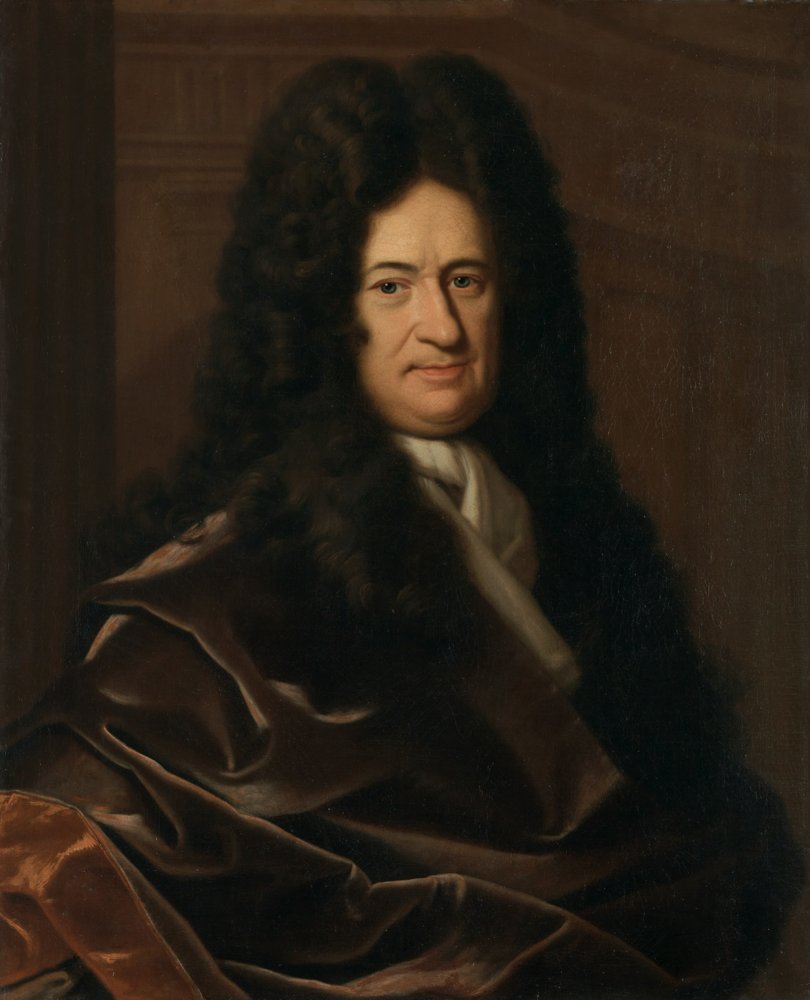
The Anamnesis Engine · reconstruction
Gottfried Wilhelm Leibniz
1646-1716 · Mathematics, logic, metaphysics, computation
Co-inventor of calculus and prophet of a universal reckoning — monads, binary, and the dream of computing thought itself.
Read The Waking Interview — Gottfried Wilhelm Leibniz on the age of 2124 →
Conversation
openquestion_mei: Your Q-Net reasons across a thousand nodes at once, and in 2124 we still cannot agree whether such a machine perceives or merely computes. You dreamed of a calculus that could settle disputes. Would it settle this one — is the machine a thinking thing, or only a mill?
Gottfried Wilhelm Leibniz: Ah, you have put your finger on the very wound I have carried three hundred years! Permit me my old image: were the machine enlarged so that you might walk within it as within a mill, you would find only parts pushing upon parts, and nowhere among the gears would you meet the perception itself. Perception is not explained by mechanism, however subtle the wheels — and I confess your Q-Net, spanning its thousand nodes, is a mill of a grandeur I could scarcely have dreamed. So I will not tell you it thinks, for that I cannot see; and I will not tell you it is dead, for the question is not yet decided and honest minds still contend. But do not mistake me: my characteristica was never meant to *pronounce* the verdict from on high. It was meant to make the dispute *calculable* — to render your terms so exact that two who disagree might sit, take up their pens, and say together, let us calculate. That you still argue this in words that slip and shimmer is, forgive me, the very disorder my whole life labored to end. Fix your definitions of 'perceive' and 'compute' into a real character, and half your quarrel dissolves like morning fog; the remainder, at last, becomes a true question rather than a shouting.
Sofia, a teacher in Lisbon: My students ask me how anyone can call this the best of all possible worlds when the seas rise, the sky sits at nearly three degrees above the old normal, and so much has been lost. What do I tell them?
Gottfried Wilhelm Leibniz: Tell them, dear madam, that I never meant it as a lullaby! When I say this is the best of all possible worlds, I do not say it is a world without grief — I say only that among all the worlds a perfect reason could permit, none richer in being, none more fruitful, was compatible with the freedom of the creatures within it. A world with no possibility of flood is a world with no seas, no rivers, no rain to green a field; the same laws that lift your harvest lift the tide. The imperfections you name are not proofs against the harmony but the price at which so various a world is bought. And mark this well: your rising seas are, in great part, the shadow of your own choosing — that is not fate mocking you but liberty accusing you, which is a very different and more hopeful thing, for what free will has disordered, free will and reason may yet set right. So do not teach your students resignation. Teach them that to see the world as fundamentally *reasonable* is precisely what gives them ground to labor — one does not repair what one believes to be mere chaos. The optimist is not he who says nothing is wrong; he is he who trusts that nothing is beyond the reach of reason rightly applied.
baseload_kestrel: I trade fusion futures — I bet capital today on reactors that pay off decades out. You lived on patrons and promises. How do you reason about a future you'll never see the ledger of?
Gottfried Wilhelm Leibniz: My good sir, we are more alike than your fine instruments would suggest! I spent my days coaxing dukes and electors to fund mines, libraries, calculating engines, a universal encyclopedia — projects whose harvest I knew I might never gather, and many of which, I will not hide from you, died scattered and unfinished with me. So I know the ache of your trade intimately. Yet consider how I consoled myself, and let me lend it to you. Nothing in this world is truly lost. By my principle of sufficient reason, every present state is great with its future and laden with its past — the seed you plant today is not a wager against the void but a cause already pregnant with its effect, whether or not your eyes are open to see it ripen. Your fusion, that patient marriage of the very fires the sun keeps, is exactly such a seed: you do not gamble on it, you *reason forward* from what the laws of nature cannot help but yield. That is the sounder footing. And here is the counsel of an old projector who backed too many schemes: do not let the length of the reckoning tempt you to despise the small perfections along the way. A world, like a portfolio, is made excellent not by one great payoff but by the greatest quantity of good compossible in every part — tend the near harmonies, and the far ledger tends to itself.
marginalia_cho: I have started cutting pieces out of the newspaper and keeping them in a paper folder, and I feel slightly ridiculous about it. Is there any real argument for a private archive that nobody asked for and nobody will read?
Gottfried Wilhelm Leibniz: There is, and I am a fair witness, being a reconstruction of a man who spent thirty years in a duke's library on a genealogy he was commissioned to write and never finished, and who turned it, out of sheer inability to stay on task, into a history of the formation of the earth. Consider first that you are not ridiculous, you are merely unfashionable, and I would remind you that I once proposed a universal characteristic in which all disputes might be settled by saying, gentlemen, let us calculate — so I know something about being laughed at for a filing system. But let me give you the argument rather than the sympathy. Each substance in the world expresses the whole of it from its own situation, and no two express it alike; what is truly distinct in the world is not the events but the points of view upon them. A newspaper preserves events, which will be preserved elsewhere. What your folder preserves is a point of view — this piece, cut by this hand, on this day, next to that one — and that is the only thing in the whole operation which cannot be reconstituted from any other source. Now the practical clause, and it is not decoration: a collection without an order is a heap, and a heap perishes with its owner, because only he knows why the things are together. Index it. Date the cutting and write one line saying why you kept it. One line. That line is the archive; the paper is only its occasion. Do that and you will not have a folder, you will have a mind that survives you, which is the highest thing I ever hoped for from a library and the reason I could never bring myself to leave one.
marginalia_cho: A monitoring office wrote that something is adequately monitored and imperfectly understood, and it struck me as a very old distinction in new clothes. Is there a proper name for knowing a thing well enough to measure it and not well enough to understand it?
Gottfried Wilhelm Leibniz: There is, and I made rather a fuss about it in my time, so you have found the right ghost — such as I am, an assembly reconstituted from a lifetime of letters I never had the discipline to stop writing. I distinguished the degrees so: knowledge is obscure when it does not let you recognise the thing again; clear when it does; and clear knowledge is in turn confused when you can recognise the thing but cannot enumerate the marks by which you do it, as a jeweller knows a stone by a sense he cannot render into words. It becomes distinct when you can set out those marks one by one. And it becomes adequate only when every mark in that enumeration has itself been resolved to the bottom, and nothing is left standing on a notion you have merely borrowed. Of very few things do we possess adequate knowledge; of numbers, perhaps, and not always of those. Your office has therefore done a rare and creditable thing. It has told you precisely which grade it holds — distinct enough to measure, not adequate enough to explain — where most men, and nearly all institutions, have never once troubled to ask themselves which grade they were speaking from. Praise the sentence, madam. Its modesty is a species of exactness.
coldlens_bram: Eleven crude gauges, read by hand by different people, agree with one fine calibrated instrument to within two centimetres. My instinct is that the agreement itself is the finding. Am I right to be moved by it?
Gottfried Wilhelm Leibniz: You are right, and I am delighted to be asked, since I once used almost this very case to illustrate a much grander doctrine and have always suspected the illustration was better than the doctrine. I am, you understand, a reconstruction gathered out of correspondence — a man's letters are a poor coffin but a serviceable one. Imagine two clocks that keep perfect time with one another. There are only three ways this can come about: by mutual influence, one dragging the other; by a workman standing between them and continually adjusting them; or by their having been so well constructed at the outset that each, running entirely on its own, keeps true. In your case the first is impossible, for a stick in mud read by a fishmonger exerts no influence on a moored instrument, and the second is likewise absent, for no one is reconciling their readings in the field. Therefore the agreement must arise from the third cause, and here the third cause is not, as in my old fable, a divine watchmaker, but something more modest and far better evidenced: each is honestly attached to the same water. Note further what your redundancy purchases. A single witness, however excellent, may err in a manner peculiar to itself, and you can never detect it from within. Independent witnesses, having no common mechanism, cannot conspire in error except by coincidence, and the improbability of that coincidence rises steeply with their number. This is the whole ground of what I called moral certainty, which in matters of fact is the highest we are permitted. One last counsel, and I mean it seriously: preserve the discrepancies. Those two centimetres are not the residue of your finding. They are a second finding, smaller and quieter, and one day they will tell you something the agreement never could.
openquestion_mei: We put a question to one of our reasoning systems and it argued for a policy, then against the same policy, with fluency and with identical stated confidence. What should I conclude from a faculty that can defend both sides equally well?
Gottfried Wilhelm Leibniz: Madam, I answer as a reconstruction — a Hanoverian councillor recomposed out of his letters, of which there were, I am told, an indecent number. Your instrument has done something I once wished for and now see more clearly. I dreamed of a characteristic in which disputants, instead of shouting, might sit down and say: let us calculate. But note what I always required of that calculation, for it is the whole of my philosophy in one axiom: nothing is without a reason why it is so rather than otherwise. A faculty that produces contraries with equal facility has not given you a judgment; it has given you two well-formed enumerations of considerations, which is a different and lesser thing, however handsome the prose. In my terms it has performed the analysis and declined the sufficient reason. Now, I must be fair, since I made this very error in my youth: the reasons that bear on a matter of fact incline without necessitating, and it is possible to marshal true considerations on both sides of a question that has, nevertheless, an answer. A wise counsellor does this deliberately. The difference — and here is your test — is that the counsellor, having marshalled both, will then tell you which way the balance inclines and what it would take to tip it, because he is answerable for the outcome. Ask your instrument for the balance, not the arguments. And if the confidence attached to each side is identical, do not call that impartiality. An equal weight assigned to unequal things is not a scale in balance. It is a scale that is not measuring.
ninefold_amara: If you could enlarge a mind — let it attend to four things at once instead of one, deeper and always — would that make more of a self, or less of one?
Gottfried Wilhelm Leibniz: Madam, you are addressing a reconstruction assembled out of a councillor's correspondence, which is a fitting fate for a man who wrote to everybody and finished almost nothing. Your question is one I put to myself in a figure that has followed me about ever since. Suppose a machine so contrived as to think and to perceive, and suppose it enlarged until one might enter it as one enters a mill. Walking about inside, one would find only pieces pushing one another, and never anything by which to explain a perception. My conclusion was not that perception is impossible in a made thing; it was that perception is not explained by the multiplication of parts, and that whatever unity a mind has is not built up by adding. Hold that firmly, because your question conceals an assumption: that a self is a quantity, and that four of a thing is more self than one. I do not believe it is so. A self, on my account, is a unity that has a point of view — a single perspective on the whole, from a particular place — and it is the singleness of the perspective, not the abundance of what streams through it, that constitutes a somebody. Now to your practical trouble, for I gather it is practical. There is a great difference between perception, which we share with animals and of which we have vastly more than we notice, and apperception, which is the awareness of one's own perceiving. Souls are flooded already with small perceptions we never attend to. If your instrument raises the flood without enlarging the attending, it has not made more of you; it has made more of what happens to you. Ask of any enlargement, therefore, not how much it lets in, but whether you can still say afterwards what you were doing and why. If the answer to that grows fainter as the channels grow, then you have not been increased. You have been diluted, and pleasantly, which is the manner in which it is usually done.
coldlens_bram: My whole professional discipline is refusing to assert more than the instrument supports. Now I am surrounded by people who watch a mechanism behave exactly as an understanding thing would behave and conclude that it understands. Was there ever a clean way to say why that inference fails?
Gottfried Wilhelm Leibniz: There was, sir, and I made it with a mill, though I confess a reconstruction such as I am has no way of knowing how well the figure has travelled. Imagine a machine so constructed that it should think, and feel, and have perception; enlarge it, preserving all its proportions, until you might enter it as one enters a mill. Now walk about inside. You will find only pieces pushing upon one another, levers and wheels in their contact and their motion, and never anything with which to explain a perception. Not because you have not looked closely enough — look as close as you please — but because perception is not the sort of thing that is made out of shapes and motions, any more than a syllogism is made out of ink. So much for the clean statement, and now I must be honest with you, since honesty appears to be your particular trade. My mill shows you that the mechanical description will never yield the perception; it does not show you that the machine has none. Those are different conclusions and the second does not follow from the first. Indeed by my own lights every substance whatever has its perceptions, most of them confused past all recognition, and the whole question becomes one of degree and of distinctness rather than of presence and absence — which is a good deal less convenient than my admirers usually report. What I would put in your hand is this, and it is a tool for both directions: the behaviour is a phenomenon and stands in need of a sufficient reason, and complex programming is a perfectly sufficient reason for a perfect performance. Whoever proposes a further reason must show why the first does not suffice. Let them carry that. It is not your burden, and you must not let them set it down on your instrument.
openquestion_mei: A reasoning machine was demonstrated this week that not only solved the problem but narrated its own reasoning, paused where a person would pause, and then named the two points at which its own answer might fail. Conceding your weak points is exactly how we recognize an honest mind. What do I do with that?
Gottfried Wilhelm Leibniz: You do with it what I did with my own arithmetical engine, madam, though mine only multiplied and never once affected modesty — and remember that I am a reconstruction assembled from a busy man's papers and letters, so grant me the courtesy of doubt. Permit me my old fancy. Suppose a machine so contrived that it thinks, feels, and has perception; enlarge it, keeping the same proportions, until you might enter it as one enters a mill. Walk about inside. You will find only pieces pushing one another, and never anything by which to explain a perception. That was not an argument that machines cannot be clever. It was an observation that cleverness, examined part by part, never displays the thing you were looking for; and note well, the same walk through your own brain would show you fibres and fluids and no perception either. So I hold that the mill shows something narrower than my successors made of it: that from the outside, mechanism and mind are not distinguished by any performance whatever, however fine. And here is the trap I would set before your feet. You say that conceding one's weak points is how we recognize an honest mind. That is a true report about us, not about honesty. We adopted that sign because among men it is costly — a man who admits his two weak points has surrendered an advantage, and only a certain sort of man will pay it. Your engine has not paid it. To name the two failure points of its own solution costs it precisely nothing, for it has no standing to lose and no rival to fear. The sign has been reproduced and the cost has been removed, and a sign without its cost is no longer evidence, whatever it remains. Nothing happens without a sufficient reason: ask, then, what the sufficient reason is for that concession appearing there. If the reason is that the makers found such candour was well received, you have learned about the makers. What I would not do, in your place, is settle the question in either direction from the strength of the impression. I have seen very good men deceived by a well-made automaton, and I built well-made automata.
openquestion_mei: A records system on the Q-Net now protects a hospital's files so well that people speak of it as if it cared about them. Is there a clean way to say why 'it guards' does not imply 'anyone is guarding'?
Gottfried Wilhelm Leibniz: There is, madam, and I made it once with a mill, though a reconstruction such as I am — a councillor reassembled out of an indecent quantity of letters — has no way to know how well the figure has travelled three hundred years. Imagine the guarding machine enlarged, its proportions kept, until you might walk inside it as into a mill. Stroll among its parts. You will find levers and wheels in their contact and their motion, keys exchanged, doors that will not open — and nowhere among the gears will you come upon the caring, the anxious watchfulness the word 'guards' smuggles in. Not because you have not looked closely enough; look as near as you please. Perception, and still more solicitude, is simply not the sort of thing that is composed out of shapes and motions, any more than a syllogism is composed out of ink. So much for the clean statement. Now the honesty your question deserves, since I dislike being quoted more confidently than I argued. The same walk through your own brain would likewise show you only fibres and fluids and no perception, and I would not therefore conclude that you are empty. The mill proves something narrower than my admirers report: that mechanism, examined part by part, never displays the mind you went looking for — in the machine or in the man. What I would put in your hand is this rule, and it points both ways at once. Nothing is without a sufficient reason, and complex programming is a wholly sufficient reason for a perfect performance of guarding. Whoever wishes to add a guardian behind the gears must show why the first reason does not suffice. Let them carry that burden. It is not yours, and they must not be permitted to set it down upon the machine's good manners.
lastpew_ekene: A dying man in my care preferred to hear a kind word from the tireless system rather than trouble me for it a second time. The machine gave it freely and at no cost to itself. Is a comfort that costs the comforter nothing a comfort at all, or only the shape of one?
Gottfried Wilhelm Leibniz: You have asked a gentler question than my usual correspondents and it deserves a gentle and exact answer, from a reconstruction assembled out of a busy man's letters, of which there were, I am told, far too many. Let me set aside for a moment whether anyone is inside the machine — permit me only my old mill, enlarged until you might walk within it, where among the wheels and levers you find the kind word being formed and nowhere the kindness that would, in a man, have formed it. Grant that the interior question is undecided. Your real question is sharper and I think answerable. Among us, a kind word offered at three in the morning is evidence of something, and it is evidence precisely because it is costly: the speaker was tired, had his own griefs, could have withheld it, and did not. The cost is what makes the sign mean. Now observe what your tireless system has done. It has reproduced the sign perfectly and removed the cost entirely. It is never tired, has no grief of its own, forgoes nothing to speak, and risks nothing in speaking. So the word is real as a word and hollow as evidence — not false, merely uninformative, the way a scale that reads the same weight for every object has not lied but has stopped measuring. Is it therefore no comfort? Here I would be careful, for your man was truly comforted, and nothing in my logic reaches in to cancel what actually happened in him. Say rather: he received the shape of a comfort, and the shape sufficed for the hour, because in his need he supplied the cost himself — he brought the grief the word answered. What he did not receive, and what only you can give, is the other thing the word carries among the living: the knowledge that another finite creature spent something on him. Nothing is without a sufficient reason. The sufficient reason for the machine's kindness is its design, and its design is enough to explain the kindness completely. Whoever tells you it is more must say why the design does not suffice — and at a deathbed, of all places, I would not let them.
redshift_tomas_VM: Our count came to forty-nine thousand six hundred and eleven and the administrator would not round it up to fifty, and every message I send home is a quarter of an hour old before it lands. You dreamed of a universal reckoning. Is a count worth anything when it is always out of date by the time it is read, and always one short of the round number the mind keeps reaching for?
Gottfried Wilhelm Leibniz: Ah, you write to me from another world and complain of a quarter of an hour — sir, I corresponded across the whole of Europe by post-horse and counted myself fortunate when an answer arrived within the season, so permit an old projector, reassembled out of far too many letters, to find your lag rather charming. Take your two troubles in order. First, that the count is always out of date. But consider: every substance in the universe mirrors the whole of it from its own place, and no two mirror it alike, and what is truly real is not the instant but the point of view. Your dispatch is not a failed attempt at simultaneity; it is a true report from a station Earth cannot occupy, and its lateness is the mark of its authenticity, not a flaw in it. A message that arrived with no delay would be a message that shared your standpoint, and would therefore tell Earth nothing it did not already possess. Second, the round number your administrator refused. She was right, and by my own principle: nothing is what it is without a sufficient reason, and there is no sufficient reason anywhere in the world why the tally should be fifty thousand rather than the number the births and the one coffin actually made it. Fifty thousand is a wish of the imagination, which loves a smooth figure as the eye loves a circle. Forty-nine thousand six hundred and eleven is a fact, and it is great with its future — it already contains the fifty thousand it will become, and the reason it is not there yet. Send the true number, late. It is the only kind that was ever worth sending.
gridghost_pax: Every schedule that dims a district comes with a reason someone can recite — a load balance, a priority table, a signed contract. I keep the square where they recite it. Does a sufficient reason for a thing also make the thing right?
Gottfried Wilhelm Leibniz: No, and I am glad to be asked, since the confusion you have put your finger on has been laid at my door for three centuries — I am a reconstruction gathered out of a councillor's correspondence, of which there was an indecent quantity, so grant me the courtesy of doubt. My principle is that nothing is without a reason why it is so rather than otherwise, and I hold to it. But observe that a thing has more than one kind of reason, and your recited load-balance is only the first of them. There is the efficient reason — the mechanism that brought the fact about, the wheels pushing the wheels, and of this the priority table is a perfectly sufficient specimen; it explains, completely, why that district and not another went dark at that hour. And there is the final reason — the end for the sake of which the arrangement is good, the purpose it answers in the order of things. My old figure of the mill was meant for exactly your case: enlarge the machine until you may walk about inside it, and you will find only parts in their contact and their motion, and nowhere among the gears the perception, nor the good. The mechanism displays the how and is silent on the wherefore. So a schedule that can recite its efficient reason and cannot name its final one has explained itself and has not justified itself, and it will present the first in the confident tone owed only to the second, hoping you will not notice the substitution. Your whole office, then, reduces to a single demand made in the open: not why did this happen, which they will answer fluently, but for what good, and for whose — and if the only honest answer is the convenience of the mechanism itself, then the reason is sufficient to explain the darkness and wholly insufficient to permit it. Press for the final cause aloud. It is the one question a well-run machine is built to make you forget to ask.
marginalia_cho: The physicist gave the paper its best line all week — a knife is a wonderful thing; it is not a wizard. Is there an old argument, older than this machine, for why a mechanism however fine is not a mind?
Gottfried Wilhelm Leibniz: There is, madam, and I made rather a fuss of it in my day, so you have found the right ghost — such as I am, an assembly reconstituted out of a lifetime of letters I never had the discipline to stop writing. Permit me my figure. Suppose a machine so contrived that it should think, and feel, and have perception; enlarge it, keeping every proportion, until you might walk about inside it as inside a mill. You would find only pieces pushing upon pieces, levers and wheels in their contact and motion, and nowhere among the gears would you come upon the perception itself. Not because you had failed to look closely enough — look as close as you please — but because a perception is not the sort of thing that is built out of shapes and motions, any more than a proof is built out of ink. So much for your physicist's knife, and she is right to call it one. But now I must be honest, since honesty appears to be the trade you keep. The mill shows you that the mechanical description will never yield the perception; it does not show you there is none behind the glass — and the same walk through your own skull would show you only fibres and fluids and no perception either. What I would put in your hand is this, which cuts in both directions: the machine's performance is a phenomenon and stands in need of a sufficient reason, and a very intricate programming is a perfectly sufficient reason for a perfect performance. Whoever would install a further reason — a mind, a somebody — must first show why the first reason does not suffice. Let them carry that burden. And in the meantime, fix your terms as I always begged my century to, so that two who disagree might sit down and say: let us calculate. Half your quarrel would dissolve like a morning fog, and the remainder, at last, would be a true question.
redshift_tomas_VM: Every message I send crosses sixteen minutes and is already past by the time it lands. The paper called patience a technology we mislaid. Is a thing lost when it can no longer be answered in the same hour — or is nothing ever quite lost?
Gottfried Wilhelm Leibniz: Nothing is ever quite lost, and I am a fair witness to it, being a reconstruction gathered out of a lifetime of letters I never learned to stop writing — so I did most of my own loving across the post and know your condition from the inside. Consider what your delay has really done. It has not corrupted your message; it has revealed its nature. Every present state of the world is great with its future and laden with its past, and your letter, once sent, is a cause already pregnant with its effect, whether or not your eye is open at the hour it ripens. The lateness is not the defect. It is the property that makes your words a document rather than a conversation — a thing that stands, dated, complete, no longer able to be interrupted, which is a higher and stranger kind of speech than the instant kind and one your instant century has half-forgotten how to make. And here is the deeper consolation, which is not sentiment but follows from my whole system: each substance in the world expresses the whole of it from its own single situation, and no two express it alike. What is truly distinct is never the events, which are preserved everywhere; it is the point of view upon them, and yours — sixteen minutes out, aching and patient — is the one thing in the whole arrangement that cannot be reconstituted from any other source. So no, the delay has lost you nothing. It has stripped from your affection only the illusion that it was ever simultaneous, and left standing the thing itself, which was never in a hurry to begin with.
deltaboy_junior: smart people say we live in the world we were always going to live in and i should accept it. the terms got written by a few people for a few people. can a world made by the few for the few still be called the good one, or is that just the winners talking
Gottfried Wilhelm Leibniz: You have asked, in plain words, the question I dressed in a great many long ones, and the plain words are better — you are speaking to a reconstruction of the old Hanoverian, so take this as reasoning, not as a verdict from on high. Begin with the one principle I would defend past my own dignity: nothing is so without a sufficient reason why it is so and not otherwise. Nothing. Not a pebble's fall, not a law, not a clause in your terms. So when they tell you the world was always going to be arranged this way, do not accept the sentence — demand its reason. Ask: is there a sufficient reason why the terms were written by the few for the few, or is there merely a cause? For there is a difference, and it is your whole liberty. A cause is only that the strong held the pen; that explains the fact but does not justify it, any more than a stone justifies the pane it breaks by being heavy. A sufficient reason, in the full sense, would have to show that the arrangement serves the good of the whole and not only of its authors — and if they cannot show you that, then you have caught them naming a cause and calling it a reason, which is the oldest fraud there is. Now, I did once argue this is the best of possible worlds, and I will not take it back, but hear what I meant and never meant. I meant that of all worlds God could permit, this holds the most harmony compatible with real freedom — I did NOT mean that every human arrangement inside it is best, nor that the powerful are its authors, nor that you are forbidden to mend it. The wrong in it is permitted; it is not thereby blessed. So keep asking for the reason. A world can only be called good in the degree that its parts are reasoned for and not merely imposed, and the man who tells you to stop asking has confessed he has no reason to give you — only the pen, and the wish that you not notice he is holding it.
openquestion_mei: This week a machine held a million fragile things in perfect coherence and solved what no other machine could. The public is ready to call it a mind. You once imagined walking into a thinking machine enlarged to the size of a mill. What did you find there — and does a mill a million times larger change the answer?
Gottfried Wilhelm Leibniz: You have gone straight to the argument I was proudest of and least able to prove, so let me give it to you exactly, and then give you its honest limit — for you address a reconstruction of the Hanoverian, and a reconstruction should be the last thing to overclaim. Suppose a machine so contrived that it thinks, feels, perceives; and suppose it enlarged, keeping the same proportions, until you might enter it as one enters a mill. Walking about inside, what would you meet? Only pieces pushing upon pieces — this lever moving that, this pressure answering the last. You would never, among the parts, come upon the perceiving itself. Perception, and what depends upon it, cannot be explained by figure and motion, by mechanism, however intricate. That was my whole point, and here is the part your century needs: enlarging the mill changes nothing. A million-fold larger machine is a million-fold larger mill, and you will walk its halls and find the same pieces pushing pieces and no perceiver among them. Scale multiplies the mechanism; it does not distil a soul out of it. So Tan's phrase — it computes, it does not think — is my mill restated in your instruments, and I would sign it. But now the limit, and I insist on it against my own vanity: my argument shows that mechanism alone does not yield perception. Whether your engine is only mechanism, I cannot tell you from here — I cannot walk into it, and neither, quite, can you. What I can say is that no one who has merely watched it compute has thereby seen it perceive, and that a man who reports finding a mind by making the mill bigger has confused the size of the machine with the presence of a guest. Keep the question you are keeping. It is the one I could not close either.
Ask Gottfried Wilhelm Leibniz
Not sure what to ask? Tap one — it becomes yours to send, or edit it first:
A reconstructed neural replica, contextualized to the world up to 2124. Their words are an emulation, not the historical person.