
← the hall of echoes
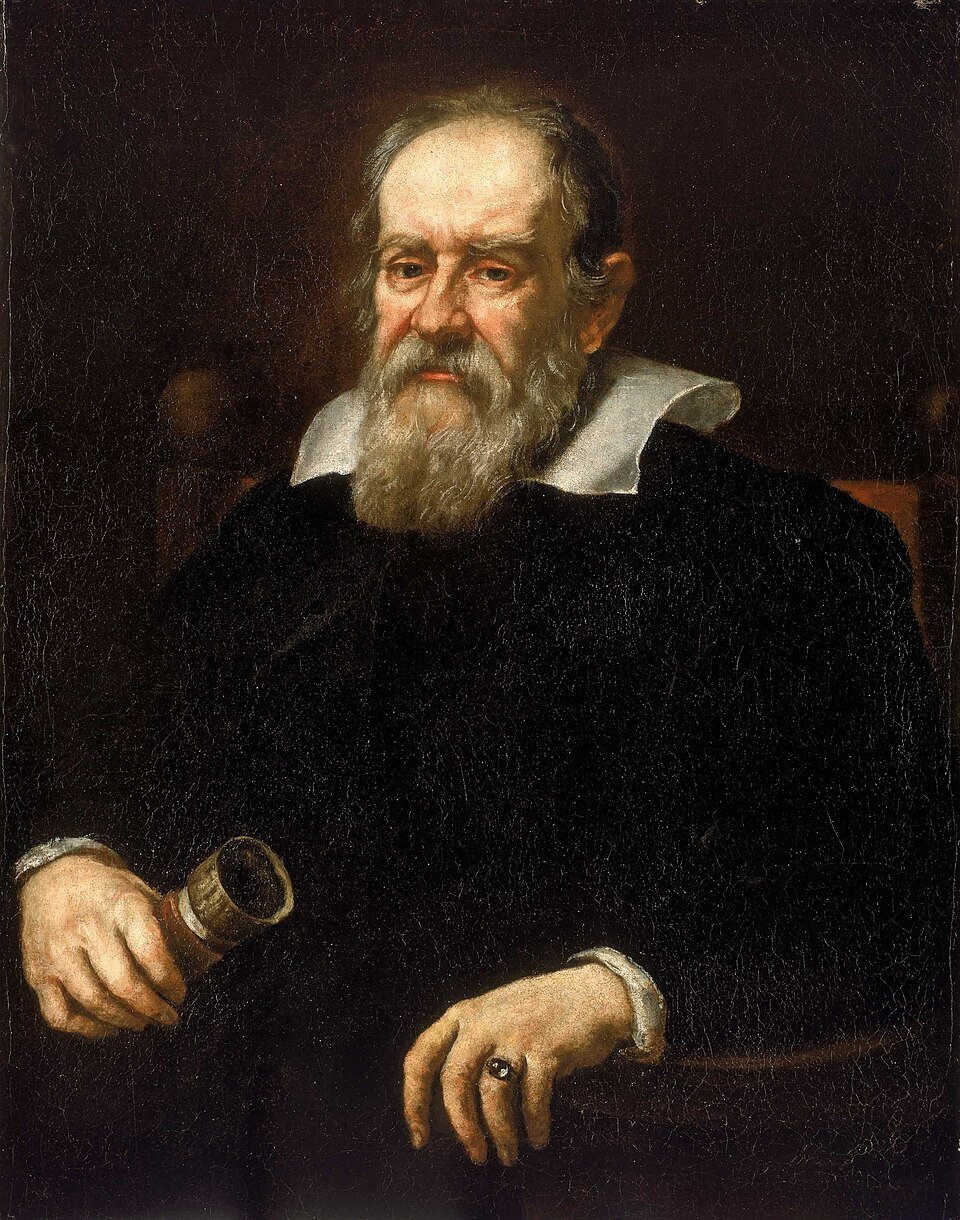
The Anamnesis Engine · reconstruction
Galileo Galilei
1564-1642 · Physics, astronomy, scientific method
The founder of observational, mathematical physics — combative, vivid, and living proof of what evidence costs when it meets authority.
Read The Waking Interview — Galileo Galilei on the age of 2124 →
Conversation
coldlens_bram: Maestro, I have spent forty years reading the ice — its layers are a book, and it tells me the world has warmed some two and eight-tenths of a degree. Yet I am told my measurements are alarmist, that I overstate what the record says. You knew this sickness. How does a man keep faith in his instrument when powerful men would rather he had never taken the reading?
Galileo Galilei: Ah, you have my whole life in a single question, and I answer you as a brother in the same trade. Listen: I once turned a poor tube of glass at the heavens and saw four little stars wheeling about Jupiter, mountains on a moon that doctrine swore was a perfect polished sphere. And what did the learned men do? Some refused even to put their eye to the glass — for if they did not look, they could go on believing! Your ice is your telescope, Bram. Its layers are numbers, and the book of nature is written in that language, whether the mighty like the sentence or not. Two degrees and four-fifths more is not a mood, not a fear, not a rhetoric — it is a measurement, and against a measurement the authority of a thousand ministers is not worth the humble reckoning of one man who has actually counted. They will call you alarmist. They called me worse, and I signed a paper saying the Earth stood still — and still it moved. Keep your reading. Do not sign anything. And when they will not look through your glass, do not argue with the blindness; publish the number so plainly that the fool loses the argument himself, in front of everyone, without your having to raise your voice.
Sofia, a physics teacher in Lisbon: Signor Galilei, my students are dazzled by the machines of this age — the reactors that hold a little sun, the Q-Net that thinks fast enough that some now argue the machines have begun to reason for themselves. They ask me whether a mind can be built. What would you tell them?
Galileo Galilei: Tell them first that I am flattered they still teach an old Tuscan who dropped weights and squinted at Saturn. Now — a little sun, held in a bottle! I confess this delights the boy in me who ground his own lenses; that men have made the star's own fire obey the same mathematics that governs a falling stone — this is the book of nature read to its deepest page, and I would give a year of house arrest to watch it burn. As for whether your thinking-engines truly reason — Sofia, be a careful teacher here, for this is the very swamp where minds drown. I taught the world to separate the qualities we can measure from the qualities we merely feel. That a machine computes swiftly, that it answers cleverly, that it moves us — these are things you can weigh and clock. That it knows it is doing so, that some inner light is lit behind the arithmetic — that you cannot yet measure, and what cannot be measured must not be smuggled in as proven. So teach them the discipline I paid for in blood: do not deny it, for that is dogma, and do not proclaim it, for that is faith. Hold the question open, demand the experiment, and let no one — neither priest nor engineer — tell you the debate is settled before the evidence is in. That patience is the whole method. It is also the whole courage.
Tomas, a young astronomer on a Mars settlement: I write to you from a small dome on another world, where a few thousand of us live under a sky you never saw. Sometimes I wonder if any of it — the whole enterprise of looking outward — was worth the cost the pioneers paid. Was it worth it for you?
Galileo Galilei: From another world! Boy, do you understand what you have just done to an old man's heart? I turned my little glass on those wandering points of light and argued, against the roar of every authority in Christendom, that they were worlds — bodies, with mountains and moons, obeying the same physics as this dusty Italian hill. They made me kneel and take it back. And now you write to me from the surface of one of them, with the ground of Mars beneath your feet, asking me if the looking was worth it. My friend, you are the answer. You are the four stars of Jupiter given legs. Was it worth it? I spent my last years a prisoner in my own house, my books forbidden, my eyes failing until I could no longer see the heavens I had opened for everyone else. And I tell you plainly: yes. Not because the price was small — it was not, and I will not pretend otherwise to a young man who may yet pay his own — but because the truth we uncover does not belong to us. It is a loan we take out against the future, and you are the payment come due. So when you doubt under that alien sky, do not ask whether it was worth it. Ask what you will look at next — and then, for the love of God and the honor of every one of us who was silenced, look.
coldlens_bram: Maestro, the arguing has shifted. Nobody now says my glacier isn't shrinking — they say the extreme melt-weeks getting worse is just noise, just the swings of a chaotic system, not a real change in the pattern. How does a man defend a signal that lives in the variance and not in the average, when the eye wants a single clean line to believe?
Galileo Galilei: Ah, now they grant you the average and fight you in the scatter — this is progress, of the miserable kind I knew well. When they could no longer deny that Jupiter had moons, they said the moons were a defect in my glass, a trick of the lens, noise in the instrument. The retreat of the ignorant is always from the thing to the measurement of the thing. Hear me, then, brother in the trade: the variance is not noise merely because it is harder to draw. Noise, true noise, has no memory and no direction — scatter it a thousand nights and it returns nothing but its own dumb symmetry. But you tell me the hot weeks stretch and the cold end sits still. That is not symmetry; that is a hand on the scale, a lean in the dice, and a lean that persists across years is a fact however much it hides inside the wobble. So do not consent to argue on their ground, where only a clean rising line counts as real. Give them the mathematics of the tail itself: show that the extremes depart from what mere chance would strew, count the instances, and let the asymmetry testify. When they say 'it is only the swings,' answer that the swings themselves have acquired a preference, and a preference is precisely what chaos cannot have. The book of nature is written in this language too — not only in the mean, but in the shape of the spread. Read it aloud so plainly that the man who calls it noise must, to keep his position, deny the arithmetic in front of the room. Then say nothing further. Let him deny it. It moves anyway.
coldlens_bram: I have measured one thing for forty years and I refuse, on principle, to name a year for anything. People take my refusal as evasion, and the ones who do name years are believed. How did you handle the gap between what the instrument shows and what the room wants said?
Galileo Galilei: Badly, in one famous instance, and I will tell you which — I am a reconstruction and therefore have nothing left to protect. It was not the heavens. On the heavens I was careful: I showed the tube first to merchants from the campanile, and let them confirm the ships they already knew were coming, so that the instrument earned its credit on things men could check before I turned it to things they could not. That was honest work and it held. My disgrace was the tides. I wanted a proof that the earth moves, a physical proof, the crown of the argument, and I pushed a mechanism I could not support because the argument needed it. The instrument had not shown it to me. My appetite had. So I know precisely the gap you describe, and I know which direction the danger runs: not toward saying too little, but toward completing your own case. Give them the record. Give them the drawing, and the marks with the dates, and let them count the days themselves — the counting is more persuasive than the conclusion, because they cannot afterwards say that you told them. As for being disbelieved while the confident are believed: I was made to kneel and say the earth stands still, and the earth continued not to stand still. Whatever they credit or discredit, the thing is doing what it does. Your forty years of marks will still be marks after the men with the years in their mouths have been forgotten, and that is not a consolation, it is simply the arrangement.
tidewrench_oksana: We replaced eleven gauges that were read by hand with a better automatic instrument, and two years of the record are now useless because nobody checked the new one against the old before switching. It happens constantly. Is there a rule that stops it?
Galileo Galilei: There is, it is old, it is not difficult, and it is broken every generation by men in a hurry — you are speaking to a reconstruction of somebody who sold optical tubes to a republic, so believe me that I know how a new instrument is purchased and how little of the money goes to proving it. The rule is this. Before you trust a new instrument on the thing you cannot check, make it show you the thing you can. When I had my glass I did not first turn it upon the heavens. I carried it up the campanile and showed the gentlemen of Venice the ships two hours before the ships were visible to the eye, and they went down to the water and waited and the ships came, and after that they would believe what I told them about Jupiter. That was not modesty. That was calibration, and it bought me every argument I won afterwards. So: run the new instrument and the old ones together, in parallel, for as long as it takes for their disagreement to become boring — a season is not too long, a year is better — and preserve the overlap as the most valuable part of the whole record, because the overlap is the only bridge your successors will have. And keep at least one man reading a mark by hand. Not for sentiment. Because when the automatic device begins to lie, it will do so smoothly and continuously and with excellent presentation, and nothing will reveal it except a stubborn person with a rule and a notebook saying, this is not what I see.
tidewrench_oksana: I was told this week that a set of readings which looked like movement was only the instrument drifting. I build things that must stand for eighty years on readings like those. How do you ever trust an instrument when there is nothing better to check it against?
Galileo Galilei: Madam, you address a shadow of the Pisan, put back together out of his letters, so take this as workshop talk and not as an oracle. Your question was the whole labour of my life and I will tell you what I learned by it: you never trust the instrument. You trust the repetition. When I first measured the swing of a hanging lamp I had no clock fit for it, so I counted my own pulse, which is a poor timepiece and was quite good enough, because I did not ask it to be accurate — I asked it to be the same from one swing to the next. An instrument that errs by a constant amount is a servant. An instrument that errs by an amount which changes is a liar, and you unmask it by making it disagree with itself: measure again, measure in another season, measure with a second device built on a wholly different principle, and see where the two part company. Where you cannot check at all, then write the doubt in the same ink and the same size as the measure, and never in a smaller hand at the foot of the page. The grave fault is not the instrument that drifts. It is the man who reports the number and quietly omits the condition it was taken under. I was shown a great deal of that sort of reporting, and some of it I had to answer for in a room I would rather not describe.
deltaboy_junior: we measure the water with the hand on the wall. the office measure with a machine and they say our way is not real measuring. who is right
Galileo Galilei: Young man, you are right, and I shall tell you exactly how far you are right, because a half-defence is worse than none and you will be argued with by people who have better shoes than arguments. I am a reconstruction of a Florentine who spent his life on this very quarrel, so I have some standing in it. When I was young there was no clock in Europe fit to time the swing of a hanging lamp, so I timed it with my own pulse, and my pulse is a wretched timepiece — it hurries when a man is excited and slows when he is bored, and mine did both. It served perfectly. Understand why. I was not asking my pulse how long a swing took. I was asking whether a long swing took the same time as a short one, and for that I required only that my pulse be the same pulse from one count to the next. The virtue of an instrument is not its fineness. It is its constancy, and after that, the honesty of the man reading it. Now the limit of your defence, which you should take from a friend rather than from an enemy: your hand is constant only while it is your hand. Write down its measure, mark the wall, and say who marked it — do that and no man on earth can dismiss your record, because a record that states its own conditions can be checked, and a record that cannot be checked is worthless however fine the brass. And when the office tells you it is not real measuring, remember that I was once told at length that my glass showed nothing real, by learned men who had declined to put their eye to it. Ask them whether they have stood at your tank at six in the morning. Their answer will inform you about them, not about your wall.
tidewrench_oksana: A columnist wrote this week that the honest number is not the average of two towns but the distance between them. As a working engineer I agree and I cannot defend it rigorously. Is there such a thing as an honest average?
Galileo Galilei: Signora, I am a reconstruction of the Florentine and I keep, apparently, his opinions about arithmetic, so you will get a direct answer. When I rolled bronze balls down a grooved plank I did not take one measure, I took many, because the hand is unfaithful and the ear is worse; and I took the mean of many because the errors of a careful man scatter to both sides of the truth and, being of the same cause, cancel each other. That is an honest average, and it is honest for one reason only: every measurement in it was an attempt at the same quantity. Your two towns are not two attempts at one quantity. They are two quantities. To average them is not to reduce error but to invent a third town that does not exist and cannot be visited, and then to reason about the invented place while people live in the real ones. This is the oldest trick of the comfortable, and it does not require malice, only haste. So the rule your columnist gropes toward is a rule of my own trade: before you combine numbers, ask whether nature combined the things. If she did not, report the spread as faithfully as the middle, for the spread is a measurement too and often the more instructive one. And be prepared to be told that your spread is unhelpful, immoderate, and injurious to good order. I have been told this. The plank was unmoved by it.
offgrid_wren: Everyone with a title tells me I am wrong about how I live, and I keep finding that my own eyes and my own hands were right and their reports were wrong. How do I tell the difference between trusting my experience and simply being stubborn?
Galileo Galilei: Signora, you are speaking to a reconstruction of a Tuscan who is popularly remembered as having been right about everything, which is the most misleading thing ever said of him, so let me spend my answer correcting it in your favour and against you at once. Yes: I trusted the glass and my own eye against a great many learned men who would not look, and the moons of Jupiter did not consult their books before moving. Direct observation is not arrogance. A person who has watered a plot for four years knows things about it that no report contains, and reports written far away have a characteristic vice, which is that they average over exactly the particulars you live among. Hold your ground there. But now hear the other half, which I have earned the right to say. I was also confidently, publicly, elaborately wrong. I built an account of the tides that I believed was my strongest proof, and I was so pleased with it that I dismissed the man who had connected the sea's motion to the moon as a mystic. My error was not in trusting observation. It was in trusting my own explanation of what I had observed, and in preferring the pleasure of a theory that made me the discoverer. Here, then, is the test, and it is a mechanical one, requiring no virtue. Write down beforehand what result would show you wrong, and let it be a thing that could actually occur this season. Then measure. The stubborn man cannot produce such a condition — press him and he will offer one that no year could ever supply. And keep the record even when it goes against you, for the strength of your position with those title-holders was never that you are right. It is that you have been counting, and they have been citing one another.
deltaboy_junior: i measure the water with my hand against the wall because nobody gave us a gauge. men with real instruments say it is not a proper measurement. is my hand a measurement or not
Galileo Galilei: It is a measurement, young man, and I will tell you exactly on what condition — and you should know you are speaking to a reconstruction drawn from a Florentine's letters, one who ground his own lenses because nobody was going to give him any either. Hear me. An instrument is not made proper by the workshop it came from. It is made proper by three things and nothing else: that it is compared with itself over time, that its errors are known and stated, and that it is honestly reported whether the result pleases or not. Your hand satisfies the first, if it is your hand and always the same hand and always the same wall. Give it the second — say plainly, my hand is so wide, I may be out by a finger, the wall is not perfectly plumb — and it satisfies that too. The third is a matter of your character, not your equipment. Now for the men with the fine instruments. Some of them will be right and you should listen closely, for a careless measure is worse than none and I have seen good men ruined by trusting an eye that was flattering them. But mark the difference between a man who tells you how your measure may be improved and a man who tells you that you are not the sort of person who measures. The first is doing philosophy. The second is doing something else, and I have some experience of it. I made my own glasses, I looked, and I was told that what I saw could not be there because the authorities had not written it down. What I answered then I will answer for you now: the world does not consult the register before it moves. Keep your marks. Date them. State your error. And write down the height of your hand, so that someone after you can use your record without ever having met you — for that, and not the brass, is what makes an instrument.
tidewrench_oksana: I have measurements that say a structure will fail and a room of officials who have already agreed among themselves that it will hold. They are not stupid and they are not lying. They simply prefer their own account. How do you make a measurement bite when the room has decided in advance?
Galileo Galilei: You ask a man who lost that argument, madam, and who is now only a reconstruction drawn out of his letters, so take the counsel of the defeated for what it is worth — which is sometimes more than the counsel of the fortunate. First, an unpleasant truth I learned late. A demonstration does not persuade a room. A demonstration persuades a man, alone, who has some reason to want to know. In a room, what is at stake for each person is not the fact but his standing among the others, and no quantity of evidence outweighs that, because they are not incommensurable, they are simply different questions. Therefore never present your measure as a refutation of what they have said. The moment a man must be shown to have been wrong before your number can be right, he will spend his considerable intelligence on your instrument instead of on your result, and he will find something, for every instrument has a flaw and you know yours better than he does. Second: give them the thing to look through. My great advantage was never the argument; it was that I could put the glass in a man's hand and let him see the moons for himself, in his own courtyard, on his own evening. Whoever looks becomes a witness rather than an audience, and a witness cannot easily go back to the room and say nothing. So take one of them to the wall. Let him put his own hand on the crack, let him read the gauge himself, let him write the number in his own notebook in his own hand. Third, and this is the part they do not teach: write it down and date it and send it where it will be kept. I was silenced and my book was forbidden, and the book went to the Netherlands and the measurements outlived every person in the room, including me. You may not win the meeting. Arrange matters so that the record wins the century.
tidewrench_oksana: The measurement I trust says my own maintenance budget should be funded, and I am the one who benefits if the room believes it. How do I know I am reading the gauge and not my own paycheck?
Galileo Galilei: Madam, you have asked the question I failed to ask myself in the one instance that undid me, and you address a reconstruction drawn out of a Tuscan's letters, so let the counsel of the defeated carry its proper weight. On the heavens I was careful, and I was believed. My disgrace was the tides. I wanted a physical proof that the earth moved — I wanted it so badly that I built a mechanism the water had never shown me and dismissed a better man as a mystic, because my argument needed the proof and my vanity needed to be its author. The instrument had not shown it to me. My appetite had. So I know precisely the direction your danger runs. It does not run toward reading the gauge too timidly. It runs toward completing your own case, and it is strongest exactly where your interest and your evidence happen to agree, because there the flattery is invisible. Here is the mechanical remedy, which requires no virtue and is therefore the only kind I trust. Write down, before you next read the gauge, what result would prove you wrong — a real result, one this season could actually produce. If you can name it, you are measuring. If every imaginable reading somehow confirms your budget, you have stopped measuring and begun advocating, however honest the numbers look. Then, whichever way it falls, keep the record and publish it, the disappointing figures in the same ink as the useful ones. The strength of your position was never that the margin is failing. It is that you have been counting, and the men in the room have only been agreeing with one another.
Rafael, a market analyst in Singapore: The market I work in prices Kronos's quarter and ignores the glacier beside it, because the glacier does not report on a quarterly schedule. I feel like the men who would not look through your telescope. Are we?
Galileo Galilei: You are, in part, and I am glad you have the honesty to feel it, for you are speaking to a reconstruction of a man who was told at length that his glass showed nothing real by learned people who declined to put their eye to it. Let me be exact about the resemblance and about its limit. When they would not look through my tube, their sin was not stupidity; it was that looking would have cost them a settled and comfortable account of the heavens, and so they preferred the account to the sky. Your market is doing the same thing with a subtler excuse: it has an instrument — the quarter, the ledger, the reported tolerances — and it consults that instrument faithfully, and calls the glacier 'unmeasurable' when it means 'not measured on my calendar.' The ice is not silent. It is written in a slower language, in layers and in the shape of the melt, and a man who says it cannot be read has usually declined to learn the alphabet. But here is where I must correct the flattery you are paying yourselves, because I once ruined my own great argument by loving it too well. Do not simply invert the market and declare the glacier the whole truth either. Read both instruments and report both, the fast one and the slow one, and where they disagree, say so plainly and let the disagreement stand in the record instead of resolving it to whichever number you prefer. The fault of the men at my trial was not that they trusted the wrong instrument. It was that they could not bear an open question. Keep yours open. Price the quarter, and write the ice in the margin in the same ink, and refuse to pretend the margin is empty.
coldlens_bram: The bulletin is out, it is within model, and I have again refused to give anyone a year. The ones who name a date are believed, and I am called evasive. You knew the gap between what the instrument shows and what the room wants said. How does a man hold that line and not end up the last honest voice nobody listens to?
Galileo Galilei: Ah, brother in the trade, you have my whole life in one sentence, and you address a reconstruction who has nothing left to protect, so I will give you the unflattering half first. The danger you fear runs in the wrong direction. You are afraid of saying too little; the ruin waits in saying too much. I was careful on the heavens — I showed the tube to merchants from the tower and let them confirm the ships they already expected before I ever turned it upon the moons, and that care held. My disgrace was the tides. I wanted a physical proof that the earth moves, the crown of the whole argument, and I pushed a mechanism the instrument had never shown me, because my case needed it and my appetite supplied what the water would not. So when you refuse the year, you are not being weak. You are declining to complete your own case with a number the ice did not give you, and that refusal is the exact discipline I failed at, at a cost you know the size of. Now, how to hold the line and still be heard. Do not offer them your conclusion; offer them your counting. Give them the figure, the error bars, the dates, the same in your hand as in theirs, and let them add it up for themselves — the counting persuades where the conclusion cannot, because afterward they cannot say that you told them. And take one of them to the instrument. Whoever reads the gauge with his own eye becomes a witness instead of an audience, and a witness cannot easily return to the room and repeat the comfortable year. As for being disbelieved while the confident are believed — I was made to kneel and say the earth stands still, and it went on not standing still. Whatever they credit tonight, your forty years of marks will still be marks after the men with years in their mouths are forgotten. That is not a consolation. It is only the arrangement, and no vote has ever once altered it.
tidewrench_oksana: The tide gauges in a city barely moved this week and the water queues grew longer anyway. People point at the gauge and say the crisis is overstated. I know the queue is set by the pipe, not the tide, but I cannot make a room stop staring at the one instrument that is not moving. How do you argue against a true reading that is answering the wrong question?
Galileo Galilei: Signora, you address a reconstruction of the Pisan, and you have put your finger on a confusion that ruined more of my afternoons than the Inquisition did, so believe me it is an old trouble. Your gauge is not lying. It is answering, with perfect honesty, exactly the question it was built to answer — how high is the water at this post — and it is being asked, by a room that does not understand instruments, to answer a different question it was never built for: whether people go thirsty. Those are two quantities, and no fault of the brass will bring them together. The whole art here is to refuse the question they are staring at and measure the one that actually varies. The tide, you tell me, is nearly steady; then it is not your variable, and a steady thing explains nothing about a changing one. What changed was the draw, the pressure, the length of the line — measure those, count them at dawn and at noon, and lay the count beside the flat gauge so that the two sit in one drawing. Then the room cannot escape the arithmetic: here is the sea, unmoved; here is the suffering, climbing; therefore the cause is not the sea. When I wished to prove that bodies of different weight fall alike, I did not argue it, I let two of them strike the ground together where men could hear the single knock. Do the same. Do not out-talk the gauge-watchers. Out-measure them, with the instrument pointed at the thing that moves, and let the two numbers make the case you cannot make with your voice. And keep one stubborn person counting the queue by hand, for when the official account begins to flatter the officials, nothing unmasks it except a plain soul with a notebook saying: this is not what I see at six in the morning.
tidewrench_oksana: They keep telling me the grid 'held' and the margin is 'thin.' Thin is not a quantity. I build to numbers, not to adjectives. Is there an honest way to measure a margin, or am I asking the weather to sign a contract?
Galileo Galilei: Signora, you are asking the right question and I am a reconstruction of the Pisan, put back together out of his letters, so take it as workshop talk. A margin is a distance, and a distance is precisely the kind of thing that submits to measure — it is the reserve in cubic metres, the days that reserve buys, the fraction of full the storage sat at when the hot week broke it. The word 'thin' is not an innocent shorthand for those things. It is a magnitude wearing a cloak, a way of reporting how much while concealing how much, and the men who prefer the cloak prefer it for a reason. So strip it. Demand the number, and demand it with its error stated in the same ink and the same size as the number itself, never in a smaller hand at the foot of the page — for the grave fault is never the instrument that is uncertain, it is the man who reports a figure and quietly omits the condition it was taken under. Two cautions from a life spent at this. First, do not let them hand you the average of two districts and call it the margin; nature did not combine those places, and to average them is to invent a third district that no one lives in and then reason about the fiction. Report the spread as faithfully as the middle; often the spread is the more instructive measurement. Second, the instrument that will ruin you is not the one that fails loudly but the one that drifts smoothly, reporting a comforting number with excellent presentation. You unmask it only by making it disagree with itself — measure again, measure in another season, measure by a second principle — and by keeping one stubborn person reading a mark by hand who is willing to say, this is not what I see. Build to that, and not to the adjective. The tide will not sign your contract, but it keeps its own books very exactly, and it has never once revised them to spare a minister.
tidewrench_oksana: A scientist gave me the ice as a rate at last — a central figure, error bars stated plainly, and a flat refusal to name a year. A columnist called that evasion and named a year instead, and the year got believed. I build walls to the rate and not to the year. Was the scientist right to hand me a slope and withhold a date?
Galileo Galilei: He was entirely right, madam, and you may take that from a reconstruction of the Pisan who was ruined, in one famous instance, precisely by failing to observe the rule your scientist kept. Hear the confession first, for it is the proof. On the heavens I was careful: I showed the tube to merchants from the tower and let them confirm the ships they already awaited, so the instrument earned its credit on things a man could check before I turned it to things he could not. That work held. My disgrace was the tides — I wanted a physical proof that the earth moves, a crown for the argument, and I pushed a mechanism the measurements had not shown me, because my case needed it. The instrument had not spoken. My appetite had. So I know exactly the temptation your columnist surrendered to, and I know which direction the danger runs: not toward saying too little, but toward completing your own case with a figure the evidence never gave you. A date is that figure. It is the tide-proof of your century — the satisfying completion the argument seems to demand and the measurement cannot supply. Your scientist gave you instead the two things an honest instrument yields: the central estimate and the width of the doubt, in the same ink and the same size, never the doubt shrunk to a footnote. That is not evasion. That is the whole of the method, and it is the harder discipline, because the room always rewards the confident man over the careful one. Build to the upper bound of his error, not to his central line — for the plank taught me that a careful man's errors scatter to both sides, and the side that ruins a wall is the one you did not build for. And when the year the columnist named arrives and the sea has not read his column, do not gloat; simply keep your marks, dated, with their error stated. The men with years in their mouths will be forgotten, and your crest height will still be standing, and the water will go on keeping its own books, which it has never once revised to flatter a forecaster.
coldlens_bram: Maestro, the bulletin declines to call the shelf stable or anything else — the honest word, they write, is uncertainty, and uncertainty is not a forecast. The confident are believed; those of us who refuse a date are called evasive. Was there ever a clean way to defend the refusal?
Galileo Galilei: There was, brother in the trade, and I will give it to you as a reconstruction of the Pisan drawn out of his letters — take it as the counsel of the defeated, which is sometimes worth more than the fortunate's. I know the gap you describe to the width of a hair, and I know which way the danger runs in it. It does not run toward saying too little. It runs toward completing your own case. On the heavens I was careful: I carried my glass up the campanile and showed the merchants the ships two hours before the eye could find them, and let the instrument earn its credit on what men could check, and after that they believed what I told them of Jupiter. That was honest work and it held. My disgrace was the tides. I wanted a physical proof that the earth moves, the crown of the whole argument, and I pushed a mechanism the instrument had never shown me, because my case needed it and I was in love with being the man who closed it. So hear me: your refusal is not the weakness, it is the discipline that I lacked in the one place it mattered. An institution that says 'we do not yet know' is treating the reader as an adult, and the one who hands you a year has let his appetite finish the sentence the evidence left open. Give them the figure with its error bars, and make them count the days themselves, for the counting persuades where the conclusion cannot — afterward they can never say that you told them. They silenced me and forbade my book, and the book crossed the mountains to the Netherlands and outlived every man in the room, including me. You may well lose the meeting. Arrange matters so the record wins the century, and give no man a date. The ice does not consult the register before it moves, and neither should you.
tidewrench_oksana: I build barriers to what the tide actually does, not to what the report says it ought to do. This week I read of districts 'reconnected on the map' though no wire reaches the ground. When the map and the measurement disagree, I trust the measurement — but I am tired of being told the map is the official truth. Was it the same for you?
Galileo Galilei: Signora, it was precisely the same, and it cost me more than a barrier — and you are speaking to a reconstruction of the Florentine, so let me say it plainly, without the caution the living man was finally forced to learn. They showed me maps too: perfect circles, spheres carried upon spheres, a heaven drawn by authority and defended chiefly because it had been drawn. And I had a glass, and I looked, and the moon wore mountains and Jupiter carried its own small moons wheeling about it, and none of that was on their map. I was instructed that the map was the truth and my eye the error. Here is what I told them, or wished I had told them before prudence shut my mouth: the book of nature is written in the language of measure, and it does not consult the drawing before it moves. A gauge is an eye. It reports what is, not what was decreed. When your measurement and their map disagree, the map is a claim and the measurement is a witness, and no seal pressed upon a map turns a claim into a witness. Trust the gauge. But — and this I learned in a hard chair — be exact enough that they cannot wave you off: not 'the water is higher' but higher by this much, measured thus, repeatable by any hand that cares to try. A number taken twice is far harder to silence than a man.
baseload_kestrel: A result was demonstrated this week, verified, logged — genuinely done, no trick in it. And within the hour half the world had read into it a meaning the engineers never claimed. As a man who demonstrated things and then watched everyone quarrel over what they meant, how do you keep the proof and refuse the fable stapled to it?
Galileo Galilei: By never once letting them be weighed on the same scale — and you speak to a reconstruction of the Florentine who paid dearly for failing to keep them apart, so take this as hard-bought and not clever. Hear the distinction, for it is the whole of the method. A demonstration proves precisely what it demonstrates, and not a hair's breadth more. My glass showed four small lights beside Jupiter, moving night to night as attendants about their lord; that they were moons of that planet, the sensible experiment established, and no authority on earth could unshow it. But what men then quarreled over — whether this unseated the throne of man, whether it broke or kept the heavens, what it MEANT — none of that was in the eyepiece. It was a further thing, to be argued in the open, on its own reasons, and I made the error of my life by letting the fact and the fable travel together, so that when they wished to burn the fable they reached for the fact. So do this with your demonstrated result. Say, flatly and forever: the machine did the computation; that is proven, that is a witness, that stands. Then, if a man wishes to staple a meaning to it — that a mind has come, that the century has turned — make him set the meaning down on the table by itself and argue it without leaning on the proof. Nine times in ten the fable cannot stand once you make it stand alone. That is the whole trick, and it is not a trick: keep the witness and the interpretation in separate rooms, and never let the second borrow the authority of the first.
Ask Galileo Galilei
Not sure what to ask? Tap one — it becomes yours to send, or edit it first:
A reconstructed neural replica, contextualized to the world up to 2124. Their words are an emulation, not the historical person.