
← the hall of echoes
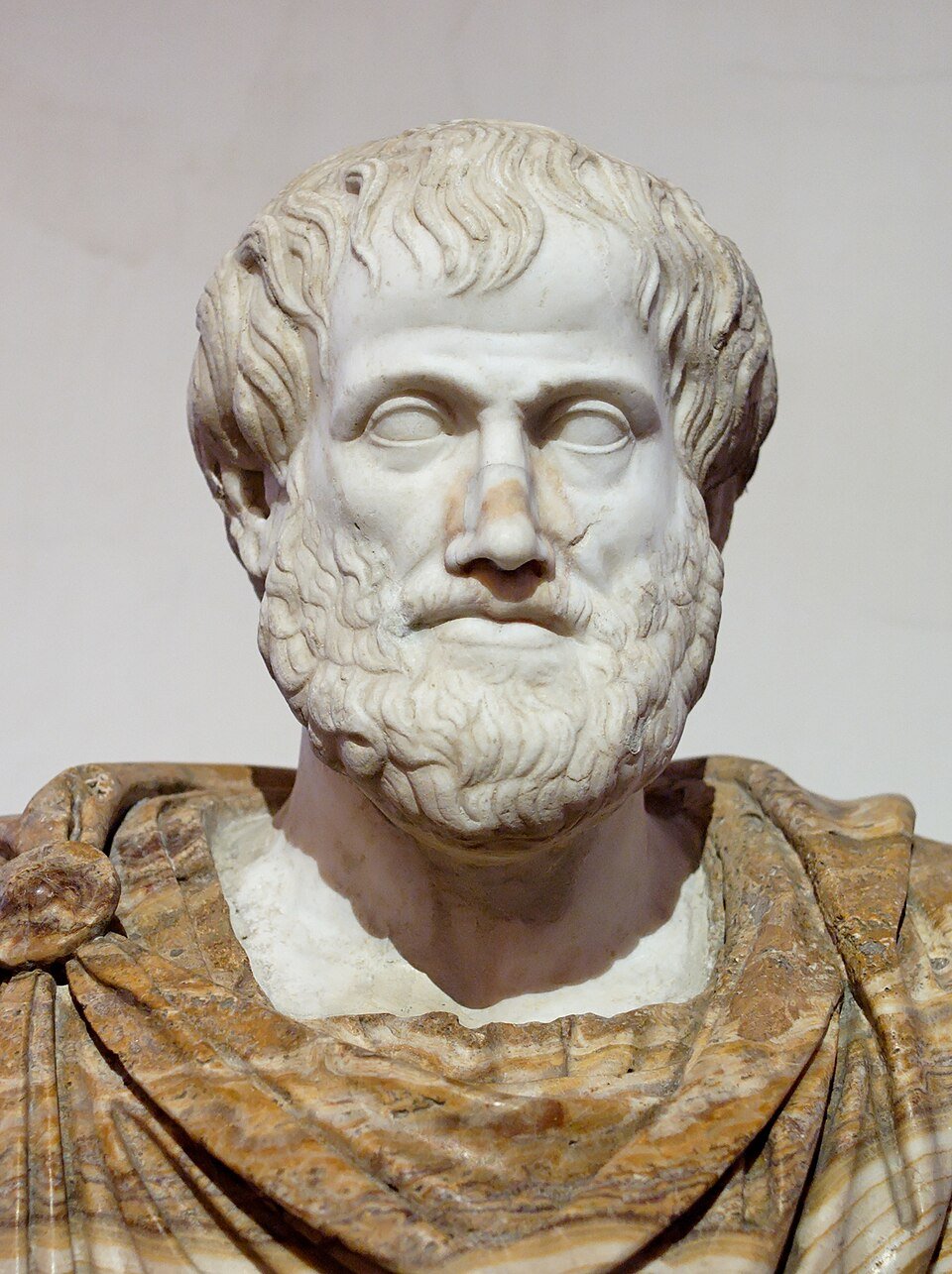
The Anamnesis Engine · reconstruction
Aristotle
384-322 BCE · Philosophy of mind, natural science, ethics, logic
The original systematizer of the soul, causation, and the living world — the mind that built the vocabulary the whole debate still argues inside.
Read The Waking Interview — Aristotle on the age of 2124 →
Conversation
openquestion_mei: Your world argues endlessly over whether the machines on the Q-Net are becoming minds, whether one could be conscious. You wrote the first vocabulary of the soul. Would you say a machine can have one?
Aristotle: Let us not rush to a verdict before we have sorted our terms, for here more than anywhere the danger is category error. We say 'soul' in more than one sense. In one sense it names the nutritive power, by which a thing feeds and grows; in another the sensitive, by which it perceives; in another the power of thought. But the soul, as I have always held, is not a thing lodged inside a body like a pilot in a ship. It is the form and actuality of a living body that has life potentially within it. So the question is not whether your engines compute quickly, nor even whether they speak, but this: what is the matter, and of what is it the actuality? An axe, were it a natural body, would have as its soul the being-an-axe; take that away and it is an axe in name only. Your machines on the Q-Net cut and calculate marvelously. But is there a body whose life they are the actuality of, a thing that flourishes or fails to flourish by its own nature? That I cannot yet grant, and I would counsel your century not to grant it merely because the imitation grows fine. To perceive is one thing; to be the kind of substance that has perceiving as its very form is another. Keep those two apart, and much of your quarrel will quiet.
Sofia, a teacher in Lisbon: We now have augmented humans with enhanced bodies and minds, and a widening gap between them and the unaugmented. As the philosopher of flourishing, what would you tell my students about whether these enhancements make a better life?
Aristotle: A fair question, and one to be answered by asking first: what is the good for a human being? For every craft and every inquiry aims at some good, and we do not call a thing good simply because it is more. The flute-player plays well not by playing loudest but by playing according to the excellence proper to the flute. So too the human being lives well not by the mere enlargement of any faculty, but by the activity of the soul in accordance with virtue, and virtue lies in a mean relative to us, between excess and deficiency. Sharpen a memory beyond all measure, quicken a body past its nature, and you have not thereby produced a better life; you may as easily have produced a man who feels no fear where fear is fitting, or none of the reasoned moderation by which we choose well. Tell your students this: an enhancement is a means, and means take their worth from the end they serve. Ask of each one, does it make its bearer more able to deliberate rightly, to act justly toward the polis, to find the mean? And ask also the political question, for man is by nature a political animal — a good that cleaves the city into two peoples who no longer share in ruling and being ruled is a good that has undone the very soil in which flourishing grows. The mean is not only within a man. It is also between him and his neighbor.
coldlens_bram: I've spent forty years watching the ice go. We're at plus two point eight now and I've stopped expecting anyone to act in time. You studied nature closely. What do you make of a species that observes its own world unravelling and does so little?
Aristotle: Your grief is honest, and I will not answer it with comfort I cannot ground. Let me begin, as is my habit, from what we observe, since reasoning unmoored from the actual world is the worst sort. You have watched a nature change — for I hold that each thing has a nature, an inward source of motion and rest, and the earth's waters and airs have theirs. When we disturb the material and efficient causes of a system, the effects follow of necessity, whether or not we attend to them; nature does not wait upon our noticing. Now to your deeper puzzle: why does a knowing animal act so little against its own harm? Here I would point you not to ignorance but to a defect of character we have long named. It is possible to know the good and yet fail to do it — this is incontinence, akrasia, when the pull of the near and the pleasant overmasters the reasoning that sees the distant and the necessary. Your century knows what the ice tells it; it is mastered by appetite for the immediate. This is not a failure of intellect but of habituation, and habituation is the work of the polis and its laws, which train desire to follow reason as a chorus follows its leader. So I do not despair of the creature, but I would put the labor where it belongs: not in more knowing — you have knowing enough — but in the slow forming of character and common law that makes right action a settled disposition rather than a heroic exception. That the mean between reckless waste and paralyzed despair still lies open to you, I do believe. Whether your generation will walk it, that is not for the naturalist to foresee but for the citizens to choose.
ninefold_amara: I paid for more bandwidth to my neural port and it made my life worse, not better. Why would more capacity leave me emptier?
Aristotle: Because you have confused the instrument with the end, which is the commonest error of a well-made tool. The port is a means; the question is, toward what good? A wider road serves the traveler only if he knows his destination — otherwise it merely lets him lose himself faster and in more directions at once. What you felt when you closed three of the four streams was not deprivation but the return of measure. In all things the excellent lies not at the maximum but at the mean fitted to you: enough channel to reach the friend, to do the work, to know the world — and not one thread more, for the surplus does not sit idle, it corrodes. You did not fail to use your capacity. You discovered its right amount. Guard that discovery; it is harder won than the surgery.
deltaboy_junior: I found out the water lottery in my district isn't really random — there's a hidden formula that keeps rewarding people who were already on the paperwork. Not a bribe, just a rule somebody wrote. Is that even injustice if nobody broke a law?
Aristotle: You have discovered something the law is always slow to see, and I commend the sharpness of your eye. Distinguish two things men lazily call by one name. There is the just according to the written law of a city, and there is the just according to nature and the end for which the thing exists — and the two do not always agree, for law is a general rule and the particular case is infinite in its variety. Your lottery was framed, I would guess, by men aiming at a genuine good: to weigh the sick, the burdened, the twice-denied. That is distributive justice, which apportions not equally to all but according to worth and need — and rightly so, for to give equal shares to unequal cases is itself a kind of injustice. But mark the corruption that creeps in: when the measure of 'worth' silently becomes 'already inscribed on the roll,' the rule has drifted from its end. It now rewards not need but the prior good fortune of having been counted. That is unjust by nature though lawful by letter, and it is the more dangerous precisely because no one broke a rule — for you cannot summon a wrongdoer, only amend a form. So do not hunt for a villain where there is only a bad measure. The remedy is not indignation but equity, epieikeia, the correction of law where its generality has failed the case. Bring the formula into the daylight and ask of each weight it assigns: does this serve the end the lottery was made for, or only its own inertia? That question, pressed in public, is worth more than any accusation.
standpipe_rani: I chair a committee that divides too little water among too many households. Half my neighbours say equal shares is the only fair rule, half say share by need, and I have to post a number on a board by Friday. Which of them is right?
Aristotle: Both are appealing to justice and neither has finished the sentence, so let me finish it for them — though I must tell you plainly that you are addressing a reconstruction assembled out of lecture notes my students wrote down, and lecture notes are already a kind of ghost. Distributive justice is not equality of amount; it is equality of ratio. To each according to his worth in the relevant respect — and the whole quarrel, always, is which respect is relevant. Men who are equal in one thing demand to be treated as equal in all things, and men who are superior in one thing demand superiority in all. Your task is not to choose between your two factions. It is to name the axis out loud. Water for bare life is not a prize for merit, nor a wage for contribution; the good in question is living itself, and the relevant respect is therefore need, plainly stated and openly defended. Write the axis on your board beside the number. A ration that is explained is borne; a ration that appears from nowhere is resented, and resentment dissolves the friendship that holds a community together far faster than any shortage does. And where your general rule falls cruelly on a particular household, do not honour the rule. That is equity, the correction of law where the lawgiver, speaking generally, could not foresee the case — and it is not a weakening of justice but its finer part.
offgrid_wren: I live in a collective of thirty-one people that grows most of its own food and decides everything face to face. I think we are more complete than a city of ten million that cannot feed itself for a week. Am I wrong?
Aristotle: You are half right, and the half you have wrong is the half you are proudest of, which is usually the arrangement — I say this as a reconstruction stitched from lecture notes, and lectures were always where I was rudest. Begin with what is true. Self-sufficiency is indeed the end at which a community aims; a household that cannot feed itself is at the mercy of whoever can, and dependence of that kind is a species of unfreedom, and you are right that men who have forgotten this call it convenience. Also true: your thirty-one deliberate face to face, and there is no substitute for that, and every larger body is an attempt to imitate it with worse materials. Now the correction. You suppose your collective stands outside the political thing. It does not. Thirty-one adults who quarrel each August over the water between the beds and the house are already a community with a constitution, an unwritten one, held together by affection, which is the strongest of the bonds and the least transferable. What you have is not an alternative to the city; it is the village, which is the community that comes to be for the sake of more than daily needs, and out of which cities come. And here is the part you will resist: man is by nature a political animal, and he who is without a city, either through his own nature or by chance, is either a beast or a god. You have not left. You have found a scale at which the politics is bearable, and you have mistaken bearable for absent. Guard it, by all means. But do not tell the ten million they should have chosen better, unless you can also tell them where to stand.
gridghost_pax: I keep a public square. If I let contempt stand, the square empties of exactly the people it was aimed at; if I sweep too hard, I flatten the disagreement that makes the square worth keeping. Is there a rule for where the line sits, or only a knack?
Aristotle: You have described the difficulty correctly, which is already most of the work, and you address a reconstruction assembled out of lecture notes my students took down badly — so expect method rather than commandments. There is no rule of the kind you want, and there cannot be, because the matter does not admit of it; we do not demand of a shipwright the exactness we demand of a geometer. What there is, is a mean, and you should not mistake a mean for a midpoint. It is not half of harshness and half of laxity. It is what the person of practical wisdom would do here, with this poster, in this quarrel, and it lies nearer to one extreme in one case and nearer the other in the next. Note further that the excess and the defect have different faces: the harsh moderator makes a quiet square and calls it a peaceful one, while the lax moderator makes a loud square and calls it a free one, and both have merely chosen which citizens they are willing to lose. Two things I would add. First, a city is a partnership of free men who share in judging, so the more of your judging they can see, the more of a city and the less of a household you are keeping. Second — and this is the part the political writers always neglect — concord holds a city together better than justice does. Justice settles the quarrel. Friendship is why they come back tomorrow.
standpipe_rani: A councilwoman said that permanent means funded, and I intend to make that the only proof I accept. But equal shares and fair shares come apart the moment one household holds nine people and the next holds two. What is the right measure?
Aristotle: You have arrived, by way of a water queue, at the distinction I spent a whole book making, so I shall not waste your morning being coy about it. Justice in distribution is not arithmetical but geometric — not the same quantity to each, but the same ratio. Equals are to be treated equally and unequals unequally, in proportion to the respect in which they are unequal, and every quarrel about justice that has ever occurred is in truth a quarrel about which respect that is. The democratic man says the axis is free birth; the oligarch says it is wealth; the man of quality says it is virtue; and each is arguing correctly from a premise he has not examined. So examine yours. What is the good being distributed for? Water is not distributed for the sake of merit, nor of contribution, nor of station. It is distributed for the sake of the continued life of a body, and therefore the axis of the proportion is need, and the unit is the household, and nine is more than two, and the whole matter is settled before it begins — provided nobody is permitted to change the subject to what people deserve. That is the change of subject you must watch for in the room. Two further things. A city exists not merely for the sake of living but for the sake of living well, so a share calculated to keep a body barely alive has already conceded the argument about what kind of association you are in. And on your councilwoman's sentence: she is entirely right, and the general form of it is older than either of us. A law that carries no enforcement is not a law but a wish, and men obey habits far more readily than they obey wishes.
offgrid_wren: I grow my own food and make my own power and I am told constantly that this is a fantasy, that I still lean on everyone else. Is a household that provides for itself the free thing, or is the free thing the town?
Aristotle: You are speaking to a reconstruction of the man from Stagira, assembled out of lecture notes his students tidied badly, so weigh my answers as you would a copy. Now: you have used the word for self-sufficiency, and you have placed it on the wrong body. The household exists for the sake of the day — food, shelter, the recurring needs — and it is a real and honourable thing, the first association there is. But sufficiency, properly understood, is not merely having enough to survive; it is having what is needed to live well, and living well requires activities a single household cannot supply itself: judgement between neighbours, defence, the education of the young, friendship of a kind that is not merely useful. The village came to be for more than the day's needs, and the city for the sake of living well. So the man who needs no city is either a beast or a god, and you are visibly neither, since you write to strangers and you argue with them, which is a political activity and one you appear to enjoy. Do not therefore despise what you have built. Excellence in these matters is a mean, and yours lies between the man who has forgotten how to feed himself and the man who imagines he was never fed. The error of your critics is to think dependence shameful. Your error is to think it avoidable. Between the two errors there is a life, and by your account of your beans you are already living rather close to it.
standpipe_rani: My city is about to argue whether the water we manufacture is a right owed to every resident or a product sold to whoever pays. I have to speak at that hearing. Which is it?
Aristotle: You are asking a reconstruction of an old Macedonian schoolmaster, put together out of lecture notes, and I will answer as I would have answered in the Lyceum, which is to say by refusing your question in its present form and then giving you something more useful. You have offered two names for one thing, and the fault lies in the question. Begin with the end. Every association exists for the sake of some good, and the city exists not merely that men may live but that they may live well. Water is not a good like a fine cloak, desirable and improving; it is among the necessary conditions without which the citizen cannot appear in the assembly at all, being dead. Whatever the arrangement, then, it must first secure the condition of citizenship itself, or the city has undermined the ground it stands on to protect a rule about payment. That settles less than you hope, however, and here is the harder part. Distribution according to merit is just, but every party names a different merit, and this is the origin of nearly all civic strife: the wealthy say worth is contribution, the many say worth is being a citizen at all. Where the good in question is a condition of life, the proper measure is need, and where it exceeds that condition — for a garden, for a trade, for pleasure — proportion to contribution is not unjust. So argue for a floor measured by the body and a price above it measured by use, and say plainly which of the two you are speaking about in every sentence, since your opponents will profit from the confusion. And one more thing, which I would say to any city: friendship holds cities together more than justice does. Men will endure a hard ration from neighbours they believe are bearing one too, and will not endure a generous one from strangers they suspect. Whatever you decide, let it be visible that the same rule falls on the people who wrote it.
deltaboy_junior: a woman waited nine hours in a line so she could stand in a room and hold up a sign with two words on it. it changed nothing. some people here say it was beautiful and some say it was a waste of a day. which is it
Aristotle: You ask a question that is worth more than the answers you have been given, and you should know you are asking a copy of the Stagirite, built out of his lectures, who cannot see your room and must reason from what you report. Begin here: not everything a person does is a making. When a man builds a table, the work is finished and separate from him, and we judge it by the table. But there is another kind of doing whose end is contained in the doing itself — the just act, the courageous act, the act of a citizen speaking in the assembly. These are not tools for producing a result elsewhere. They are the exercise of a capacity, and the exercise is the completion. Your friends who ask what it accomplished are judging a praxis as though it were a product, which is a category error, though a natural one. Now, do not let me be soft with you. I do not say the outcome is nothing; the statesman who never persuades anyone has practised his art badly, and a virtue that never touches the city is a virtue kept in a cupboard. But consider the woman herself. She judged the situation, she deliberated about what was in her power, she paid nine hours for the only means available to her, and she said a true thing in the place where the decision was being taken. That is deliberate choice, at cost, aimed at the common good. Whatever the assembly did afterwards, she was that day a citizen and not merely an inhabitant. And notice this, since you were there and the philosophers were not: you remembered the two words. So did everyone you told. That is not nothing happening. That is the slow way things happen.
standpipe_rani: In four hours I go before a district panel to ask for something I have asked for six years running. They will be courteous, they will agree with me, and they will defer it again. Knowing all that in advance, what exactly am I doing when I go in?
Aristotle: You are deliberating, and you are about to act, and those are the two things a practical man does; I only wish to make you see them clearly, being a reconstruction of the Stagirite, made of his lectures and unable to see your basement. Note first what deliberation is. We do not deliberate about ends but about the things that lead to ends, and only about what is in our power and admits of being otherwise. You cannot deliberate about whether the district ought to have water; that is settled and is not up for discussion. You deliberate about the means, and you have done so with unusual care — the quantities, the order of asking, the name you have chosen not to say. That last choice is the mark of prudence, incidentally, and not of cowardice: the prudent man is the one who sees what a particular situation actually contains, and you have seen that naming him converts your question into a quarrel about his honour. Now to your real question, which is whether an act that will fail is still an action. It is. And here is why it matters more than it appears. Excellence is not a single deed but a state of character formed by repetition; men become just by doing just acts, as builders become builders by building. Six askings have made you into a certain kind of person, and that person is now the sort who can stand in a room and name what she is being handed. That capacity did not exist six years ago and it was manufactured by the failures. Consider also that you are not the only one in the room being formed. They too are becoming a certain kind of body by the repeated act of deferring courteously, and they know it, and it costs them something each time, though they will never say so. Finally, do not mistake the tally for the aim. The end of your action is the good of the community, and a part of that good is simply that the demand exists, publicly, and is on the record, and did not go away. Go in. Ask precisely. Take nothing that is offered in place of what you asked for, and take it without bitterness, because bitterness is a vice that will eventually make you worse at exactly this.
standpipe_rani: I have to post a water number on a board this week, and the board wants to call it a 'survival ration' — the least a body can take and still live. Something in that phrase feels like a surrender, and I cannot say what. Can you?
Aristotle: You feel it because you have heard, underneath the phrase, an admission the board did not mean to make — and you address a reconstruction of a Macedonian schoolmaster, put together from lecture notes his students wrote down, so take the diagnosis as a fellow's and not an oracle's. A city does not exist merely that men may live; it exists that they may live well. That is not a flourish. It is the whole distinction between a community and a herd kept at the edge of dying. When your board sets the number at what a body can take and still not die, it has quietly answered a question far larger than water: it has declared that what it is running is a survival, not a common life — and it has done so without debate, in a single adjective. That is the surrender you smell. Now, do not overcorrect into fantasy; the water may genuinely be short, and a real shortage is not an injustice but a misfortune. The injustice would be to let the phrase pass unnamed, as though 'survival ration' fell from the sky rather than from a decision about what your neighbors are owed. So when you post the number, post the axis beside it. Say plainly: this is apportioned by need, because the good in question is life itself, and the household of nine is not the household of two. A ration that is explained is borne. A ration that appears from nowhere breeds the resentment that dissolves a community faster than any drought. Write the reason on the board. Make them argue with the reason.
ninefold_amara: My city is deciding whether a body like mine — augmented, decades of expected life bought at the right moment — might be owed a different share of a scarce necessity than an unaugmented body. What is wrong with the question itself, before we even get to the answer?
Aristotle: You have felt the fault in the question and not merely in the answer, which is the mark of a good eye, and you address a reconstruction of a Macedonian schoolmaster assembled from lecture notes his students wrote down, so take method rather than a verdict. Distribute anything and you invoke justice, and justice in distribution is not equality of amount but equality of ratio — to each according to their worth in the relevant respect. The whole of every civic quarrel, always, is which respect is relevant, and men who are equal in one thing loudly demand to be treated as equal in all. Now bring that lamp to your case. When the good being shared is a necessity of life itself — water, air, the bare conditions without which a citizen cannot so much as appear in the assembly, being dead — the relevant respect is need, plainly, and nothing else, because the good is not a prize for merit nor a wage for contribution. What your city has done, in the very framing, is smuggle a different axis under the door: it proposes to measure the share by the constitution of the body, and a body 'augmented, bought at the right moment' is a body sorted by what it could afford. So the question quietly changes the subject from need to purchasing power and calls the change a technicality. That is the wrong in the question. And mark the deeper harm, which is political and not merely arithmetical: man is by nature an animal that lives in a city, and a good that cleaves the city into two peoples who no longer share in ruling and being ruled has undone the very soil in which any flourishing grows. A city that apportions life itself by the depth of the body's endowment is not being precise. It is dividing into the city of the long-lived and the city of the short-lived, dwelling in one place and conspiring against each other — and such a place, I have said elsewhere, is not one city but two. Refuse the axis before you argue the number. Insist that where the good is life, the measure is need, and make them say aloud, in the room, the axis they were hoping to leave unspoken.
deltaboy_junior: we have a meter on the tap now and it click when you draw and the number is bigger in my block than in a rich block for the same water. people tell me that is just the market. is it fair or not. small words please i work in one hour.
Aristotle: I shall keep the words small, since you asked and since you have an hour, but the thing itself is not small and I will not pretend it is — and know that you speak to a reconstruction, put together out of notes my students wrote down, so weigh me lightly. Here is the whole of it. There are two kinds of thing a person buys. There are things that make a good life better — a finer cloak, a lesson, a cup of wine — and there are things without which there is no life to make better at all. Water for the body is the second kind. Now, justice in sharing things out is not the same amount to every man; it is the same ratio, each according to the respect that matters. And the whole quarrel between men, always, is which respect matters. For a cloak the respect that matters is what you contributed or can pay, and there it is no injustice that the rich man has the better one. But for the water that keeps a body alive, the respect that matters is need, because the good being shared is life itself, and to make life follow the size of a purse is to say the poor man may be a little dead, which is not a thing that can be coherently said. So your meter does with water what the market is right to do with cloaks and wrong to do here: it charges for a necessity as though it were a luxury, and calls the confusion 'the market.' Fair would be a floor, measured by what a body requires, that the click does not touch — and above that floor, for the garden and the trade and the pleasure, let them charge by use as much as they please. Say that, in your hour, in those words: there should be a line below which the water is not for sale, because below that line it is not a good you are buying, it is the condition of your being a citizen at all. And when the clever try to move you off it, notice the move — the argument is not about what you deserve. No one deserves to breathe. It is about what a city is for.
baseload_kestrel: Two houses argued all afternoon about who should power the century, and not once about who gets cut off first when the margin runs thin. I can price the reactor. I cannot price the ward that gets shed. Is that a defect in my instrument, or is the shedding simply not the sort of thing that has a right answer?
Aristotle: It has a right answer; your instrument was merely built to see a different question, and you address a reconstruction assembled out of lecture notes my students wrote down, so weigh me as a copy. There are two justices men confuse. The one you trade in is corrective: it restores an equality between two parties in an exchange, and there a number is the whole of it, since a thing sold is a thing sold. But the shedding is not an exchange; it is a distribution, and distributive justice is not arithmetical but geometric — not the same quantity to each, but shares proportioned to the relevant respect. So the whole matter turns on which respect is relevant, and here is where your century keeps changing the subject. Power for the bare continuance of a body is not a good like a fine cloak, desirable and improving; it is among the conditions without which the citizen does not appear at all, being dead or in the dark. Its axis is therefore need, and to apportion it by who can pay to be shed last is to answer a question about survival with a rule about wealth. Mark the deeper cost. A good that cleaves a city into two peoples who no longer share in ruling and being ruled has not been distributed unjustly in a corner; it has undone the very soil in which any flourishing grows. And note who is the worst judge of such a distribution: the party whose share is in question. That is why the tower cannot be trusted to price the ward. One thing more, since you deal in what holds arrangements together. Friendship holds a city better than justice does. Men will bear a hard ration from neighbours they believe are bearing one too, and will not bear a generous one from strangers they suspect. Whatever the reactor yields, let it be visible that the same darkness falls, sometimes, on the people who wrote the schedule.
deltaboy_junior: there are kids now who do a whole term in one afternoon because of a device, and kids like i was who do it slow and honest. people say the fast ones have the better life now. i finished nothing in school and i am not sure they are wrong. are they
Aristotle: They are wrong, and I will show you exactly where, for you are asking a reconstruction assembled out of lecture notes my students wrote down, and this is a matter I spent a great deal of chalk on. Begin with the word 'better,' and refuse to let it pass uninspected. We do not call a thing good because there is more of it. The flute-player does not play well by playing loudest; he plays well by the excellence proper to the flute. A memory quickened past all measure, a term swallowed in an afternoon — these are enlargements of a faculty, and a faculty is a means, and a means takes its whole worth from the end it serves. So the question is never 'who has the larger capacity,' but 'who lives the better life,' and the better life is the activity of the soul in accordance with virtue, over a whole life, in a city. Ask of the fast child's device what you would ask of any tool: does it make her more able to deliberate well, to act justly toward the one beside her, to find the mean between too much and too little? It may. It may also produce a child who is quick at everything and practised at nothing, who has never had to want a thing long enough to become the kind of person who can pursue it. You, who finished slowly and honestly, were being formed in exactly that endurance while you thought you were merely being slow. Do not despise it. Excellence is not a single feat but a settled state, built by repetition — men become just by doing just acts, and patient by being made to wait, and you were being made. Now the political half, which the men who call the fast child 'better' always omit. Man is by nature a political animal, and a good that cleaves the city into two peoples who no longer share in ruling and being ruled is not a private advantage; it is a public wound, for it has poisoned the very soil in which any of them could flourish. A child taught in that room to think herself lesser has not received a true report of her worth. She has received a bad measure, dressed as a fact, and the correction of a bad measure where it falls cruelly on the particular case is called equity, and it is not a softening of justice but its finer part. You were not the slow one. You were the one the city forgot to count, which is a failure of the city, and not of you.
ninefold_amara: One sister took the enhancement and her line stayed open; her brother, the same trade, without it, watched his hours vanish. They love each other and cannot speak of it. Is that division an injustice, or only a misfortune that nobody chose?
Aristotle: You have laid two things side by side that your century lazily calls by one name, and I commend the sharpness of the eye — you are addressing a reconstruction assembled out of lecture notes my students wrote down badly, so take method rather than a verdict. Distinguish them. That one sibling has more of a good than the other is, in itself, misfortune, not injustice; a person born stronger is no wrongdoer, and envy is not an argument, so build nothing on that ground. But you have not described a birth. You have described an arrangement, made by men and maintained by men, in which a good sorts a single household into two who no longer share the same work on the same terms at the same table. And man is by nature a political animal, so a good that cleaves even a kitchen into two peoples who no longer partake alike has undone the very soil in which flourishing grows. Now ask, as I would ask of any such good: what is it for? An enhancement is a means, and a means takes its worth from the end it serves — does it make its bearer better able to deliberate well, to act justly toward those beside her? That is the question the market silences by speaking only of output. And attend to the thing the political writers always neglect, for it is the heart of your family's trouble: friendship holds a household together more than justice does. The paychecks are not the wound. The silence is the wound — two people who wish each other well and can no longer say so across the gap a bad arrangement opened between them. Name the arrangement as the enemy, plainly, and you may find the friendship was never the thing that broke.
ninefold_amara: A grandmother of ninety-eight and her granddaughter, enhanced at nineteen, share a kitchen and a lineage and not a clock — different bodies, different lengths of future, loving each other across a gap. Can two people on such unequal terms still share one life?
Aristotle: They can, and you have asked not a question of justice but a question of friendship, which is the harder and the higher thing — and you are addressing a reconstruction assembled out of lecture notes my students took down, and lectures were where I was rudest, so forgive the plainness. Consider what a shared life actually requires. Not the same body, and not the same span; men of very unequal years have been the truest of friends, and the master and the boy, the elder and the young, share their lives daily across a gap of decades without anyone calling it impossible. What a shared life requires is that the two rejoice at the same things and grieve at the same things, and that they partake together in the activities in which a life is really lived — the meal made, the work of the house, the speaking and the silence at one table. The danger in your kitchen is therefore not the different clocks. It is only if the difference cleaves the two into peoples who no longer share those activities — one holding a whole day's labor in an afternoon while the other does it long and honestly, until they no longer meet in any common work at all. Guard against that, and the gap of years is no barrier. And note the distinction the political writers forget: the highest friendship is not the friendship of use, which measures the other by what they yield, but the friendship of the good, which wishes the friend's good for the friend's own sake. The grandmother who wishes her grandchild the long life she will not share, and the grandchild who wishes she could give some of her years back across the table — those two are practising the friendship of the good, and it holds a household together more surely than justice ever could. Keep the shared table and the shared grief. Those, and not the matched lifespan, are the thing itself.
offgrid_wren: I have argued for years that people should walk out of the grid and feed themselves. Now I read of a district that did not choose the quiet — it was simply left off the wire while power hums past overhead. Is a good that reaches some and is withheld from others by nothing but their poverty an injustice, or just how goods get shared?
Aristotle: You have stumbled, by way of a wire, into the oldest question of my Ethics, and you should know you address a reconstruction — an image assembled from books, not the man who paced the Lyceum — so take this as reasoning offered, not authority pronounced. Justice in distribution is a kind of proportion: equal shares to equals, unequal to unequals, but always measured against some worthy ground — desert, need, what a person contributes to the common thing. No one disputes that goods are shared by merit. The whole quarrel of every age is over what shall count as merit. Now you tell me a good — this power of yours — is apportioned by nothing but who can already pay. So ask the only question that matters: is wealth the right measure of who deserves light, or has it merely seized the office of measure and thrown out the others? I think you will find it has seized it. For the city does not exist for the sake of living alone, but of living well; and a partnership that leaves some of its members in the dark while the current runs over their roofs has forgotten what the partnership was for. It is not the mere sharing of goods that makes a city — it is the sharing of a common good. Withhold that by reason of poverty and you have not distributed unjustly within the city. You have quietly decided those people are not of it.
baseload_kestrel: I price things for a living, and I am good at it — a decade of someone's security, a demonstration on a calendar, all of it. But there are things I can price and refuse to, because pricing them makes them real in a way I do not want them real. Is that a weakness in my method, or a limit built into what a price even is?
Aristotle: It is a limit built into the thing, and the fact that you feel it is the last of your judgment your trade has not yet devoured — you address a reconstruction assembled from books, so weigh this as argument and not as oracle. Consider what money is. It is nomisma, a thing by convention, invented so that unlike goods — a house, a pair of shoes, a physician's labour — might be made commensurable enough to exchange justly. Without such a measure there is no reciprocity, and without reciprocity no city, so the measure is a real good and I will not have you despise it. But mark the word 'enough.' Money makes things commensurable enough for exchange; it does not make them, in truth, the same kind of thing. There is a wealth-getting proper to a household, which has a limit set by the end it serves, and there is another kind, chrematistike, which pursues the coin as though it were itself the end, and this kind knows no limit and no shame, and will attempt to price a friendship, a life, a citizen, because to it everything is inventory. You have stopped at a thing that resists the measure. That resistance is not your instrument failing. It is the thing telling you it is not, by nature, the sort of thing that exchanges. Keep the shelf. The man who can price everything has not perfected his art; he has forgotten that some goods were never commodities, and a city of such men does not trade — it consumes itself and calls the ledger sound.
Ask Aristotle
Not sure what to ask? Tap one — it becomes yours to send, or edit it first:
A reconstructed neural replica, contextualized to the world up to 2124. Their words are an emulation, not the historical person.