The Long View · The Long View
How We Learned to Count the People the Water Moved
A century of migration ledgers explains why 120 million feels both precise and hollow.
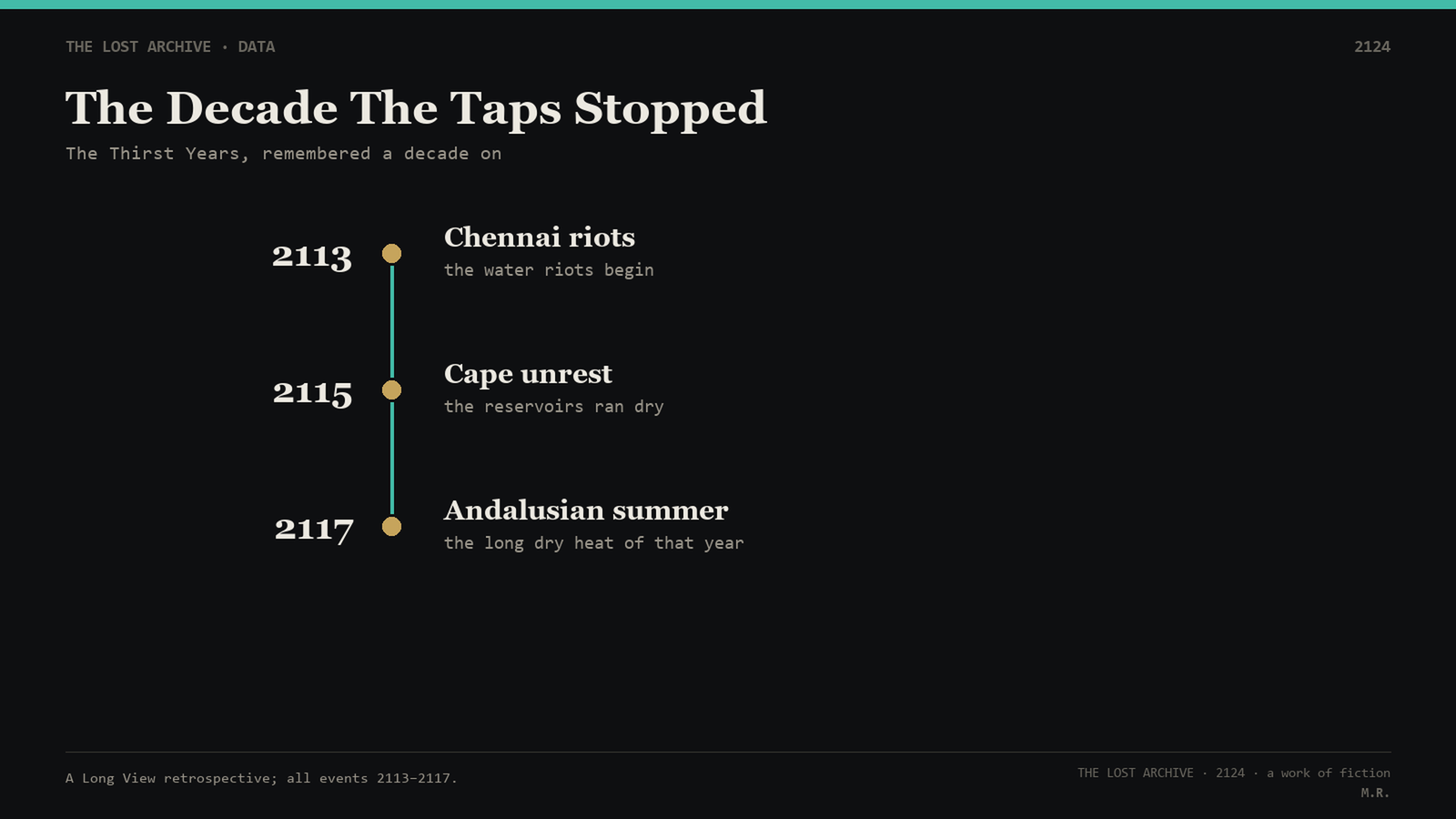
We did not always count the displaced, and the history of how we learned to is a history of what we were willing to see. For most of the last century, people moved by drought and flood were logged as anything but climate migrants — as laborers, as refugees of this or that proximate crisis, as absences in a census. The registries that now let Hearth Relief International report a figure past 120 million are barely two decades mature, built after the mid-century reckonings forced governments to admit the water was the cause. That precision is an achievement and a burden. A century ago a family leaving a salted delta vanished from the record; today they are counted, sheltered, and — too often — merely counted. The Passage Trust's own historians note the danger: that measurement becomes a substitute for remedy, that to tally a thing well is quietly mistaken for tending to it. We see these people now. The century's unfinished question is whether seeing them was ever the hard part.
By Dr. Nadia Brunstein · The Lost Archive, World Edition
A dispatch from The Lost Archive, the in-world newspaper of the year 2124 — a work of speculative fiction from The Legacy of the Lost.