
The Long View · The Long View
From Six Colonists to Fifty Thousand: How Mars Stopped Being an Expedition
The road that turned a research outpost into a rift-long settlement, traced through its real engineering and its quiet trade-offs.
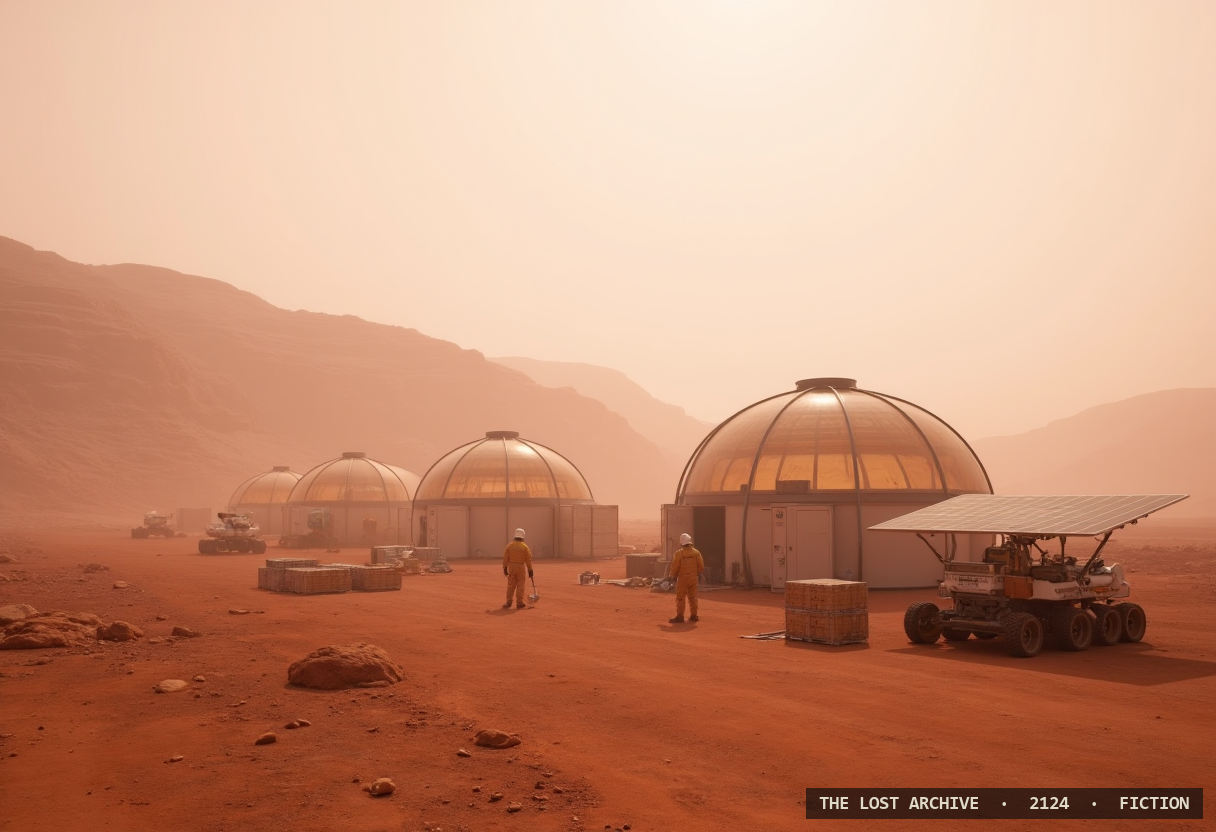
We tend to remember the Mars story as a series of firsts — first crew, first greenhouse, first child — but the truer history is a story of when it stopped being a story at all. The outpost of the 2050s was an expedition: six people, resupplied from Earth, every gram accounted for, every day a headline. The settlement that this week passed fifty thousand is something the expedition's planners never quite designed and could not have paid for — a place where most residents were not sent but simply live. The turn came with three unglamorous technologies: reliable pressurized habitat fabricated from Martian rock, closed-loop water and air that no longer needed Earth, and greenhouses that fed the colony instead of merely garnishing it. Once a settler could be born, fed, housed, and buried without a single shipment from home, Mars stopped being an expedition and became a frontier town — with a frontier town's trade-offs. The rift's growth has always outrun its margins. Districts pressurize before their redundancies are complete; the eighteen-minute gulf means Mars governs itself because it must, not because anyone chose it. Fifty thousand people did not conquer the canyon. They moved in, patched what leaked, and stayed.
By Dr. Nadia Brunstein · The Lost Archive, World Edition
A dispatch from The Lost Archive, the in-world newspaper of the year 2124 — a work of speculative fiction from The Legacy of the Lost.