
World · World
After Brazil, Three More Legislatures Put the Augmentation Question on the Docket
The vote in Brasília ripples outward as governments reach, one by one, for a line the science says isn't there.
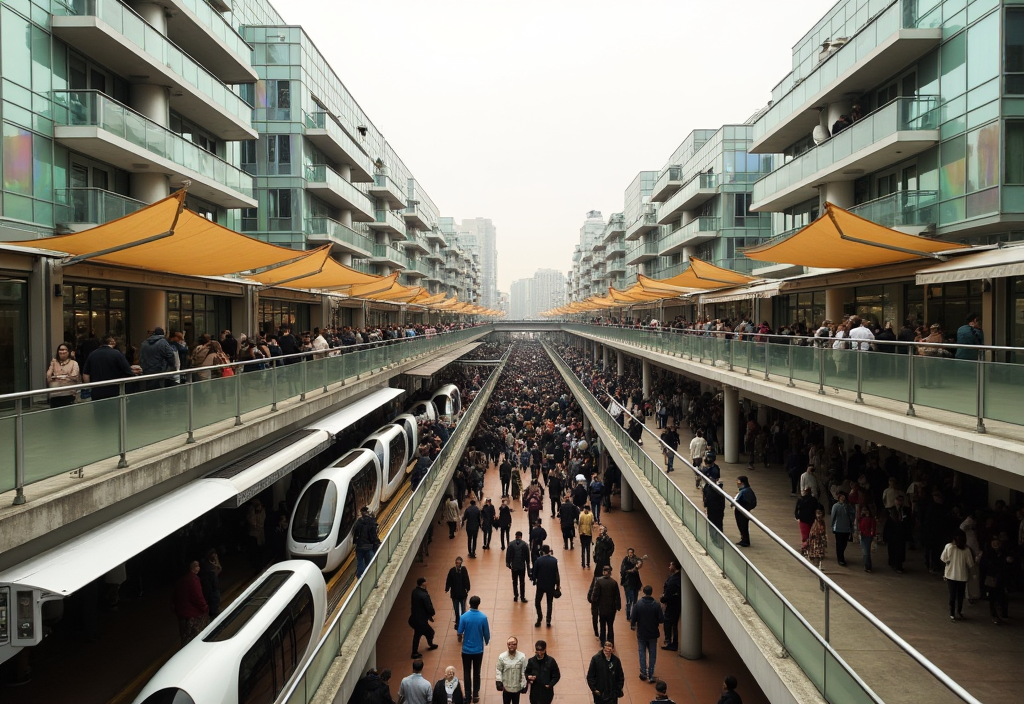
BRASÍLIA / GENEVA — It began as one country's argument and has become, in the space of a season, a continent's. Since the augmentation divide moved to the center of Brazil's autumn campaign, three more legislatures — in Lagos, in Jakarta, in a coalition of Andean assemblies — have filed bills that reach for the same elusive thing: a definition of where the human ends and the enhanced begins. The trouble, as every drafting committee soon discovers, is that the science offers no such line. Augmentation runs a smooth gradient from a hearing implant a grandmother would call ordinary to the neural lattices that let a trader read a market in her sleep. "Legislators want a fence," said bioethicist Priya Deshmukh, who has advised two of the committees. "The biology gives them a slope." Roughly one human in twenty is now enhanced, and the number climbs. Each bill tries to fix a boundary the technology keeps dissolving beneath it — schooling here, hiring there, a registry somewhere else. None has yet defined the word at its own heart. The votes will come regardless. The definition, everyone privately concedes, will not.
By Camille Fontaine · The Lost Archive, World Edition
A dispatch from The Lost Archive, the in-world newspaper of the year 2124 — a work of speculative fiction from The Legacy of the Lost.