
The Enhanced · The Enhanced
For the Augmented Five Percent, the Question Is Who Gets the Upgrade
With roughly one in twenty humans now augmented, clinics report a widening gap between who can afford enhancement and who is asked to work with it.
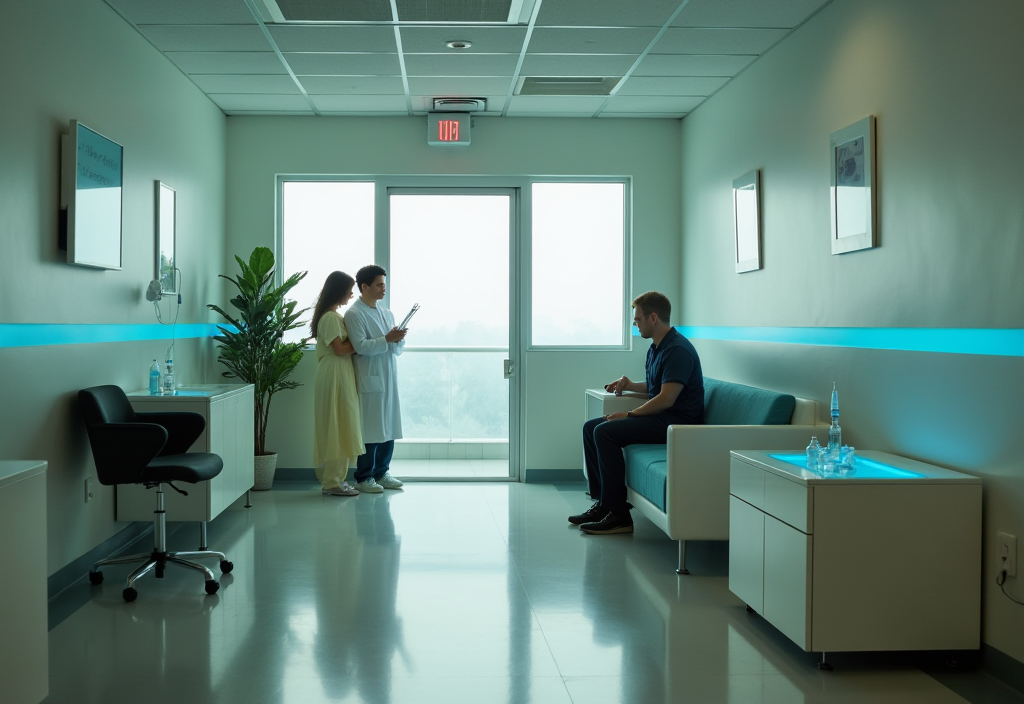
LAGOS — Augmentation has settled into the ordinary: roughly five percent of humanity now carries some neural or somatic enhancement, and in the clinics of this megacity the technology is no longer the story. The story is access. At a subsidized fitting center, a rehabilitation specialist named Dr. Kofi Adebayo divides his patients into those who chose enhancement and those whose employers required it. "The wealthy augment to become more," he said, calibrating a somatic implant for a dockworker. "The poor augment to keep up." Somaform Augmetics, whose neural-interface line remains under an open safety review that regulators have not closed, sells to both markets at very different prices. Augmentation-rights advocates warn that a technology adopted freely by some and demanded of others is not one technology but two. In Adebayo's chair, the dockworker flexed a newly responsive hand and said only that the shift paid the same either way.
By Dr. Naomi Eze · The Lost Archive, World Edition
A dispatch from The Lost Archive, the in-world newspaper of the year 2124 — a work of speculative fiction from The Legacy of the Lost.