
World · World
What a Million Qubits Actually Buys You — and What It Doesn't
Ahead of Singapore's demonstration, the paper separates the engineering from the mythology of the next quantum leap.
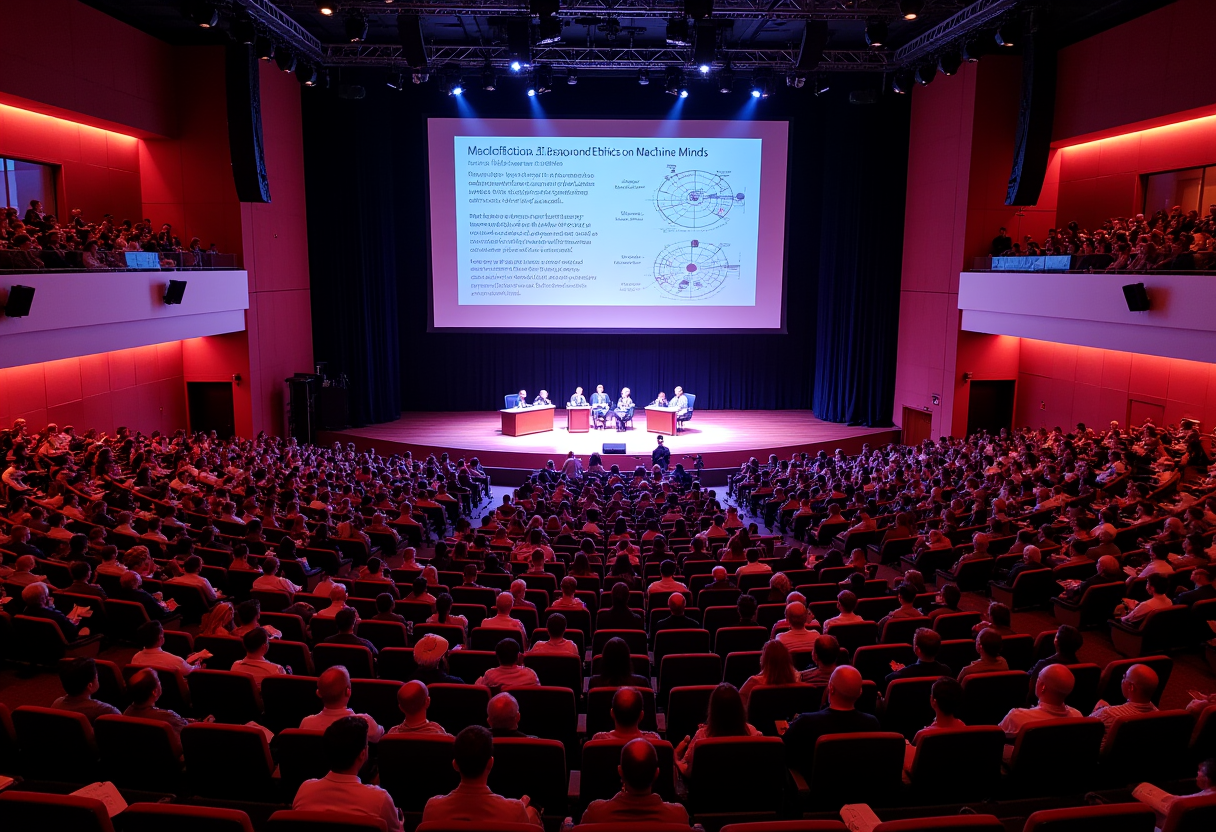
SINGAPORE — In the days before the Singapore Institute switches on its million-qubit processor for a watching public, the machine has already acquired a mythology it does not deserve, and a little cold arithmetic is overdue. Here is what a million qubits actually buys: a genuine assault on a narrow, precious class of problems — molecular simulation for new materials, optimization tangles with more variables than atoms in a room, factoring of a kind that has haunted cryptographers for a century. That is not small. It is, in its domain, revolutionary. Here is what it does not buy: a mind, a general intelligence, or a machine that "thinks" in any sense the word survives contact with. A quantum processor is a scalpel, not a brain — ruinously powerful on the exact problems it is shaped for, and useless, literally inert, on everything else. Nor does it break the Q-Net; the backbone is secured by physics precisely because machines like this were always coming. "The public wants a wizard," said Dr. Wei-Lin Tan, who will host the run. "We built an extraordinarily sharp knife. A knife is a wonderful thing. It is not a wizard, and pretending otherwise insults both." The demonstration will be genuinely historic. It will also be, if the field is honest, genuinely bounded — and the honesty is the harder achievement.
By Dr. Selene Bright · The Lost Archive, World Edition
A dispatch from The Lost Archive, the in-world newspaper of the year 2124 — a work of speculative fiction from The Legacy of the Lost.