
The Long View · The Long View
How the Cool Hours Became a Civilization
The night markets of Seville are not a summer novelty; they are the latest chapter in humanity's long habit of moving its life to survive its climate.
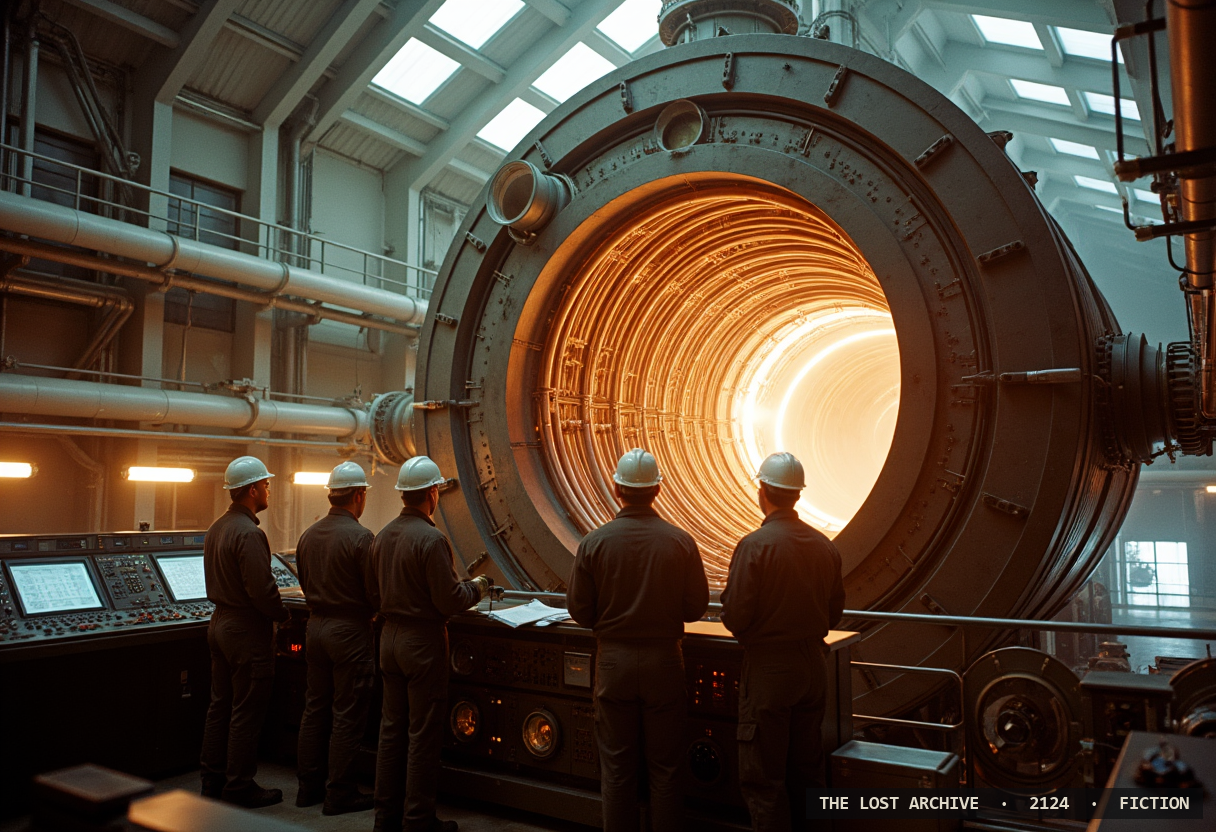
We treat the inverted clock as a heat-wave improvisation — stalls at eleven, weddings at two — but the historian's eye sees something older. Every civilization that met a hostile sky rearranged its day around it: the siesta was never laziness, and the desert caravan always moved at dusk. What is new in 2124 is the scale. With the global mean anomaly settled at +2.8°C, whole warm-belt economies from Seville to Karachi have quietly relocated their productive hours into the dark, and a generation is growing up for whom midnight is simply when life happens. This is adaptation of the most human kind — undramatic, collective, half-affectionate — and it deserves to be recorded as such rather than mistaken for decline. Societies do not always confront a changing climate with grand councils and megaprojects. Sometimes, as in the Alameda at one in the morning, they simply decide when to be awake.
By Dr. Nadia Brunstein · The Lost Archive, World Edition
A dispatch from The Lost Archive, the in-world newspaper of the year 2124 — a work of speculative fiction from The Legacy of the Lost.