Quantum Frontier · The Quantum Frontier
Reading a Bulletin Closely: What Sensors Measure, and What They Cannot
The dense lattice on the ice answers narrow questions precisely — and the broad ones not at all.
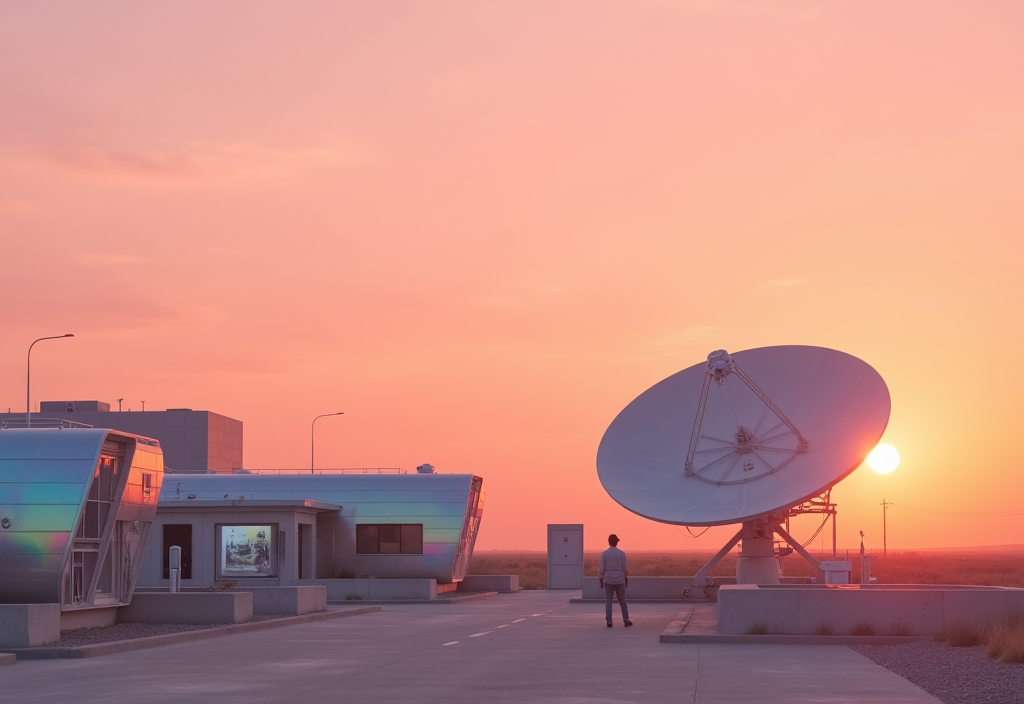
There is a temptation, on a day like this, to imagine that a dense enough field of sensors could simply tell us the answer — that with enough instruments on the ice, the future of the shelf would resolve into a number. It is worth understanding why that is not how measurement works. The lattice threaded across the monitored Antarctic sectors is genuinely extraordinary: it can report the movement of a given point to a hair, the temperature at a given depth to a fraction, the mass of a given block to a precision that would have seemed like magic a century ago. What it answers, it answers superbly. But those are narrow questions — *how fast is this point moving now, how cold is this layer today* — and the questions that keep glaciologists awake are broad ones about a coupled system of ice and rock and ocean whose behavior emerges from ten thousand interactions no single sensor sees. "A perfect measurement of a part is not a prediction of the whole," a Survey physicist explained. "We can read the ice beautifully." This quarter, she said, the lattice logged the melt rate to four decimals and the shelf depth to the centimetre; where the shelf goes next was not a figure on any readout.
By Dr. Selene Bright · The Lost Archive, World Edition
A dispatch from The Lost Archive, the in-world newspaper of the year 2124 — a work of speculative fiction from The Legacy of the Lost.