
Capitals & Commons · Capitals & Commons
Three Corridor Cities, One Argument: What Does a Rights Floor Actually Cost?
The governance of relief moves from the accord table to the municipal budget.
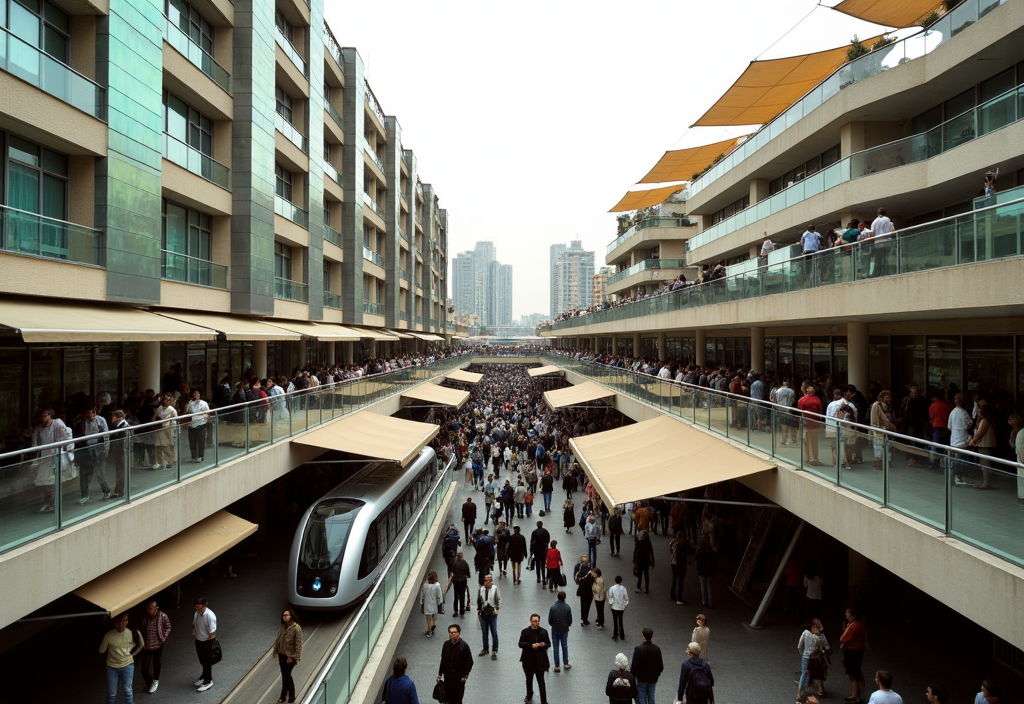
The debate that opened this week over metered water versus a guaranteed rights floor stopped being abstract the moment three corridor cities put it into their budgets. A rights floor — a baseline of water every resident receives regardless of ability to pay — is easy to affirm at an accord table and hard to fund at a council one, because the liters below the floor still cost the same to desalinate as the liters above it. Someone pays. The three cities are arriving at three different answers: one folding the cost into a progressive tariff so that heavier users subsidize the floor, one drawing on a Castellan Capital-underwritten relief facility, one simply raising the general levy and daring the objection. Each approach has its critics and its arithmetic. "The principle is settled — nobody argues a person should go without water," said one city budget director. "The invoice is where the argument actually lives." The corridor cities built their water systems in an emergency and are now, city by line-item city, deciding what that water is worth as ordinary policy — which is the least dramatic and most consequential kind of governance the century does.
By Camille Fontaine · The Lost Archive, World Edition
A dispatch from The Lost Archive, the in-world newspaper of the year 2124 — a work of speculative fiction from The Legacy of the Lost.