The Long View · The Long View
How We Learned to Live at +2.8, and What It Taught Us to Ignore
Five straight months at the anomaly that once meant catastrophe now reads, on most mornings, as weather.
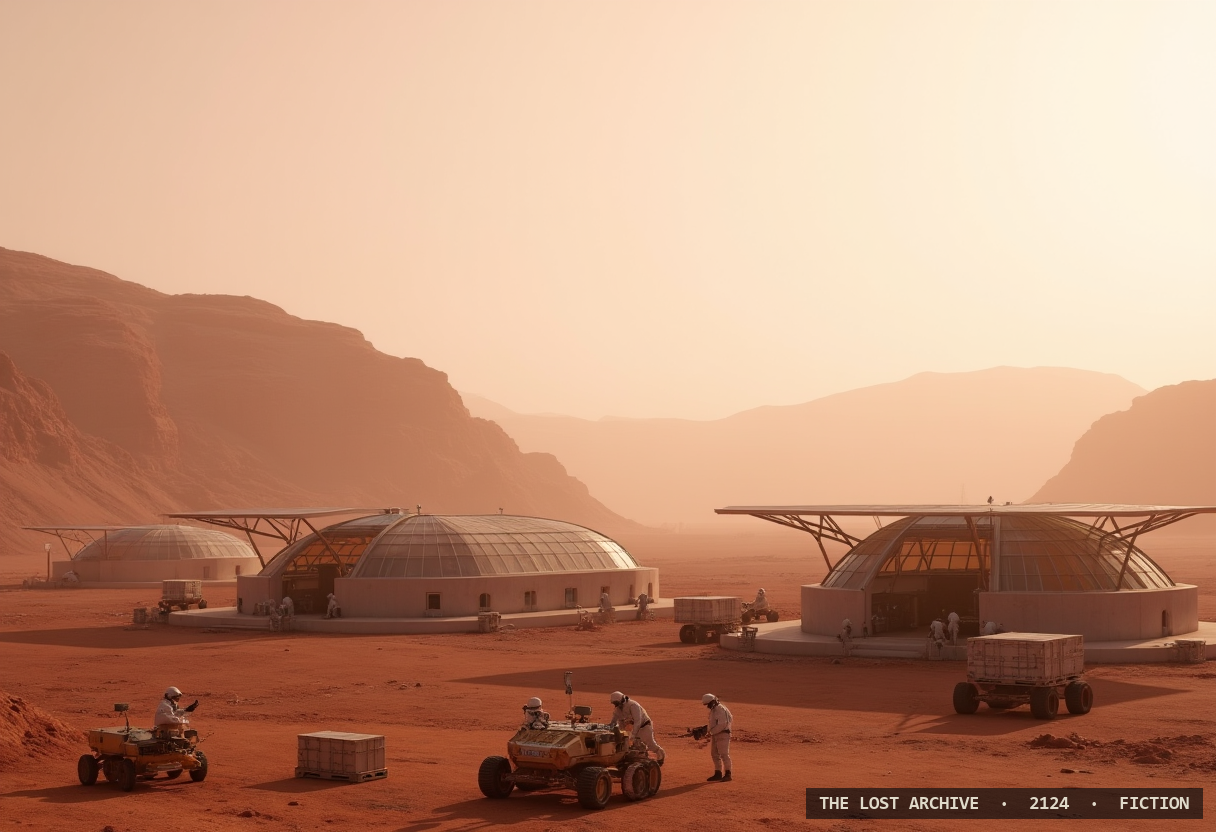
The most dangerous sentence of 2124 is a mild one: it is not so bad. For a fifth consecutive month the global mean anomaly has held at or above +2.8 °C, the threshold that an earlier century swore would be the end of ordinary life. Ordinary life continued. That is the lesson worth fearing. Dr. Nadia Brunstein notes that humans do not adapt to a crisis so much as adapt to calling it normal; the fusion grid at roughly a third of our power, the migrant corridors past 112 million, the reservoirs summoned to emergency session in July — each arrived, each was absorbed, each became the backdrop to something newer. This is not resilience; it is the slow raising of the water in which we stand, one degree at a time, until we no longer notice the temperature. The Antarctic bulletin due at month's end will likely report loss that is real and "within model" both at once. We should be most alert precisely when the extraordinary stops feeling that way. Comfort with +2.8 is not proof it is safe. It is proof of how much we can be taught not to see.
By Dr. Nadia Brunstein · The Lost Archive, World Edition
A dispatch from The Lost Archive, the in-world newspaper of the year 2124 — a work of speculative fiction from The Legacy of the Lost.