The Long View · The Long View
How the Grid Learned to Live Beside the Heat
A century of blackouts taught the world to build power close to the people who need it.
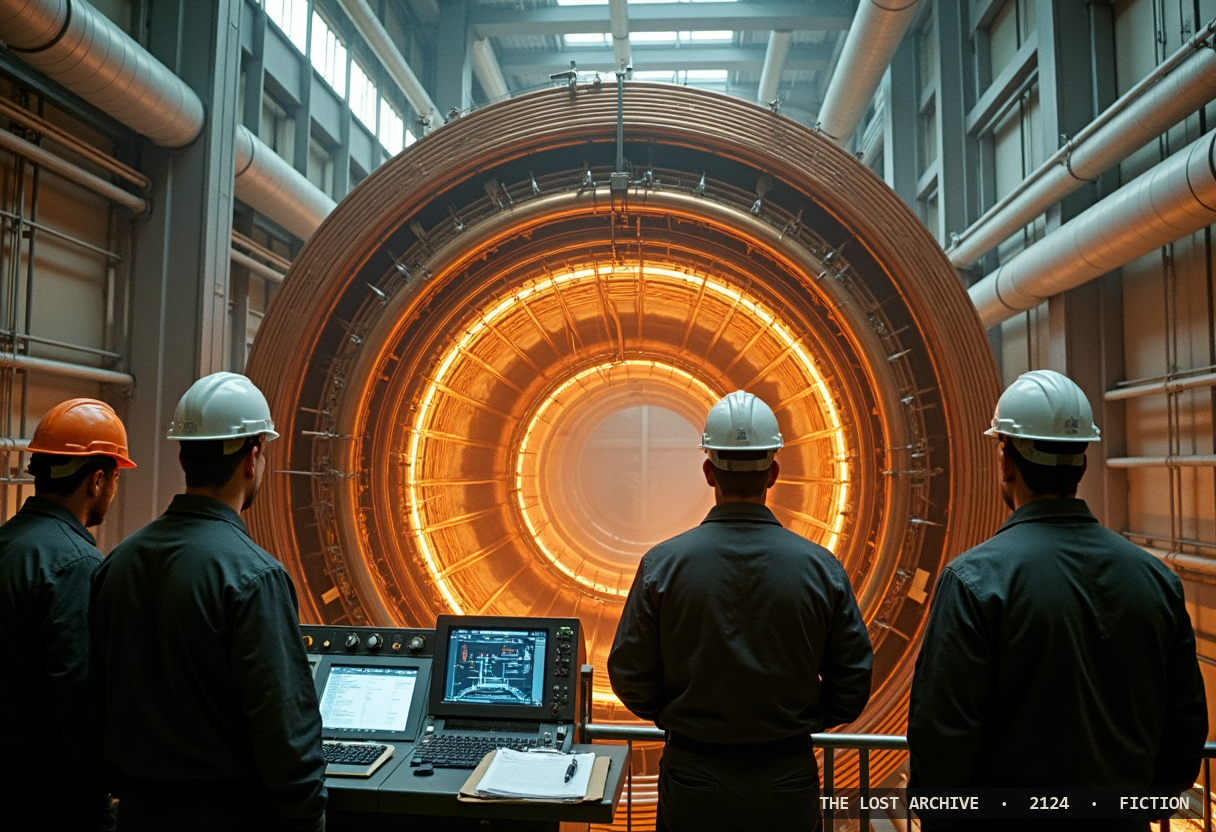
We treat this summer's grid as a crisis, and in the daily sense it is. Seen across a century, though, it is something stranger: a system that has already survived the worst version of itself and quietly redesigned around the lesson. The blackouts of the 2040s and 2070s — cascading failures when distant megaplants tripped and dragged whole regions dark — are why today's argument between building power near the load and concentrating it at vast remote sites is an argument at all, rather than a settled reflex toward bigness. Fusion now carries about thirty percent of the reconnected grid, and the reconnection itself is the achievement: a web of smaller, closer sources that can lose a node without losing a city. Historians of technology tend to find that infrastructure learns only through failure, expensively and late. The grid learned. Whether it learned fast enough for a +2.8°C world is the open question — but the humility now baked into how we wire the planet is itself a kind of progress, earned the hard way, over lifetimes most of us never saw.
By Dr. Nadia Brunstein · The Lost Archive, World Edition
A dispatch from The Lost Archive, the in-world newspaper of the year 2124 — a work of speculative fiction from The Legacy of the Lost.