
Waterline · Waterline
In the Sahel, the Corridor Reaches the Fifth Village, and the Next Still Waits
Relief arrives one standpipe at a time, measured against a margin thinner than the map suggests.
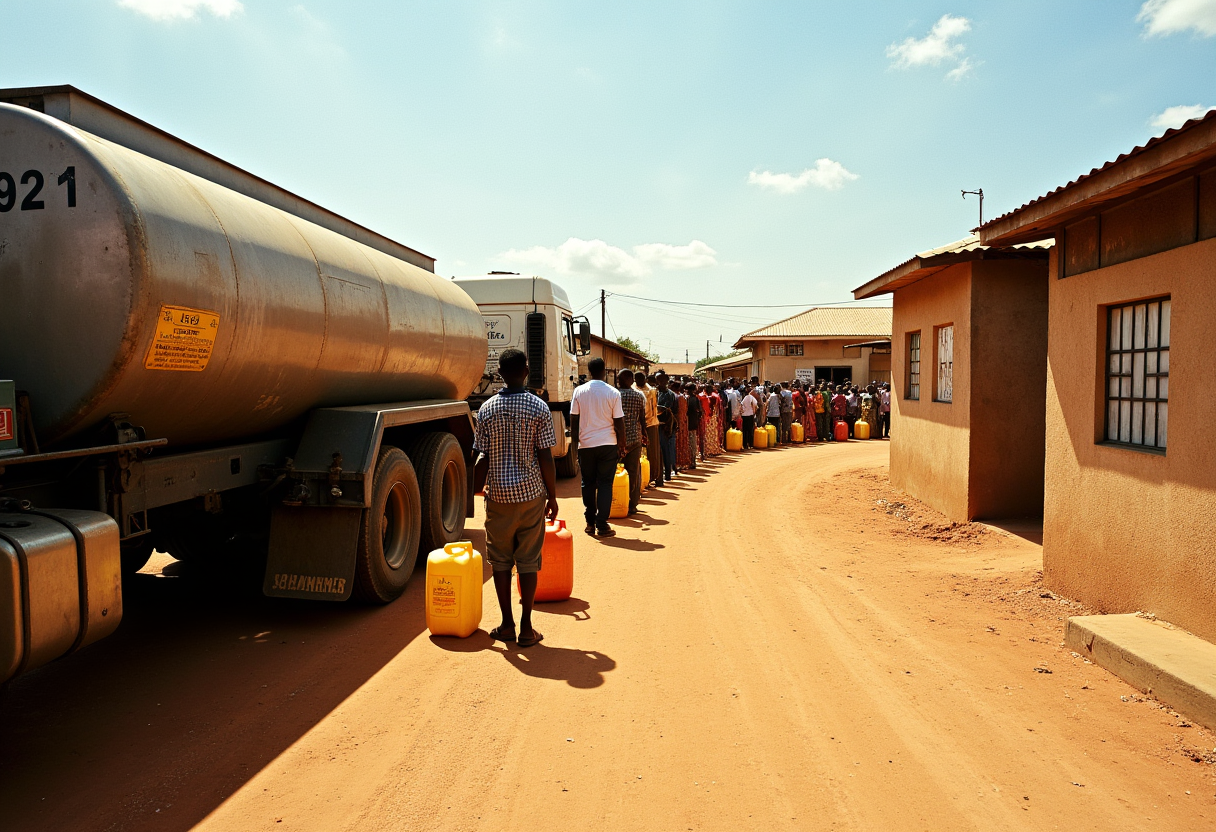
TAHOUA — The engineers ran the last stretch of pipe into Ténéré-Kâo just after dawn, and by mid-morning the village had a standpipe that ran clean. It is the fifth settlement the Sahel desalination corridor has reached since spring, each one a bright dot advancing across a planning map that hangs, hopeful and misleading, in the regional office. The map shows a confident line marching east. The engineers know the truth is thinner. Every kilometer of pipe draws on the same finite pressure the coastal plant can push inland, and every new village added to the corridor is a village the next dry stretch must also carry. "The map makes it look like a decision that's already been made," said a Tethys Hydrous Group field engineer, coiling cable in the heat. "It hasn't. The next village is on the map. Whether it gets water depends on a summer we can't see yet." In Ténéré-Kâo the argument was academic; women filled canisters and children ran the water home. Forty kilometers east, in the village that is next on the line and not yet on the pipe, they have heard the corridor is coming. They have heard it before.
By Halvard Nkemelu · The Lost Archive, World Edition
A dispatch from The Lost Archive, the in-world newspaper of the year 2124 — a work of speculative fiction from The Legacy of the Lost.