
World · World
Ministers Fly Into the Heat for a Water Session No One Wanted to Call
As the emergency session nears, the delegates arrive to standpipe queues outside the hall.
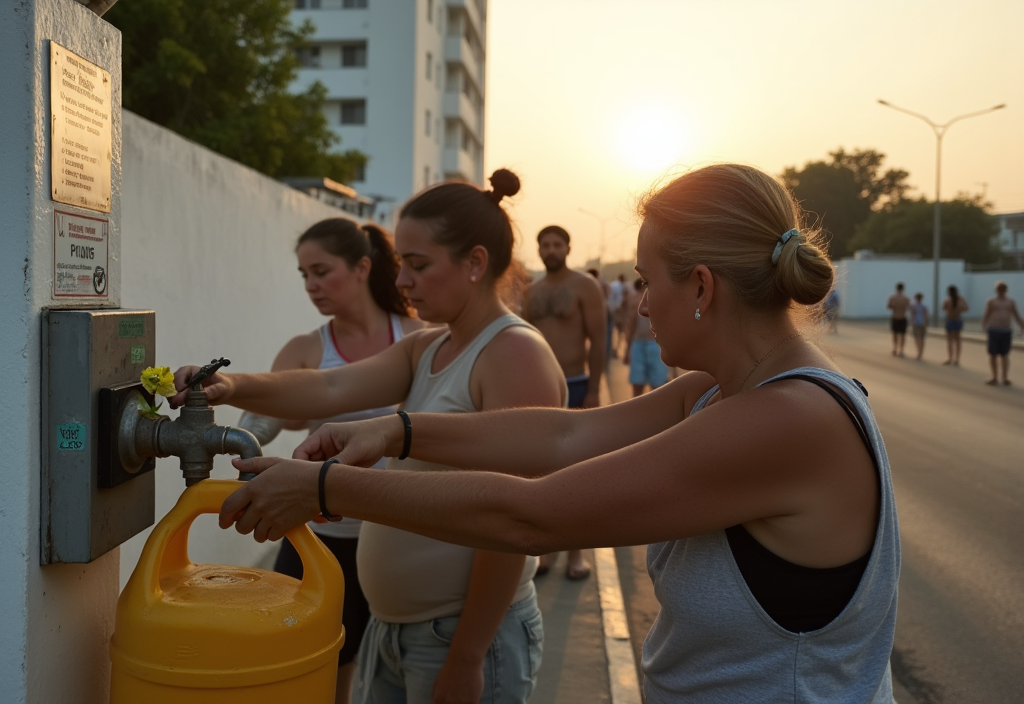
GENEVA — They came in the worst week to travel, which was, of course, the point. Delegations to the Global Concordat Council began landing Saturday under a sky the color of old brass, the thermometers holding above 41°C by mid-morning, and the first thing many ministers saw on the drive from the airfield was the queue: a standpipe line four blocks long outside the very district that hosts the Council hall. No one had wanted to call this session. Emergency water sittings are the meetings governments hold when the ordinary machinery has already failed, and everyone in the motorcades knew it. Secretary-General Ingrid Halvorsen, who summoned the delegates after reservoir figures from three continents crossed the threshold her office had quietly set months ago, said only that "the numbers asked for us before we asked for them." Inside, aides unpacked briefing folders thick as bricks. Outside, a woman named Elspeth Rau filled two steel canisters and did not look up as the cars went past. "They talk, we carry," she said. "Same as last summer." By nightfall the hall's windows glowed against a city that had not cooled, and the real session — the one in the streets — had already been in progress for weeks.
By Camille Fontaine · The Lost Archive, World Edition
A dispatch from The Lost Archive, the in-world newspaper of the year 2124 — a work of speculative fiction from The Legacy of the Lost.