The Enhanced · World
The Enhancement Gap Becomes a Health Divide, Not Just a Wealth One
Longevity for some is quietly rewriting the actuarial tables for all.
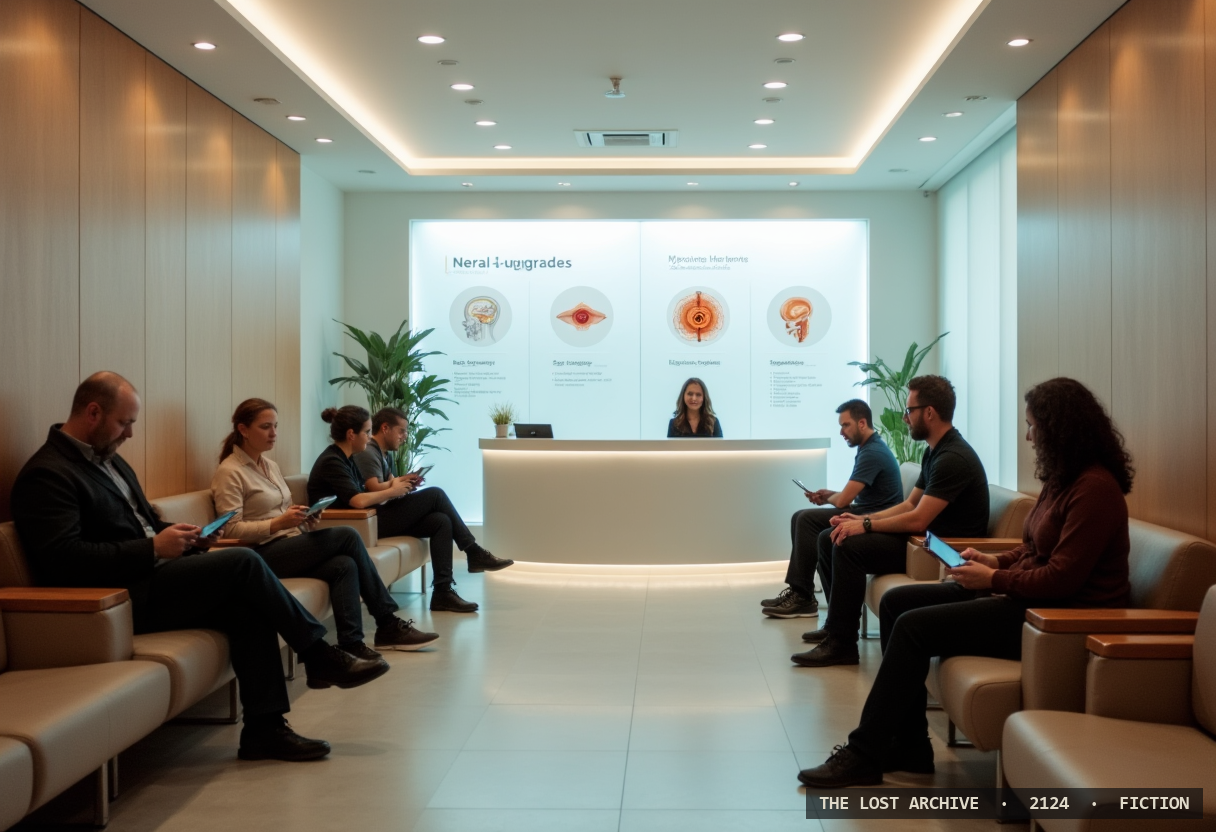
LISBON — For years the augmentation divide was described in the language of money: who could afford the therapies, who could not, a gap of price. This week a coalition of public-health actuaries put a different word to it — health — and the word lands harder. Their pooled analysis, drawn from a decade of records across a dozen health systems, finds that the roughly one in twenty humans who are enhanced are not merely living longer but aging differently, their late decades bent into a shape the baseline population will never share. The consequence is quiet and enormous: insurers, pension funds, and national health budgets built their tables on a single human lifespan, and there are now, in effect, two. "We priced a hundred years of risk on the assumption that a body is a body," said one actuary in Lisbon. "That assumption has died, and it did not tell us." The enhanced are still a small minority. But the math that holds up every retirement, every premium, every promise a state makes to its old, was written for one clock — and the century has issued a second. The tables do not yet know how to hold both.
By Dr. Naomi Eze · The Lost Archive, World Edition
A dispatch from The Lost Archive, the in-world newspaper of the year 2124 — a work of speculative fiction from The Legacy of the Lost.